
 EN
EN  DE
DE  FR
FR Small animal food
Filters
-
- - 20 %
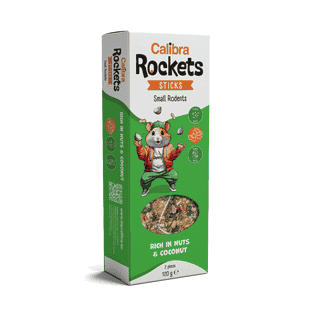
Special Price CHF 25.10 Regular Price CHF 31.40Calibra RocketsSupplementary feed for hamsters, rats, mice and other rodents
-


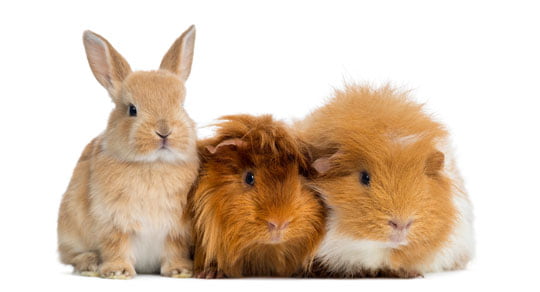
Small animal food is specially developed for small pets such as rabbits, guinea pigs, hamsters, mice, degus, chinchillas and rats . There are a large number of small animal foods from various brands on the market that are tailored to the different needs of the animals.
Small animal food usually consists of a mixture of different ingredients such as
- Cereals
- Vegetables
- Fruits
- Seeds
- Seeds
- Nuts
- dried insects
These ingredients provide the animals with the nutrients and vitamins they need to stay healthy and enjoy as long a life as possible.
Needs-based food
It is very important to choose the right small animal food for each animal, as each species has different nutritional requirements. For example, rabbits need a lot of fiber and little sugar, while hamsters need a protein-enriched diet with insects . Dwarf hamsters in particular (all breeds affected, especially pure-bred Campell hamsters and the hybrids of Dzungarian dwarf hamsters and Campell hamsters commonly found in pet shops) should be completely deprived of all sugar, including fructose and cereals, as they are very susceptible to diabetes. In addition to dry grain food or pellets, fresh hay and fresh vegetables are essential for small animals such as guinea pigs and rabbits. Above all, leafy greens, herbs, lettuce and root vegetables should be fed. Cabbage can also be given in bulk, but it is important to get the animals used to it slowly. Sugary vegetables such as carrots and peppers should be the exception and fed in small quantities from time to time as a special treat.
Treats and snacks
In addition to the main food, snacks and treats can also be offered to pamper the animals and offer them variety or to work on their trusting nature. However, it is important to ensure that these treats are only fed in small quantities , as they often have a higher fat or sugar content. Supplements or treats with pure sugar listed as an ingredient should be avoided completely, as this is not healthy for all animals. With hamsters, care must also be taken to ensure that no "sticky" foods are fed, as these can stick together and block the cheek pouches, making a visit to the vet necessary.
Overall, it is important to be well informed about the specific nutritional needs of your small animal and to ensure that it receives a balanced and healthy diet. As small rodents generally have a rather short life expectancy, you can do a lot to ensure that you can enjoy living with your little furry friends for as long as possible by providing them with a high-quality and individually tailored diet, as well as the right environment that is as stress-free as possible and a large, species-appropriate and safe enclosure.