
 EN
EN  DE
DE  FR
FR Bee and Wasp Stings in Dogs and Cats
-
 By
Dr. med. vet. Sabina Büttner
By
Dr. med. vet. Sabina Büttner - Jul 15, 2021
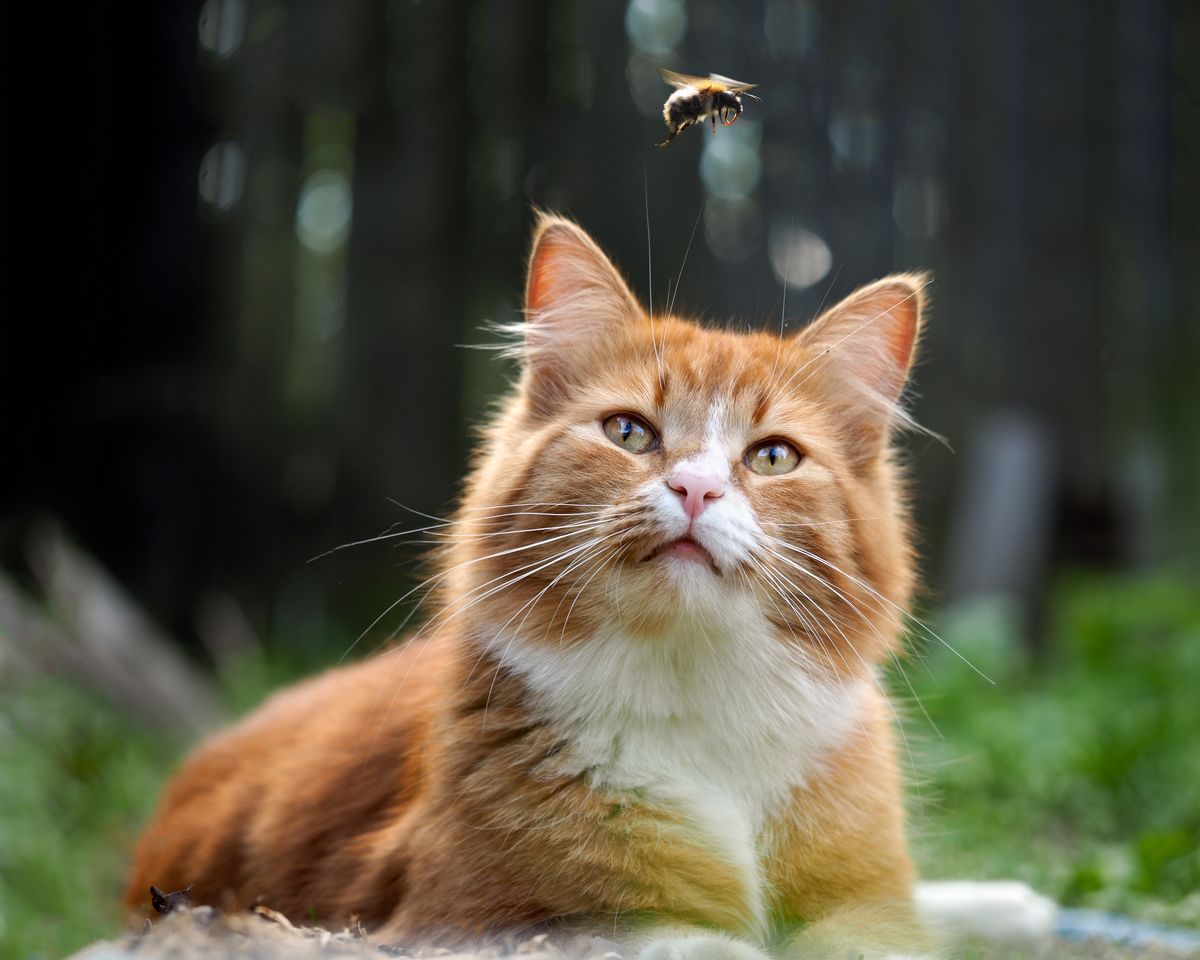
The gardens are buzzing again. Bumblebees, bees, and wasps are active, making it possible for our beloved four-legged friends to get stung at any time. Read on to learn when a sting is dangerous and what you can do in such a case.
Insect stings are not only painful for our pets but can even become life-threatening in some cases. Fortunately, most stings are harmless! Nevertheless, it's good to know how to react if you notice or suspect that your dog or cat has been stung.
How to tell if your pet has been stung?
When a bumblebee, bee, or wasp stings, it's very painful for dogs and cats too. Animals may yelp when stung, sometimes running away and hiding. They often immediately start licking the sting site.
You're not always present when your pet gets stung. Swelling on the head and paws, the two most commonly affected areas, can then be a sign of an insect sting. Sometimes a clear redness is visible, and with bee stings, you can often still find the stinger.
Stings in the mouth and throat area can manifest as head shaking, gagging, and excessive drooling, and later also as shortness of breath and collapse. If the sting is on the tongue or lip, these will swell very quickly.
When are insect stings particularly dangerous?
Most bee and wasp stings only lead to minor swelling and irritation in our pets. It becomes dangerous if the sting occurs in the mouth, throat, or neck area. The swelling can block the airways and obstruct breathing, which can quickly lead to a life-threatening situation.
If a dog or cat is attacked and stung by several wasps, or if the animal has developed an allergy to insect stings, this can trigger a life-threatening state of shock. Allergic reactions usually appear shortly after the sting, and they can vary greatly. This can include full-body swelling, weakness, circulatory, and respiratory problems. In some cases, animals also show vomiting and diarrhea. If you observe your pet being stung by a bee or a wasp, do not leave them alone for the following 1 – 2 hours. If symptoms of shock occur, a veterinarian must be consulted immediately as an emergency.
Correct behavior in case of wasp or bee stings:
Sting in a non-critical area:
- Stay calm!
- Carefully examine the sting site and, if possible, remove any bee stinger present. The best way to do this is by scraping over the affected area with a credit card until the stinger detaches (wasps and bumblebees do not lose their stinger when stinging).
- Cool the area with a cold pack or ice cubes wrapped in a cloth.
- Placing a cut onion on the sting, or dabbing some onion juice or vinegar water on it, can help relieve the pain.
- On less hairy areas, an ointment such as Fenistil can also be applied.
- Do not leave your pet alone for 1-2 hours so that you can notice any potential worsening of their condition.
- If your pet shows signs of an allergic reaction, immediately call a nearby veterinary practice to arrange an emergency appointment.
Sting in the mouth, throat, or neck area:
- Stay calm and try to calm your pet as well!
- Call a nearby veterinary practice and arrange for someone to accompany you on the drive there. It is advisable to go with two people so that one person can cool the sting site and continue to observe the dog.
- Cool an external sting site with a cold pack or ice cubes wrapped in a cloth.
- Cool an internal sting site in the throat by letting your pet lick ice. Do not just use frozen water for this; if possible, use an ice cream in a flavor they enjoy (e.g., cream or vanilla ice cream). Let your pet lick it throughout the entire drive to the vet.
Prevention of Bee and Wasp Stings
With a few preventive measures, you can reduce the risk of your dog or cat being stung by a wasp or a bee:
- Many dogs find it fun to snap at insects. Discourage this even in puppyhood – even with harmless insects!
- Cats also enjoy catching insects – our influence outdoors is limited. Indoors, wasps and bees should be caught and moved outside before your cat gets them.
- Wasps are attracted to dog and cat food! Therefore, do not leave food outside during the summer months, and do not leave wet food leftovers standing around indoors either.
- Bees and wasps can fall into water bowls and drown. If they are ingested while drinking, this can lead to stings in the throat area. Therefore, check the bowls regularly!
- Remove fallen fruit in the garden
- Have wasp nests removed from the house or garden
- If your pet has previously shown an allergic reaction to an insect sting, ensure you obtain emergency medication from your veterinarian.

Set ipet.ch as a preferred source on Google
Never miss a tip: Set ipet.ch as a preferred source in your Google account so that our veterinary advice and pet care guides appear higher up in your search results. Optional and can be undone at any time.
Set as preferred source →Useful information at a glance
How do I know if my dog or cat has been stung by a bee or wasp?
An insect sting is very painful for dogs and cats. Typical signs include yelping, running away, and hiding. Animals often lick the sting site. Swelling on the head or paws are common indicators. For stings in the mouth and throat area, head shaking, gagging, and excessive drooling may occur.
When are insect stings particularly dangerous for pets?
Stings in the mouth, throat, or neck area are dangerous because the swelling can block the airways. Multiple stings or an allergic reaction can also be life-threatening. Symptoms of an allergic reaction include swelling all over the body, weakness, circulatory and respiratory problems, as well as vomiting and diarrhea.
What should I do if my pet has been stung by a bee or wasp?
Stay calm and examine the sting site. Carefully remove the bee stinger and cool the area. For stings in the mouth or throat area, let your pet lick ice and contact a veterinarian immediately. Do not leave your pet alone for 1-2 hours after a sting.
How can I prevent bee and wasp stings in my dog or cat?
Prevent your pet from snapping at insects from puppyhood/kittenhood. Do not leave food outside during the summer months and regularly check water bowls. Remove fallen fruit in the garden and have wasp nests removed. For known allergies, ensure you have emergency medication from your veterinarian.
What should I do if my pet shows signs of an allergic reaction?
If your pet shows signs of an allergic reaction, such as swelling, breathing problems, or weakness, immediately call a nearby veterinary practice to arrange an emergency appointment. Do not leave your pet alone and observe it closely.