
 EN
EN  DE
DE  FR
FR Caution: Poisonous Plants!
-
 By
Dr. med. vet. Sabina Büttner
By
Dr. med. vet. Sabina Büttner - Aug 21, 2019

Our gardens are green and blooming again, and much of what grows there is potentially dangerous for our four-legged companions. That's why we're providing some tips here for handling plants in a pet household.
What is poisonous?
The list of poisonous garden and ornamental plants is long. Not only lilies of the valley, angel's trumpets, and autumn crocuses are poisonous plants, but also tulips, lilies, boxwood, and ivy can lead to poisoning. You can find a comprehensive overview of many plants and their toxicity to animals on the CliniTox pages of the Institute of Veterinary Pharmacology and Toxicology at the University of Zurich (www.giftpflanzen.ch).
Who is particularly at risk?
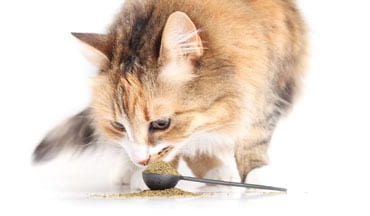
Generally, dogs and cats rarely eat large quantities of poisonous plants. Particularly at risk are young dogs who like to "help" their owners with gardening and, in doing so, nibble on poisonous plants or dig up and eat flower bulbs. Among cats, it is primarily indoor cats who come into contact with plant toxins while playing with houseplants or flower bouquets.
How to prevent?
Houseplants and balcony plants, as well as flower bouquets, must be placed out of reach of dogs and cats. It is often recommended to completely avoid poisonous plants in the garden, which is difficult given the long list of toxic plants! In any case, you should not let your young dog play unsupervised in a garden with poisonous plants. If you cannot always keep an eye on him, set up a secure puppy enclosure that prevents him from accessing the poisonous plants.
What to do if your pet has eaten plants?
- If you catch your pet in the act, immediately remove all plant parts from them and save them. If symptoms of poisoning occur, leaves, flowers, and stems can be useful for identifying the plant.
- If you are unsure whether the ingested plant is poisonous, contact your veterinarian or consult the CliniTox pages online (www.giftpflanzen.ch).
- If your pet has eaten a poisonous plant or if symptoms of poisoning such as gagging, drooling, vomiting, or diarrhea occur, it must be taken to a veterinary practice immediately. If convulsions, movement disorders, shortness of breath, or listlessness occur, it is an absolute emergency!
- Stay as calm as possible yourself so that you don't stress your pet even more, and take the nibbled plant parts with you to the practice.
- Do not try to make your pet vomit, and do not administer milk, protein, or vegetable oils.
In an emergency:
- Always contact your veterinarian or the local emergency service first!
- You can also get useful information by calling the Tox-Info-Suisse emergency number: 145

Set ipet.ch as a preferred source on Google
Never miss a tip: Set ipet.ch as a preferred source in your Google account so that our veterinary advice and pet care guides appear higher up in your search results. Optional and can be undone at any time.
Set as preferred source →Useful information at a glance
Which plants are poisonous to pets?
Many garden and ornamental plants are poisonous to pets. These include lily of the valley, angel's trumpet, autumn crocus, tulips, lilies, boxwood, and ivy. A comprehensive list can be found on the CliniTox pages of the Institute of Veterinary Pharmacology and Toxicology at the University of Zurich.
Which pets are particularly at risk?
Young dogs who enjoy playing in the garden and nibbling on plants are particularly at risk. For cats, it's primarily indoor cats that come into contact with houseplants or bouquets.
How can I prevent my pet from eating poisonous plants?
Place houseplants, balcony plants, and bouquets out of reach of dogs and cats. Do not let young dogs play unsupervised in gardens with poisonous plants. A secure puppy enclosure can help prevent access to dangerous plants.
What should I do if my pet has eaten a poisonous plant?
Immediately remove all plant parts from your pet and keep them for identification. In case of poisoning symptoms such as retching, drooling, vomiting, or diarrhea, take your pet immediately to a veterinarian. Severe symptoms like seizures or shortness of breath constitute an emergency.
What emergency measures should I take if my pet is poisoned?
Immediately contact your veterinarian or the local emergency service. Do not try to induce vomiting in your pet, and do not give it milk, protein, or vegetable oils. Stay calm to avoid further stressing your pet, and take the eaten plant parts with you to the clinic.