

 EN
EN  DE
DE  FR
FR Interactive Toys for Dogs and Cats
-
 By
Kathy Wyss
By
Kathy Wyss - Nov 7, 2025
Interactive Toys for Dogs and Cats – More Than Just Playthings
Mental stimulation is just as important for dogs and cats as physical exercise. Interactive toys promote concentration, endurance, and self-confidence – and they prevent boredom and behavioral problems.
Many pets today live in apartments and have fewer natural stimuli than before. With targeted mental toys, their daily lives can be enriched without physically overtaxing them. The key lies in variety, motivation, and shared activity.
Why Mental Stimulation is Important
A pet that is allowed to use its mind is happier and more balanced. Mental tasks provide structure and meaning, strengthen the bond with humans, and promote joy of life.
Just a few minutes daily are enough to achieve positive effects. It is crucial that the tasks are adapted to the pet and allow for successful experiences – this way, motivation is maintained.
Interactive Toys for Dogs – Training for Body and Mind
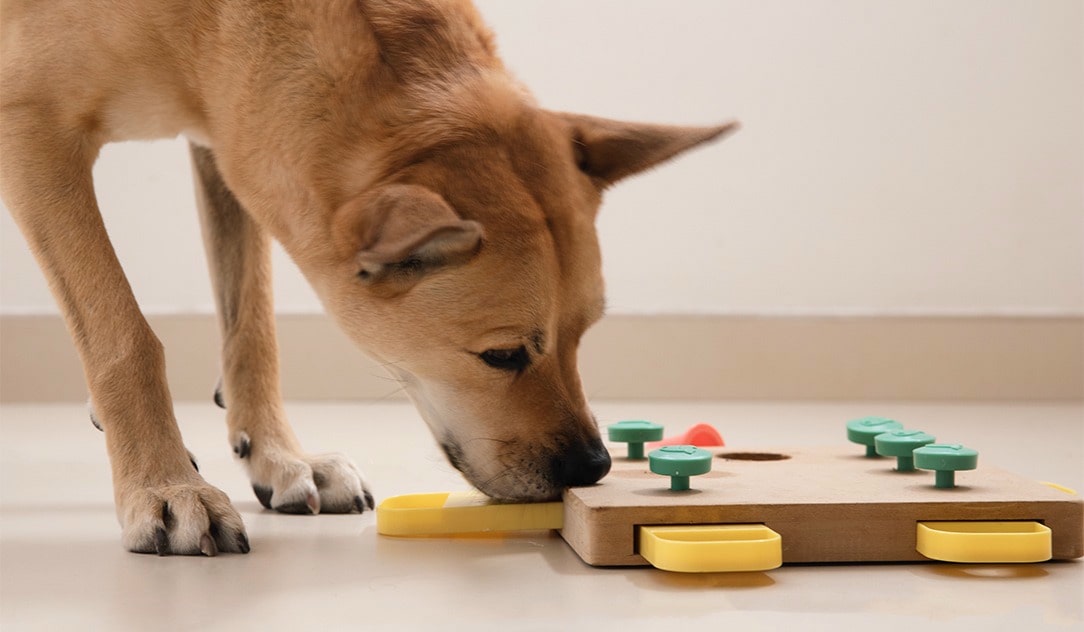
Dogs learn quickly when they are having fun. Interactive toys appeal to their natural hunting and tracking instincts. Treat-dispensing toys or puzzles are particularly popular, where the dog has to solve small tasks to get a reward.
Initially, a simple game where the principle is quickly understood is sufficient. Afterward, the difficulty level can be increased – for example, with multiple compartments, movable flaps, or complex shapes. This way, the dog remains challenged without being overwhelmed.
Paws, snout, and teeth are used for pulling, scratching, and nudging.
Scent work is also a wonderful addition. Snuffle mats or scent games activate the senses and concentration simultaneously. Especially on rainy days or when movement is restricted, they are a valuable way to redirect energy constructively.
Short, regular sessions of ten to fifteen minutes are entirely sufficient. Afterward, your furry friend can rest – after all, mental work is just as tiring as physical exercise.
Interactive Toys for Cats – Playful Promotion of Instincts
Cats are naturally curious and agile. Interactive toys directly appeal to their hunting and discovery instincts. Food labyrinths, puzzle boards, or balls with treats encourage them to use their paws purposefully and find solutions.
Indoor cats, in particular, benefit from this type of activity. Independently working for rewards promotes movement, coordination, and concentration – and simultaneously supports healthy weight management.
Variety is crucial: different toys in rotation, small DIY versions made from cardboard or fabric scraps, and occasional new challenges keep their interest alive. Those who gradually introduce their cat to new games will soon notice how much joy and pride they develop when successfully solving them.
Patience pays off – some cats need a little time to understand the principle. A small incentive in the form of a treat or a familiar movement helps with the introduction.
Food Toys as Part of Daily Feeding
We recommend offering the daily dry food ration for cats exclusively through food toys or special activity bowls. This way, eating becomes a meaningful activity that promotes movement, dexterity, and concentration. Especially for indoor cats, this form of feeding replaces important elements of natural hunting behavior. Instead of simply taking food from a bowl, the cat gets to search, feel, and puzzle – just as it would when hunting outdoors. This not only keeps them physically more active but also mentally stimulated and happier.
How to Successfully Use Interactive Toys
Whether dog or cat – it's important that the game is fun and remains safe. Toys should be sturdy, non-toxic, and free of small swallowable parts. Robust material is particularly worthwhile for strong dogs.
Initially, it is advisable to play together. This way, you can observe how the pet reacts and, if necessary, provide targeted support. Over time, many pets become independent and choose their favorite toy on their own.
Mental stimulation acts like mental fitness training: it strengthens concentration, promotes problem-solving skills, and ensures balanced behavior – both in everyday life and in challenging situations.
Conclusion: Smart Engagement for More Joy in Life
Interactive toys are far more than entertainment – they promote the mental health and emotional well-being of dogs and cats. They create positive experiences, strengthen the bond, and ensure more peace and contentment in everyday life.
Whether a treat-dispensing toy, snuffle mat, or homemade puzzle – every pet benefits from small challenges that engage their mind. Especially in Switzerland, where many pets spend a lot of time indoors, this form of activity is a valuable addition to daily life.
A few minutes of mental play each day can make all the difference – for a healthy, balanced, and happy pet life.
Useful information at a glance
How often should a pet play with intelligence toys?
Short and regular sessions are ideal. Even ten to fifteen minutes per day are sufficient to mentally challenge and engage dogs and cats. It is crucial that the tasks can be successfully mastered.
From what age are intelligence toys suitable?
Many toys are already suitable for young animals, as long as they are simply designed. Puppies and young cats particularly benefit from easy tasks where they quickly experience success. The difficulty level can be gradually increased with age.
How can you tell if a toy has the right difficulty level?
A suitable toy challenges without frustrating. If a dog or a cat remains motivated, makes regular small progress, and ends the game positively, the difficulty level is appropriate. If the animal appears stressed, the task should be simplified.
Can dogs and cats use intelligence toys independently?
Many animals can do this after a brief introduction. However, it is advisable to practice together at the beginning so that the principle is understood and the game remains safe. Once the animal knows how the toy works, it can also engage with it alone.
What positive effects do intelligence toys have for dogs and cats?
Indoor cats receive fewer natural stimuli than outdoor cats. Intelligence toys offer them mental challenge, structure, and meaningful engagement. Dogs are also mentally stimulated in addition to their daily exercise. This can reduce boredom, excessive meowing or barking, and other behavioral problems.
Can homemade toys work just as well?
Yes, absolutely. Many cats and dogs love DIY toys made from cardboard, fabric scraps, or simple household items. It is important that they are safe, stable, and free of small parts that could be swallowed. DIY versions are excellent for regularly expanding the repertoire.