

 EN
EN  DE
DE  FR
FR Blue-Green Algae: A Summer Danger for Your Dog
-
 By
med. vet. Bianca Michoud-Valente
By
med. vet. Bianca Michoud-Valente - Jul 1, 2025
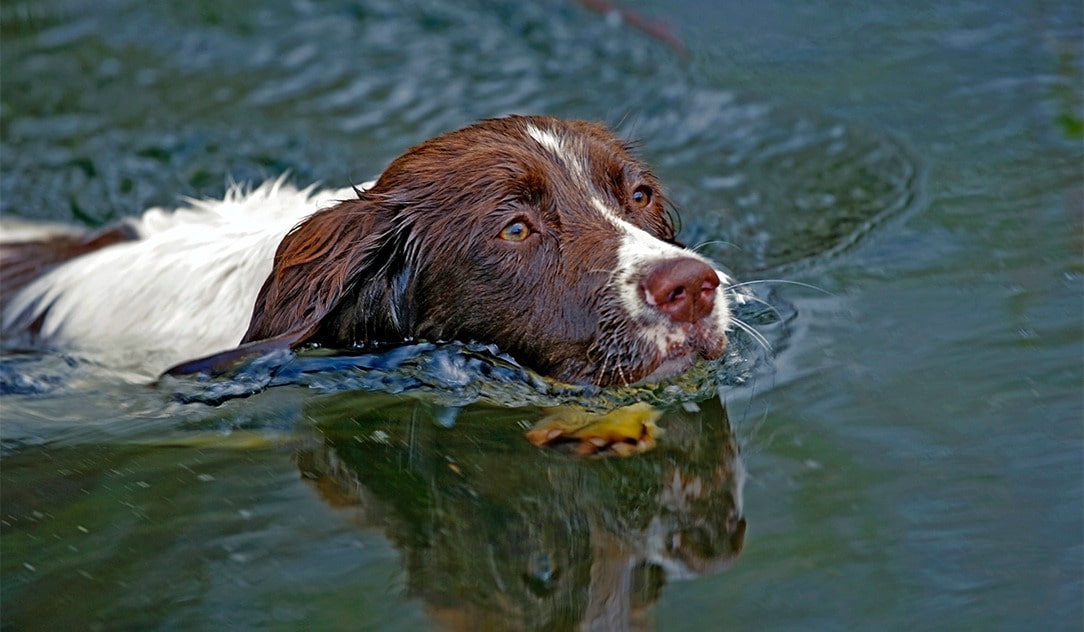
In summer, we love refreshing walks by lakes and rivers – but an invisible danger can quickly turn these relaxed moments into a drama. Blue-green algae are microorganisms that naturally occur in our waters. They multiply rapidly in warm weather and can lead to the death of your dog within a few hours. To protect our four-legged companions from this risk, it is crucial to recognize blue-green algae in time, understand their potential danger, and take the right precautions.
What are Blue-Green Algae (also called Cyanobacteria)?
Cyanobacteria are microorganisms from the family of bacteria – despite their misleading nickname "blue-green algae". They naturally colonize the sediments of freshwaters and can rise to the water surface under favorable conditions.
Several factors promote their proliferation: high temperatures, strong sunlight, and stagnant or slow-flowing waters. Heatwaves therefore pose a particularly high risk.
Another crucial factor is eutrophication, an excess of nutrients (especially nitrogen and phosphorus) in the water – often caused by the use of fertilizers in agriculture, wastewater discharge, or deforestation. These nutrients promote the growth of cyanobacteria at the expense of aquatic biodiversity.
Important to know: Cyanobacteria are naturally present in almost all Swiss waters. It only becomes dangerous when they multiply excessively in strong heat and in stagnant water areas.
Why can Blue-Green Algae be deadly for dogs?
Cyanobacteria produce various groups of toxins. Some attack the liver, leading to the destruction of liver cells, internal bleeding, and can be fatal in the worst case. Others affect the nervous system, causing severe neuromuscular disorders up to respiratory arrest.
Some strains can even produce multiple toxin types simultaneously – which further increases their danger.
Particular risk for dogs:
Dogs can come into contact with these toxins in various ways. The greatest risk occurs when they ingest contaminated water while swimming. However, licking the coat after contact with contaminated water or with surface deposits is also a common source of contamination. Some dogs are even attracted by the smell of cyanobacteria accumulations. Contact with contaminated sticks or stones also poses a potential danger.
What are the signs of blue-green algae poisoning?
Symptoms often appear very quickly – from a few minutes to several hours after contact. Typical signs include:
- Gastrointestinal issues: Vomiting, diarrhea (sometimes bloody), nausea, excessive drooling
- Neurological disorders: Tremors, disorientation, loss of balance, pronounced restlessness
- Further symptoms: Difficulty breathing, bulging eyes, fever
Without immediate veterinary treatment, the dog's condition rapidly deteriorates: seizures, coma, and ultimately death can occur – caused by severe damage to the liver, heart, or nervous system.
What to do if blue-green algae poisoning is suspected?
First steps:
Seek a veterinarian immediately! There is no specific antidote – therefore, quick action is crucial. Rinse your dog thoroughly with clean water to remove any toxin residues from their coat. Never attempt to induce vomiting in your dog without first seeking veterinary advice.
Veterinary treatment:
Therapy consists of symptomatic treatment:
- IV fluids for stabilization and to support the elimination of toxins
- If necessary, administration of activated charcoal if toxin ingestion occurred recently
- In some cases, gastrointestinal lavage is performed
- Intensive veterinary monitoring is usually required
Should you prevent your dog from swimming?
As a precautionary measure, you should definitely keep your dog on a leash near suspicious waters. Do not let them approach water bodies that are cloudy, discolored, or foul-smelling. Access to beaches or riverbanks with warning signs should be strictly avoided. Always carry enough fresh and clean drinking water during walks so that your dog does not have to drink from rivers or lakes.
After every swim – even in seemingly clear water – the dog should be thoroughly rinsed with clean water. Inform yourself about current warnings from cantonal health authorities or on social media, where temporary swimming bans are regularly published.
How to recognize Cyanobacteria?
Cyanobacteria often manifest as follows:
- Algal mats in green, brown, or black tones that can detach and accumulate on the shore
- Spongy coatings or clumps at the edge of the water body
- Colored film on the water surface
- Cloudy water with an unpleasant, foul odor
|
Photo: DGE |
Photo: DGE |
Photo: Canton of NE |
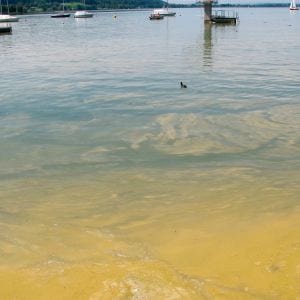
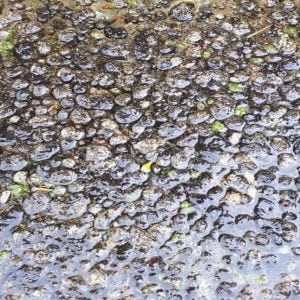
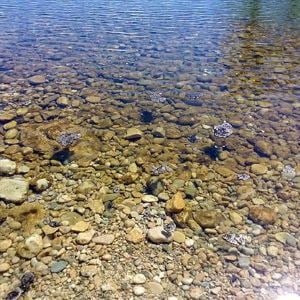
Particularly vulnerable zones are river mouths, stagnant or slow-flowing waters, as well as shallow areas with high nutrient content. The weather also plays a central role: Be especially careful in calm water, heat, and strong sunlight.
What is the situation in Switzerland?
In Switzerland, there is currently no comprehensive and real-time monitoring system for cyanobacteria in waters. Since these microorganisms naturally occur in aquatic habitats, their mere presence is not necessarily considered unusual, which complicates the establishment of structured environmental monitoring. Furthermore, there are no official thresholds for temperature or concentration that would automatically lead to swimming bans. Water temperature is only one of many influencing factors that promote the growth of cyanobacteria – the nutrient content of the water is also crucial. In addition: The visible signs of a mass proliferation are often subtle and difficult for an untrained eye to recognize. To address this lack of data, the University of Neuchâtel, together with the Federal Office for the Environment (FOEN) and several cantons, has launched a scientific project with citizen participation. A mobile app now allows trained individuals from the public to report suspected cases, so that targeted samples can be taken and analyzed – thus creating a better early warning system.
Conclusion:
- In extreme heat and in stagnant or visibly contaminated waters: Do not let your dog swim or drink from them.
- Regularly check for cantonal health warnings to identify swimming ban zones early.
- Always carry clean drinking water for your dog. A water bottle or a collapsible bowl is a simple but indispensable tool to avoid contact with potentially contaminated water.
Vigilance and prevention remain the best means to protect your dog's health.
Sources:
Official website of the Canton of Vaud (French)
Official website of the Canton of Neuchâtel (French)
Eawag – the aquatic research institute of the ETH Domain

Set ipet.ch as a preferred source on Google
Never miss a tip: Set ipet.ch as a preferred source in your Google account so that our veterinary advice and pet care guides appear higher up in your search results. Optional and can be undone at any time.
Set as preferred source →Useful information at a glance
What are blue-green algae and why are they dangerous?
Blue-green algae, also known as cyanobacteria, are toxic microorganisms that can multiply rapidly in heat and in nutrient-rich, stagnant waters. They produce toxins that can cause severe liver or nerve damage in dogs – sometimes even fatally.
How do dogs come into contact with blue-green algae?
Dogs usually ingest the toxins by drinking contaminated water, bathing in it, or licking their coat after swimming. Sticks or stones from contaminated waters also pose a danger.
How quickly do symptoms of blue-green algae poisoning appear in dogs?
Very quickly: Depending on the toxin and the amount ingested, initial signs such as vomiting, diarrhea, or tremors can appear within minutes to a few hours. Immediate veterinary treatment is crucial.
How do I recognize possible blue-green algae poisoning in dogs?
Typical symptoms include vomiting, diarrhea (possibly bloody), excessive drooling, tremors, restlessness, coordination disorders, or difficulty breathing – usually a few minutes to hours after contact. If such signs appear, go to the vet immediately!
What does first aid look like in case of suspected blue-green algae poisoning?
Immediately rinse the dog with clear water and seek veterinary treatment. Never administer medication on your own or induce vomiting – quick, professional action can be life-saving.
How do I recognize if a body of water is affected by blue-green algae?
Suspicious signs include greenish-brown algal mats, flakes, slimy clumps, a colored film on the water, or a foul odor. Stagnant or shallow waters are particularly at risk during hot weather.
Should my dog generally stop swimming in summer?
No, but with caution: Avoid murky, stagnant, or heavily warmed waters – especially during heatwaves. Keep your dog on a leash in such places and always offer clean drinking water as an alternative.