EN
EN  DE
DE  FR
FR Dry Food or Wet Food: Which Food is Right for My Pet?
-
 By
med. vet. Bianca Michoud-Valente
By
med. vet. Bianca Michoud-Valente - Mar 14, 2025
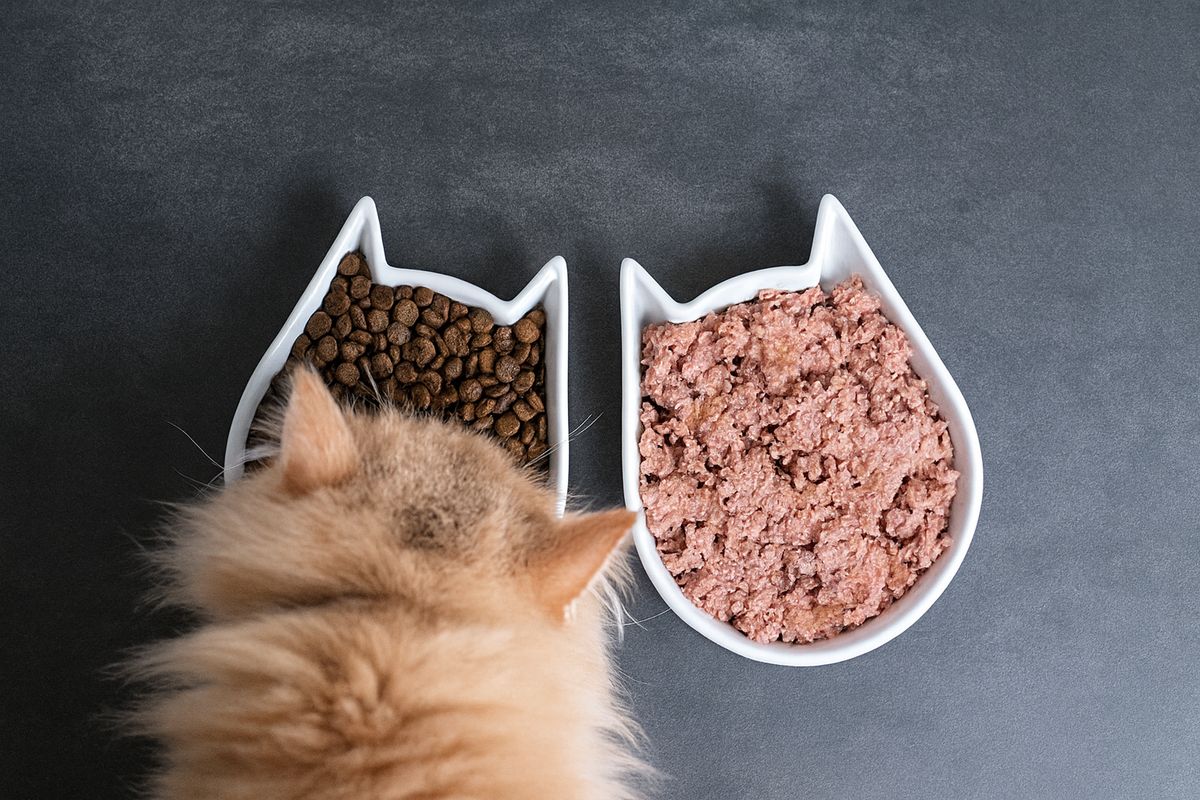
Many pet owners face the question of whether to feed their dog or cat dry food, wet food, or a combination of both. Each feeding method has its own Benefits and drawbacks that need to be considered. At the same time, the individual preferences of the animal should be taken into account to ensure its well-being. In this article, we present the different options and their Benefits.
Dry, Wet, or Semi-Moist Food: What are the Differences?
There are three main categories of commercial food for dogs and cats: dry food (kibble), wet food, and semi-moist food (soft kibble). Each of these variants has its specific characteristics and can meet different needs.
Dry Food: Practical and Cost-Effective
Dry food is the most commonly used form of nutrition for dogs and cats. It is valued for its ease of handling and generally lower cost.
Benefits:
- Easy to store and portion
- Often more affordable than wet food
- Promotes chewing muscles and has a positive effect on dental health
- High energy and nutrient content
- Compatible with automatic feeders or for Activity Feeding
Disadvantages:
- Low Moisture content (less than 10%), which reduces fluid intake
- Less palatable than wet food
- Can be too calorie-dense if the food amount is not adjusted
Wet Food: Palatable and Increases Moisture Intake
Wet food typically contains 70 to 80% water, providing the animal with plenty of fluid along with its food.
Benefits:
- Provides the animal with essential fluids, especially beneficial for cats
- Very palatable, ideal for picky eaters or during convalescence
- Easier to chew, especially for older animals or those with Dental problems
- Can be used for Activity Feeding with Licki Mats, but these must be cleaned after each use.
Disadvantages:
- Must be refrigerated after opening and has a short shelf life once opened.
- More expensive than dry food
- Can promote tartar buildup if proper dental care is not provided.
- Food bowl must be cleaned after each feeding.
Semi-Moist Food: A Palatable Alternative
Semi-moist food consists of soft pieces with a medium Moisture content.
Benefits:
- More palatable than dry food
- Easy to chew, ideal for animals with sensitive teeth
Disadvantages:
- Shorter shelf life than dry food
- No mechanical cleaning effect for teeth
- Limited selection on the market
What About Mixed Feeding: Is It a Good Option?
Combining dry and wet food can unite the Benefits of both feeding methods, provided the amounts are correctly balanced to avoid excessive calorie intake.
Benefits of Mixed Feeding:
- Improves fluid intake by compensating for the low Moisture content of dry food
- More palatable, making it ideal for picky eaters
- Promotes food variety, preventing monotony and overly strong preferences
How to Properly Dose Mixed Feeding?
When combining dry and wet food, it is important to adjust the amounts accordingly to avoid excessive calorie intake. Additionally, it should be checked whether the wet food is a Complete food or a complementary food.
If it is a complementary food, it should not make up more than 15% of the total ration, as otherwise a nutrient imbalance could occur. Generally, you can reduce the usual dry food ration by approx. 30–50% when adding wet food.
Also use our Food Calculator to determine the correct proportions. Remember to regularly weigh your animal to keep an eye on its weight and adjust the food amount if necessary.
The Special Case of the Cat: Why Should Wet Food Be Preferred?
Cats have specific needs that make wet food particularly beneficial:
-
An animal that naturally drinks little: In the wild, cats largely meet their fluid needs through their prey. They feel little thirst, which can be problematic with an exclusive dry food diet. If a cat that only eats dry food does not drink enough alongside it, this can increase its risk of urinary tract diseases.
-
The Importance of Fluid Intake: Wet food consists of an average of 75% water and thus contributes significantly to fluid intake. Therefore, it is recommended to feed mainly wet food or at least use a mixed feeding approach.
-
Deep-rooted Food Preferences: Cats are often neophobic, meaning they are skeptical of new textures and flavors. To prevent a cat from later refusing certain types of food, it should be accustomed to both dry and wet food from a young age.
Conclusion
Dry food is practical and cost-effective, but requires an animal fed exclusively with it to drink enough. Wet food is more palatable and hydrating, but more expensive and involves more cleaning effort. Mixed feeding combines the Benefits of both feeding methods and often represents the best compromise.
For cats, a wet or mixed-based diet is strongly recommended to ensure adequate fluid intake, prevent urinary tract diseases, and support the kidneys. For dogs, mixed feeding can also be a good way to provide variety.
In our online shop, you will find a large selection of dry and wet food specifically tailored to the needs of your dog or cat. Feel free to contact our experts to find the optimal nutrition for your animal!
"Activity Feeding" refers to a feeding method for pets where food is presented in such a way that animals have to actively search or work to get it. This method aims to promote the animals' natural instincts and keep them mentally and physically engaged.

Set ipet.ch as a preferred source on Google
Never miss a tip: Set ipet.ch as a preferred source in your Google account so that our veterinary advice and pet care guides appear higher up in your search results. Optional and can be undone at any time.
Set as preferred source →Useful information at a glance
What are the main differences between dry food and wet food?
Dry food is practical and cost-effective, with a low Moisture content, which reduces fluid intake. It promotes dental health and is easy to store. Wet food, on the other hand, is more palatable and increases Moisture intake, which is particularly beneficial for cats. However, it is more expensive and requires more cleaning effort.
Why is wet food particularly recommended for cats?
Cats primarily cover their fluid needs in nature through their prey and therefore drink little. Wet food, which consists of approx. 75% water, helps to increase fluid intake and can reduce the risk of urinary tract diseases.
What Benefits does mixed feeding offer?
Mixed feeding combines the Benefits of dry and wet food. It improves fluid intake, is more palatable, and promotes food variety, which prevents monotony and strong preferences.
How do I correctly dose the food amount for mixed feeding?
When mixed feeding, the amounts should be adjusted to avoid excessive calorie intake. Typically, the dry food ration can be reduced by approx. 30–50% when wet food is also given. Use our food calculator on ipet.ch to determine the correct proportions.
Which feeding method is suitable for older animals or those with Dental problems?
For older animals or those with Dental problems, wet food or semi-moist food is ideal, as it is easier to chew. Semi-moist food also offers a palatable alternative to dry food.