
 EN
EN  DE
DE  FR
FR Food Supplements for Dogs and Cats: Beneficial or Unnecessary?
-
 By
Dr. med. vet. Sabina Büttner
By
Dr. med. vet. Sabina Büttner - Jan 12, 2026
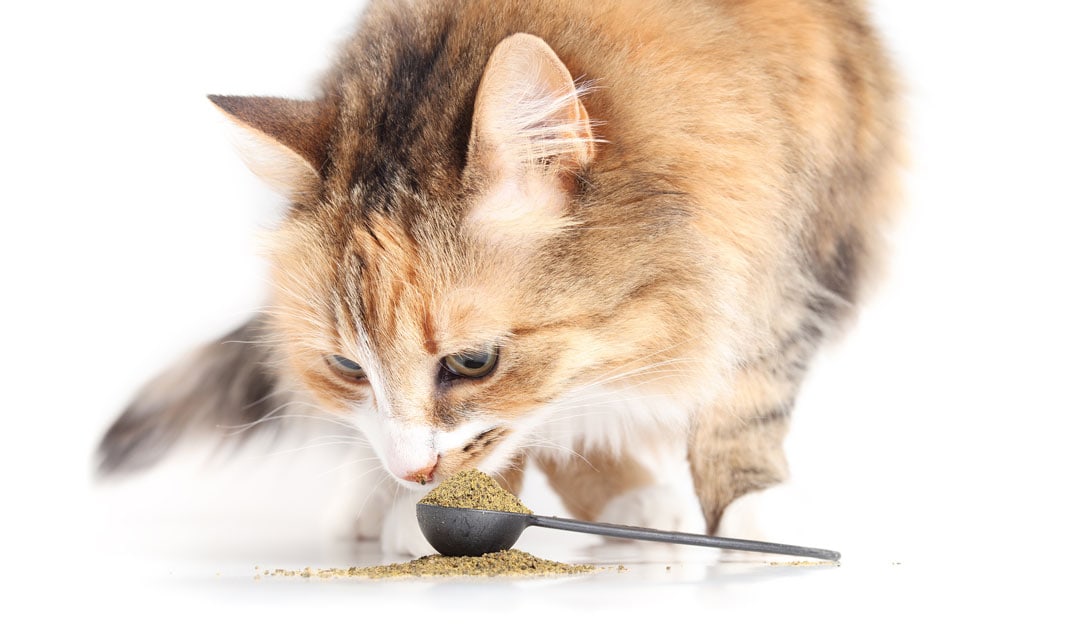
In modern animal husbandry, needs-based nutrition holds a high priority. Many pet owners wonder whether conventional complete food is sufficient or if food supplements for dogs and cats can significantly boost vitality. Generally, targeted supplementation can be extremely valuable in certain life stages, but it should always be needs-based and expertly administered.
The Basis: When is a complete food sufficient?
High-quality complete food is designed to cover the average nutritional needs of a healthy animal. They contain vitamins, minerals, and trace elements in a balanced ratio.
✅ When it is sufficient
A healthy pet without special needs is supplied with everything it requires by a good quality complete food. A food supplement is not necessary.
❌ Risks of over-supplementation
If preparations are administered indiscriminately to a healthy animal without specific additional needs, this can lead to over-supplementation. Caution is particularly advised with fat-soluble vitamins or minerals such as calcium, zinc, or iron.
An excess can reduce the absorption of other nutrients, strain organs, or negatively affect skeletal growth in young animals.
When food supplements offer added value for pets
However, there are situations where the body has an increased need that is not fully covered by regular food. In these cases, special complementary food makes an important contribution to health and quality of life.
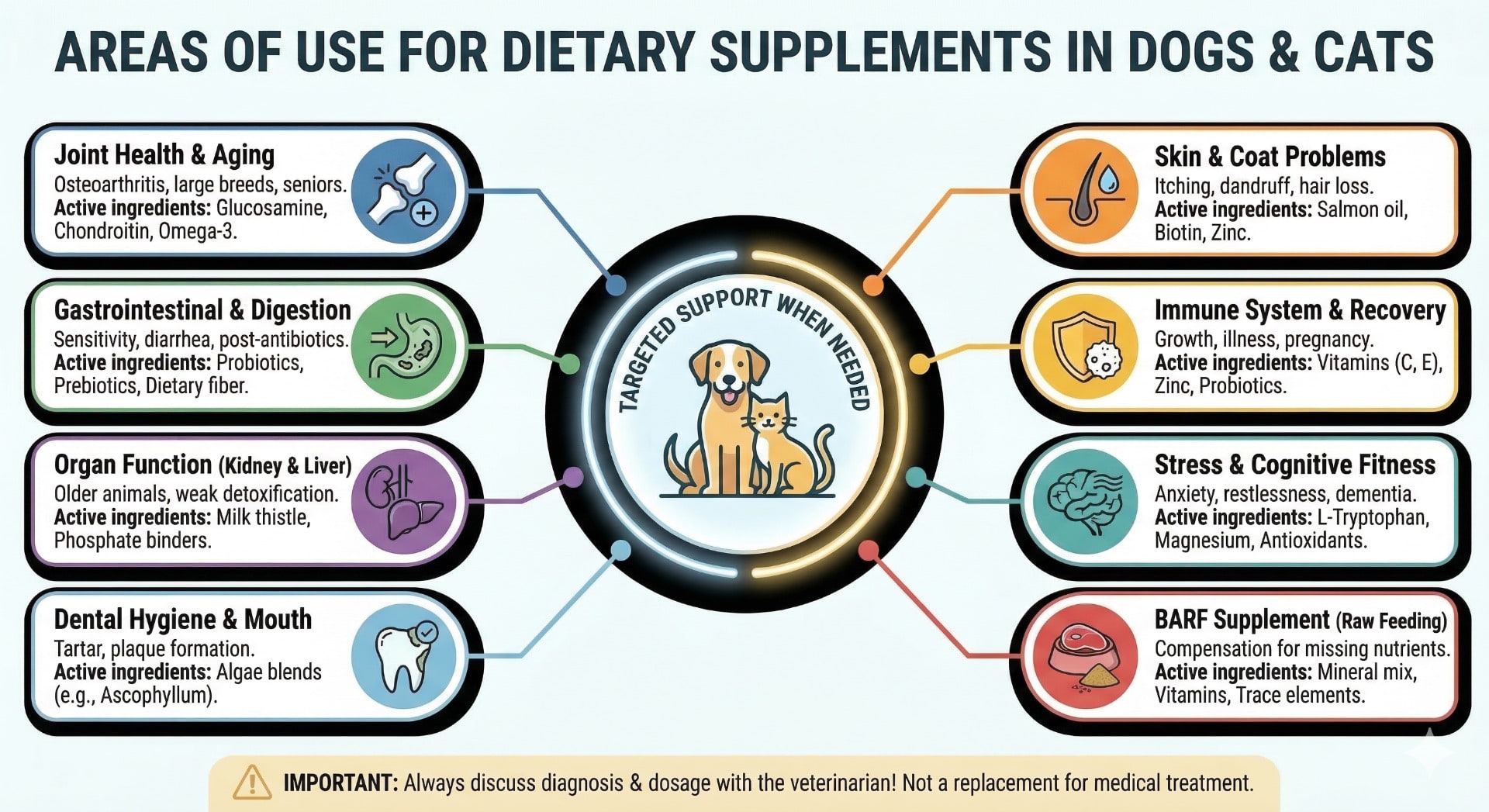
Joint Health and Support in Old Age
With increasing age or in large dog breeds, the strain on the musculoskeletal system increases. Ingredients such as glucosamine, chondroitin, or omega-3 fatty acids can support joint function and alleviate inflammatory processes. Antioxidants also help protect cells from free radicals and preserve the cognitive fitness of senior pets.
Targeted Relief for Skin and Coat Problems
Dull coat or dry skin are often signs of a deficiency in essential fatty acids, zinc, and biotin. Administering high-quality salmon oil or special skin preparations supports the skin's barrier function and ensures a healthy shine.
Tip: Especially during coat change, the additional intake of essential fatty acids for dogs and cats can be very beneficial.
Special Stress Situations and Immune System
Growing animals, pregnant bitches, and active sport dogs have a significantly increased nutrient metabolism. Also, after illnesses or antibiotic treatment, building up the intestinal flora with probiotics can be beneficial to sustainably strengthen the immune system.
Gastrointestinal Health and Digestion
A sensitive digestive tract often manifests as flatulence or varying stool consistency. Prebiotics (dietary fibers) and probiotics (live microorganisms) help restore the microbial balance in the gut. This is particularly advisable after deworming, antibiotic administration, or in stressful situations to optimize nutrient absorption.
Support for Organ Function (Kidney & Liver)
Especially in older cats and dogs, the detoxification organs can lose efficiency. Special supplements with milk thistle for liver support or phosphate binders for early renal weakness can help reduce organ strain and ensure long-term quality of life.
Stress Prevention and Cognitive Support
Active ingredients such as L-tryptophan, green tea extracts, or magnesium are used to promote neuronal calmness. For older animals, there is also evidence that a combination of antioxidants (vitamins E and C) and omega-3 fatty acids can help slow down cognitive dysfunction syndrome (dementia).
Dental Hygiene and Oral Health
Plaque and tartar are widespread in pets. In addition to brushing teeth, algae mixtures (e.g., Ascophyllum Nodosum) can be administered via food. These alter the composition of saliva in such a way that the new formation of plaque is hindered and existing tartar is softened.
The Importance of Feeding Type: BARF and Home-Cooking
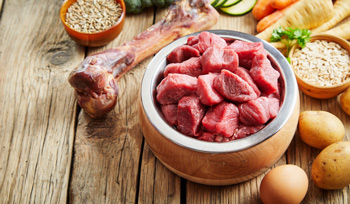
Special attention should be paid to individual feeding methods, such as BARF (raw feeding). Since the components are put together by the owner, the addition of minerals and vitamins is absolutely essential.
In this case, a food supplement is not an optional extra, but an essential component of the daily ration to prevent deficiency.
Forms of Administration: How to Ensure Successful Dosing
For the valuable ingredients to unfold their full effect, acceptance by the animal is crucial. Modern developments in pet nutrition now offer diverse possibilities:
| Form | Benefits | Application Note |
|---|---|---|
| Functional Snacks | Outstanding acceptance; the supplement is perceived as a reward. | Ideal for in-between meals, as they are eaten like conventional treats. |
| Oils (e.g., Salmon Oil) | Provide valuable fatty acids and enhance the taste of the food. | Simply add to the daily meal. |
| Powders | Highly concentrated and very precisely dosable. | Best mixed with wet food or meat. |
| Tablets / Capsules | Guarantee an exact amount of active ingredient per day. | Can be hidden in a piece of meat if necessary. |
| Pastes | Particularly popular with cats; often enriched with vitamins. | Direct administration from the finger or as a topping on the food. |
Conclusion: Quality and Consultation Before Quantity
Food supplements are not miracle cures, but highly effective tools for health prevention. Their use should be targeted and needs-based. Targeted supplementation is always beneficial when it compensates for a specific deficiency or supports the organism during a particular life stage.
However, it is important to emphasize that food supplements have a supportive function and do not replace medical treatment.
If an animal shows clear symptoms of illness, pain, or behavioral changes, the administration of food supplements should always be discussed with the treating veterinarian beforehand. Only a professional diagnosis ensures that the chosen preparations optimally complement the therapy and that no undesirable interactions with medications occur.

Set ipet.ch as a preferred source on Google
Never miss a tip: Set ipet.ch as a preferred source in your Google account so that our veterinary advice and pet care guides appear higher up in your search results. Optional and can be undone at any time.
Set as preferred source →Useful information at a glance
Do healthy dogs or cats need food supplements?
Generally not. A high-quality Complete food provides healthy animals with all necessary nutrients. Additional food supplements are only beneficial for specific needs.
When is food supplements beneficial for my pet?
In cases of increased need, e.g., during growth, old age, after illnesses, for joint problems, skin or coat problems, stress, or with individually prepared feeding (e.g., BARF).
Can I harm my pet with food supplements?
Yes. An oversupply, e.g., of fat-soluble vitamins or minerals like calcium or zinc, can lead to health problems. Veterinary consultation is important.
How do I recognize if my pet has a nutrient deficiency?
Signs can include dull coat, skin problems, joint discomfort, diarrhea, weakness, or behavioral changes. A precise diagnosis should always be made by a veterinarian.
What forms of food supplements are available?
Supplements are available as powder, oil, paste, tablets, capsules, or functional snacks. It is important to choose the form that your pet readily accepts and that is easy to dose.
What should be considered when feeding BARF or homemade food?
In this case, targeted supplementation is absolutely necessary to avoid deficiencies. Specially formulated mineral and vitamin mixtures should be used.
Can food supplements replace medication?
No. Supplements can provide supportive care during therapy but do not replace medical treatment. In case of illness, veterinary consultation is essential.