
 EN
EN  DE
DE  FR
FR Raw Feeding: What to Consider When BARFing?
-
 By
med. vet. Bianca Michoud-Valente
By
med. vet. Bianca Michoud-Valente - Jul 31, 2023
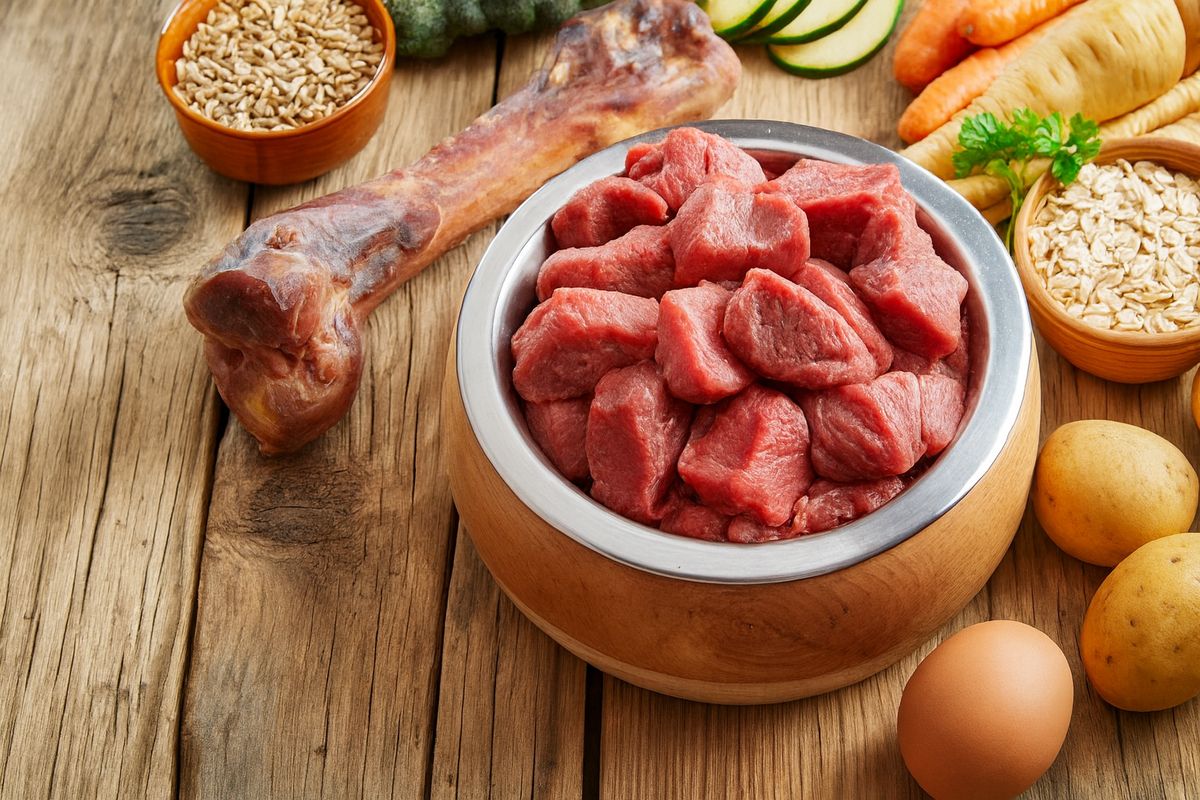
Given the wealth of available and sometimes contradictory information, it can be challenging to navigate when seeking a raw food diet for your dog or cat. Below, we have compiled our tips for a tailored and responsible raw feeding approach.
What is Raw Feeding?
Raw feeding for dogs and cats consists of a diet based on raw meat, offal, and bones. There is no official definition or uniform recipe. The term "BARF" (an abbreviation for Bones And Raw Food or Biologically Appropriate Raw Food) has become widespread in recent years when referring to raw feeding. Nevertheless, dairy products, eggs, fruits, vegetables, or oils are often included. Sometimes the ingredients are not entirely raw and may contain, for example, cooked grains. Furthermore, depending on the recipe, it is sometimes recommended to add multivitamin food supplements to make the diet more balanced.
Raw feeding, also known as BARF, has become increasingly popular in recent years, as many pet owners report improvements in their pets' general health and behavior. A well-designed raw feeding diet is rich in high-quality proteins and nutrients, is satisfying, and very palatable. Owners of raw-fed cats and dogs typically report improvements in dental health, digestion, coat quality, weight management, and energy levels. However, if the food rations are not correctly composed, under- or over-supply of certain nutrients can occur, endangering the animals' health.
If you wish to feed your pet raw, you have two options: you can either prepare a homemade raw food diet or use commercially available raw food.
Homemade Raw Feeding
Homemade BARF rations have the Benefits that they can be individually tailored. This allows for great flexibility for animals with special nutritional needs. However, this type of diet is more complex, as it requires thorough research and consultation with a nutritional expert to be balanced and appropriate in the long term.
As with any homemade diet, it must be ensured that all nutrients are supplied sufficiently and in the correct proportion to each other for the organism to function smoothly. Therefore, we strongly recommend using food supplements to ensure that your pet receives all essential vitamins and minerals. These food supplements contain nutrients that are not always sufficiently present in raw foods. There are also vitamin and mineral mixtures that have been specifically developed to complement raw food or BARF rations.
Commercial Raw Feeding
For pet owners who desire a simpler solution with less time commitment, there is already ready-to-feed raw food available, offered frozen or in Cans, in "Complete food" and "complementary food" varieties. Complete food is formulated to contain all the nutrients a dog or cat needs daily, thereby ensuring a balanced supply. Complementary food refers to feed that alone does not contain all the nutrients an animal needs. To ensure a balanced diet, these must therefore be fed in combination with other feed. Whether it is a "Complete food" or a "complementary food" must be indicated on the food label, as well as the feeding recommendations.
These ready-to-feed products make it easier for pet owners to feed their animals raw according to their needs, and are also practical for daily use.
Food Safety
Like all commercially available pet food, raw food is subject to strict legal regulations and must undergo various tests to ensure its safety. This minimizes the risk of food-borne contamination for both the owner and the animal.
Nevertheless, when preparing a raw food ration, it is crucial to pay attention to food safety and to source ingredients – both fresh and frozen – from reliable suppliers. Furthermore, you should adhere to hygienic handling and storage methods to reduce the risk of pathogen transmission.
Our Tips for Hygiene and Handling
When feeding your pet raw meat, proper hygiene practices are essential. They are very important to ensure food safety for all members of the household.
Here are our tips on how to ensure you handle your pet's raw food correctly:
- Buy products in perfect condition. The packaging should show no visible signs of damage (dents, tears, discolorations, etc.).
- Wash your hands with warm water and soap after handling the food and its packaging.
- Wash and disinfect all surfaces, dishes, bowls, and utensils that have come into contact with raw food after each use.
- Carefully remove and dispose of any uneaten raw food as soon as your pet has finished eating.
- Clean and disinfect your pet's feeding area as soon as it has finished eating.
- Store raw food correctly. If you purchase ready-to-feed raw food, you will find storage instructions on each package.
Thawing Raw Food:
- When thawing food, make sure to do so in an airtight container.
- Thaw it only in the refrigerator.
- Never refreeze food that has been partially or fully thawed.
- Do not discard the thawed juice, as it may contain important nutrients for your pet. Pour it over the rest of the food.
- Do not freeze oils and food supplements. They should always be added fresh.
Planning to Feed Your Pet Raw Food?
If you wish to change your cat's or dog's diet, do not hesitate to contact our veterinary team specializing in nutrition. They will gladly discuss your expectations and your pet's needs with you, help you create individual rations, and provide advice on preparation and storage.
Sources: FEDIAF Guide to Good Practice for the Manufacture of Safe Pet Food, FEDIAF Nutritional Guidelines, FEDIAF Code of Good Labelling Practice for Pet Food

Set ipet.ch as a preferred source on Google
Never miss a tip: Set ipet.ch as a preferred source in your Google account so that our veterinary advice and pet care guides appear higher up in your search results. Optional and can be undone at any time.
Set as preferred source →Useful information at a glance
What is raw feeding or BARFing?
Raw feeding, also known as BARFing, is a feeding method for dogs and cats based on raw meat, offal, and bones. Dairy products, eggs, fruits, vegetables, or oils are often included. The term 'BARF' stands for 'Bones And Raw Food' or 'Biologically Appropriate Raw Food'.
What are the Benefits of raw feeding for my pet?
Many pet owners report improvements in their pets' general health and behavior. These include better dental and digestive health, improved coat quality, better weight control, and higher energy levels.
What are the risks of raw feeding?
If the food rations are not correctly composed, under- or over-provision of certain nutrients can occur, jeopardizing the animal's health. Careful planning and consultation with a veterinarian are therefore important.
How can I ensure that my pet's raw diet is balanced?
It is important to provide all nutrients in the correct ratio. We recommend the use of food supplements to ensure that your pet receives all essential vitamins and minerals. Consult with a veterinarian to ensure a balanced diet.
What hygiene measures should I observe when raw feeding?
Ensure you purchase products in perfect condition and wash your hands after handling raw food. Clean and disinfect all surfaces and utensils that have come into contact with raw food. Store raw food correctly and only thaw it in the refrigerator. Do not refreeze food once it has been thawed.