
 EN
EN  DE
DE  FR
FR Is my pet overweight?
-
 By
Dr. med. vet. Sabina Büttner
By
Dr. med. vet. Sabina Büttner - Aug 26, 2019
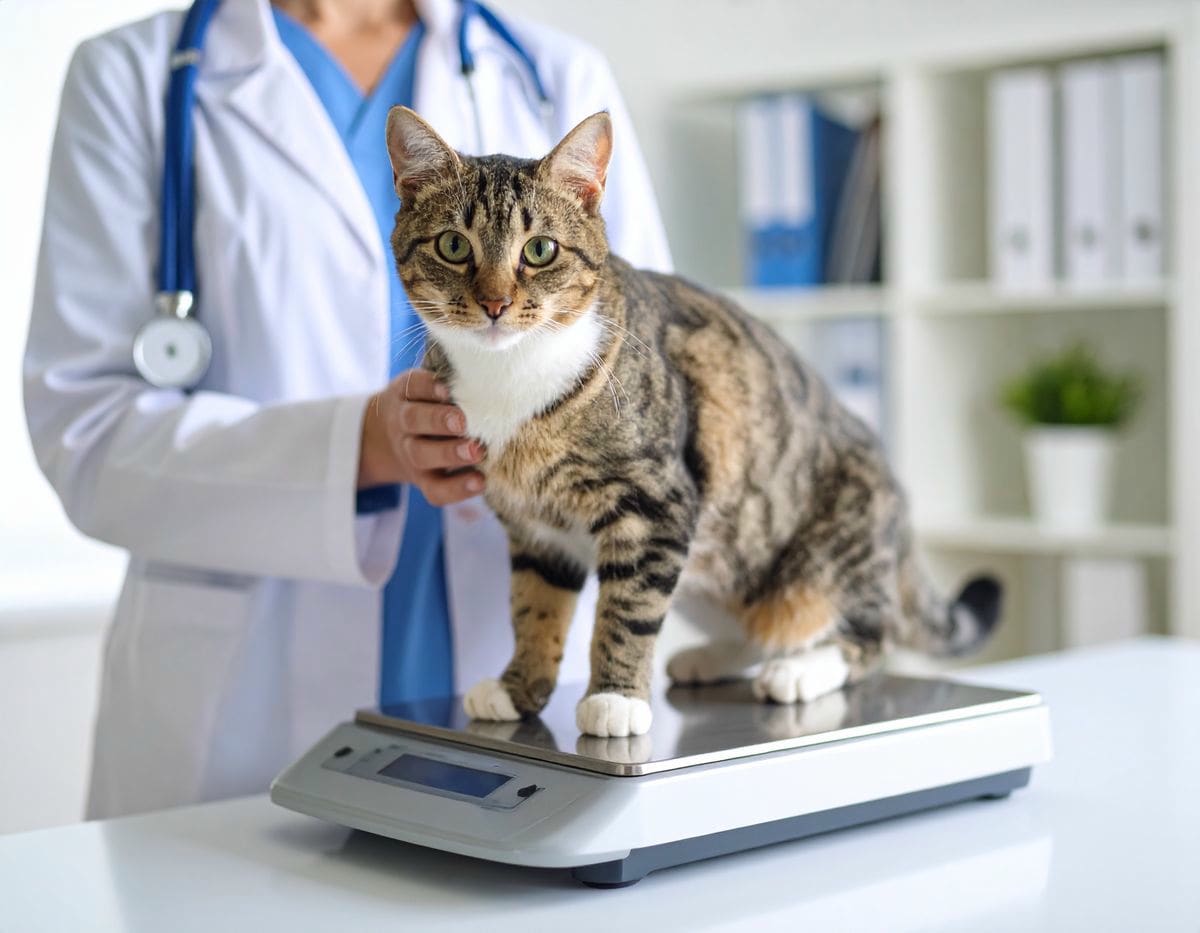
We know it: many cats and dogs today suffer from overweight. But is your own pet among them? We often don't notice that our four-legged friends slowly gain weight over the years. Therefore, objective criteria are needed to show whether a pet is carrying too much weight.
Weight
A seemingly very simple method is to determine the animal's weight and compare it with the given breed standards. In individual cases, however, this information is often not very helpful. For example, an ideal weight of 4 to 5 kg is given for domestic cats. However, a large-framed cat can certainly weigh 6 kg without being overweight. It becomes even more difficult with dogs. The values specified for a breed have a very wide range. The optimal weight for Labrador Retrievers is given, for example, as 25 to 34 kg. However, a small, lightly built Labrador will still suffer from overweight at 30 kg.
To determine if our pet is overweight, it is therefore better to compare the animal's current weight with the weight it had upon reaching adulthood. The prerequisite for this, of course, is that the animal was neither underfed nor overfed during growth, and that its weight was recorded and subsequently stored at that time.
Body Condition Score
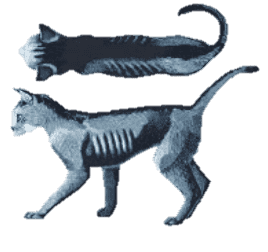
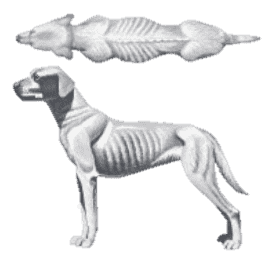
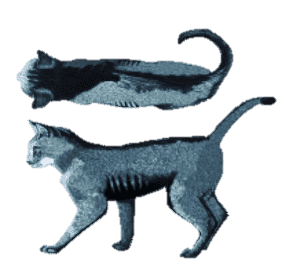
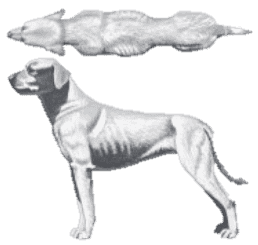
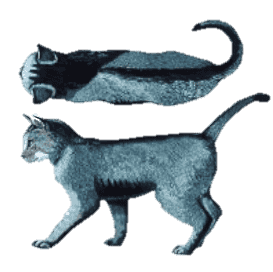
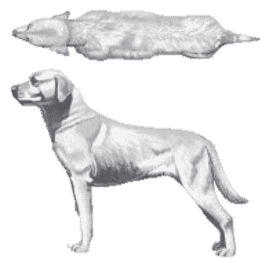
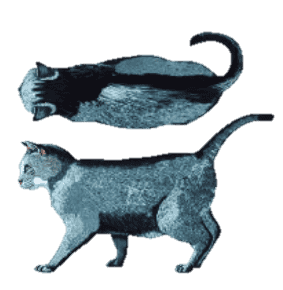
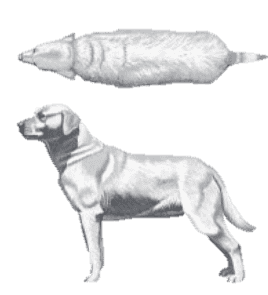
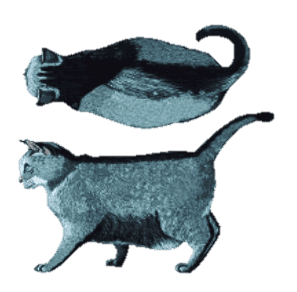
Veterinarians today mostly use the so-called Body Condition Score (KKI) to determine the nutritional status. The body's fat percentage is estimated based on some subjective body criteria. Assessed are:
- the body silhouette from above and from the side
- how easily the ribs can be felt
- the thickness of the fat layer along the back, the tail base, and on the abdomen
So you only need to look at your animal from the side and from above, and gently palpate it, to classify it into one of the following 5 stages:
KKI 1: 20% Underweight
|
 |
 |
KKI 2: 10% Underweight
|
 |
 |
KKI 3: Ideal Weight
|
 |
 |
KKI 4: 10% Overweight
|
 |
 |
KKI 5: 20% Overweight
|
 |
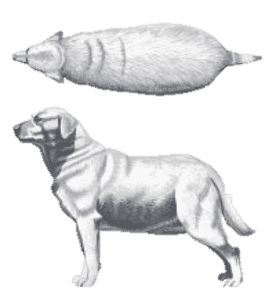 |
Graphic according to: petnutritionalliance.org. Canine Purina Body condition / Feline Purina Body Condition
Studies show, however, that many pet owners misjudge their animal – even if they know the assessment criteria for the KKI. Sometimes even severely overweight dogs and cats are still considered to be of normal weight by their owners. So if you are unsure whether your animal is too fat, ask your veterinarian during your next visit. He will be able to assess your animal more objectively than you. In addition, he will compare the current weight with the records in the medical history. Should your animal be too fat, various diets, compiled according to the latest scientific findings, are available today to help your animal return to a normal weight in the long term! With our Weight Reduction Program, you can quickly and easily create an individual weight loss plan for your animal. You can select a diet food, calculate the amount of food, and create a weight curve so you can monitor whether the animal is losing weight at the correct speed.
It is best to avoid the development of underweight or overweight by adjusting the amount of food. To do this, calculate a guideline for the ideal daily food ration for your animal in our iPet Food Calculator. Weigh it regularly and adjust the amount of food accordingly as soon as you notice that your animal is gaining or losing weight.

Set ipet.ch as a preferred source on Google
Never miss a tip: Set ipet.ch as a preferred source in your Google account so that our veterinary advice and pet care guides appear higher up in your search results. Optional and can be undone at any time.
Set as preferred source →Useful information at a glance
How can I determine if my pet is overweight?
To determine if your pet is overweight, you can use the Body Condition Score (BCS). This index helps you assess the body fat percentage based on the body silhouette, the palpability of the ribs, and the thickness of the fat layer. Alternatively, you can compare your pet's current weight with its weight at adulthood, if recorded.
What is the Body Condition Score (BCS) and how does it work?
The Body Condition Score (BCS) is a system used by veterinarians to determine an animal's nutritional status. It is based on assessing the body silhouette, the palpability of the ribs, and the thickness of the fat layer. There are five stages from BCS 1 (severe underweight) to BCS 5 (severe overweight).
What should I do if I am unsure whether my pet is overweight?
If you are unsure whether your pet is overweight, we recommend asking your veterinarian during your next visit. They can assess your pet more objectively and compare its current weight with the records in its medical history.
How can I help my pet lose weight?
To help your pet lose weight, you can use our weight reduction program. With this, you can create an individual plan that includes veterinary diet food, calculating the amount of food, and creating a weight curve. This way, you can monitor whether your pet is losing weight at the correct rate.
How can I control my pet's weight long-term?
To control your pet's weight long-term, you should adjust the amount of food and weigh regularly. Use our iPet food calculator to determine a guideline for the ideal daily food ration. Adjust the amount of food accordingly as soon as you notice your pet gaining or losing weight.