

 EN
EN  DE
DE  FR
FR My Dog Played with Processionary Caterpillars
-
 By
med. vet. Bianca Michoud-Valente
By
med. vet. Bianca Michoud-Valente - May 12, 2022
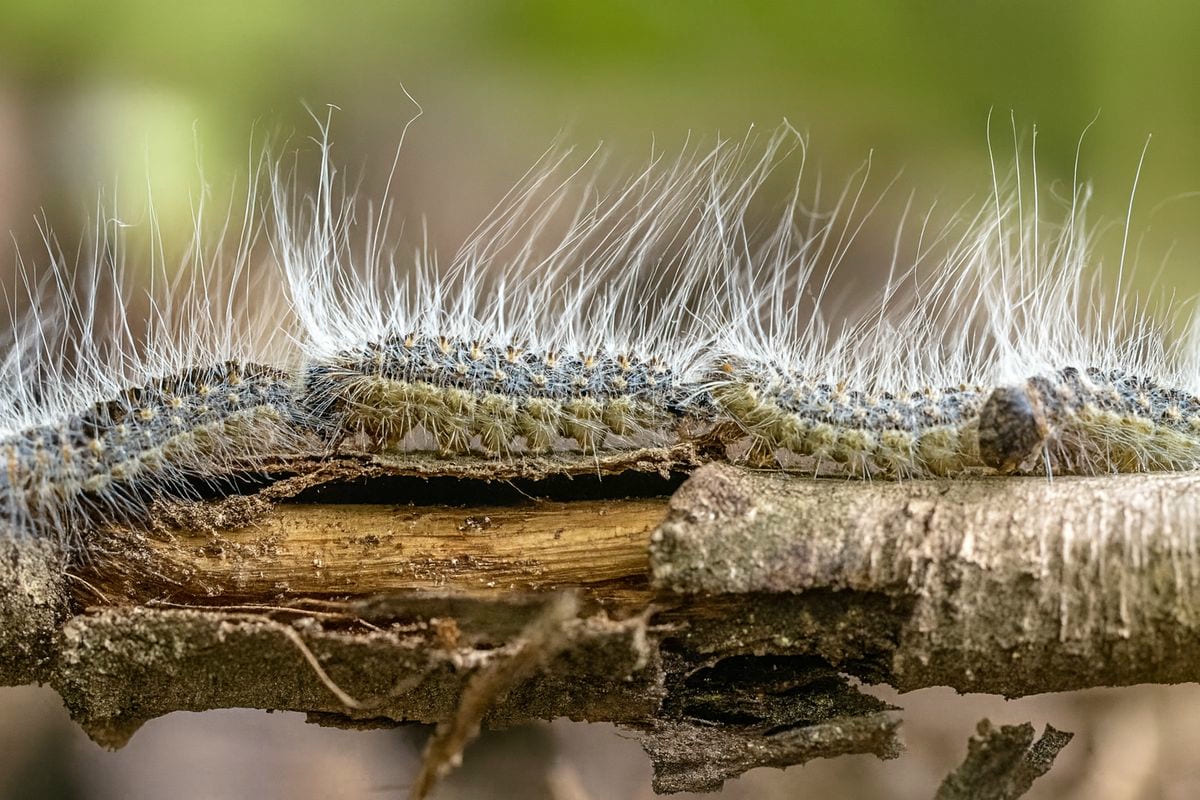
In spring, the dreaded processionary caterpillars descend from the trees and can be found on the ground. Curious dogs may then try to "play" with them. Unfortunately, these caterpillars are dangerous, and contact can lead to severe injuries and permanent damage. What can you do if your dog has come too close to these caterpillars?
In Switzerland, two species of caterpillars are responsible for most injuries: the pine processionary moth and the oak processionary moth.
The pine processionary moths (Thaumetopoea pityocampa) build their nests in pine trees. In spring, colonies of hairy caterpillars descend from the trees in a long procession and bury themselves in the ground. There, they pupate, and in early summer, the moths emerge.
Another species of processionary moth, which is equally irritating to the skin, infests oak trees. These are the oak processionary moths (Thaumetopoea processionea). They can be found from spring to summer. However, they do not form processions on the ground but remain along the tree trunks, where they also pupate.
Processionary caterpillars are covered with fine hairs that are extremely irritating and allergenic. As soon as the caterpillar is stressed, it can actively release its highly toxic hairs into the air. These can cause severe irritation in both humans and animals. Cats are generally more cautious than dogs. Therefore, they are less likely to approach processionary caterpillars and are at lower risk.
The skin-irritating properties of the hairs persist for a long time, even after the caterpillar has shed them. The hairs can also be spread by wind or water. Therefore, it is not advisable to walk in areas near infested trees. Their presence can be recognized by the nests spun from white threads, which can be seen in the branches of pine trees or along the trunks of oak trees.
If you discover processionary caterpillars in your garden, keep your pets away and contact your municipality to find out what control methods you can use.
What to do if your dog has ventured too close to processionary caterpillars?
If a dog encounters a column of processionary caterpillars during a walk, this strangely moving ‘string’ on the ground can pique its interest, leading it to sniff and want to play with them. However, even simple skin contact with a paw or snout can lead to a severe allergic reaction (edema or even anaphylactic shock). Symptoms usually appear within a few hours of contact. Any contact with a caterpillar should therefore be considered a life-threatening emergency!
If it is merely "skin contact," you can first thoroughly rinse the affected area with water, without rubbing and without touching it yourself, to remove hairs and toxins. Protect yourself with gloves if possible. You can also shampoo the area once you are home. The face or snout can quickly swell in the following hours. We therefore recommend taking your dog to a vet so that they can receive anti-allergic treatment as quickly as possible.
Unfortunately, dogs tend to lick or even swallow processionary caterpillars. In this case, it is a life-threatening emergency, and your pet must be taken to a vet as quickly as possible.
In the next few hours, your dog will not only develop skin symptoms but also respiratory and digestive tract complaints. They will start to scratch, drool, and vomit. Subsequently, there will be swelling (edema) of the face and/or tongue. Typically, the tongue will turn bright red, and mucosal lesions will form. Breathing difficulties may also occur if the swelling affects and obstructs the airways.
These symptoms are severe and painful. They require rapid, intensive treatment and often hospitalization.
If treatment is delayed or the mucosal lesion is too advanced, parts of the tongue may die, requiring amputation (or the dead tissue may fall off on its own). In rare cases, a dog may also die from the consequences of contact with the caterpillars.
Caterpillar Control
Caterpillar control is not the responsibility of private individuals. Also, make sure you never touch the caterpillars with bare hands or deal with the nests yourself.
If you notice the presence of processionary caterpillars, keep your dog away from the area, warn acquaintances who also have pets, and inform the municipality.
Due to the health risk to residents and pets, the cantons employ specific methods to control these dreaded insects.

Set ipet.ch as a preferred source on Google
Never miss a tip: Set ipet.ch as a preferred source in your Google account so that our veterinary advice and pet care guides appear higher up in your search results. Optional and can be undone at any time.
Set as preferred source →Useful information at a glance
What are processionary caterpillars and why are they dangerous for dogs?
Processionary caterpillars, such as the pine processionary moth and the oak processionary moth, are caterpillars that appear in spring and summer. They are covered with fine, stinging hairs that can cause severe allergic reactions and injuries in dogs upon contact. These hairs can also become airborne and cause irritation.
What symptoms occur in a dog that has come into contact with processionary caterpillars?
After contact with processionary caterpillars, a dog may develop symptoms such as swelling in the face or muzzle, redness of the tongue, drooling, vomiting, and breathing difficulties. These symptoms are serious and require immediate veterinary assistance.
What should I do if my dog has touched processionary caterpillars?
If your dog has touched processionary caterpillars, immediately rinse the affected area thoroughly with water, without rubbing. Protect yourself with gloves. Take your dog to a veterinarian as soon as possible to receive anti-allergic treatment.
How can I prevent my dog from coming into contact with processionary caterpillars?
Avoid walks in areas where processionary caterpillars are known to be present. Look out for the typical white nests in trees and keep your dog away from these areas. Also, inform other dog owners about the danger.
What should I do if I find processionary caterpillars in my garden?
Keep your pets away from the caterpillars and inform your local authorities about the infestation. The control of the caterpillars should not be carried out by private individuals, as they pose a health risk. The local authorities will take appropriate measures.