
 EN
EN  DE
DE  FR
FR Which Types of Meat Are Best for Dogs?
-
 By
Dr. med. vet. Sabina Büttner
By
Dr. med. vet. Sabina Büttner - Jun 26, 2026
The selection of meat types in dog food today is larger than ever before. From classic beef to exotic kangaroo, everything is available. But which meat is the healthiest for your dog? How does digestibility differ, and what truth is there to the myth that pork is dangerous for dogs? In this article, you will find out which meat perfectly matches your dog's needs.
What Actually Determines the Digestibility of Meat?
In veterinary medicine, digestibility is understood as the percentage of food that the dog's body can actually break down, absorb through the intestinal wall, and utilize. A dog's stomach is designed for the efficient use of proteins, but not every tissue delivers the same quality.
Digestibility is largely determined by two factors:
- Biological Value: This indicates how well the amino acid profile of the meat matches the dog's own bodily protein requirements. The more similar the profile, the fewer waste products (such as ammonia and urea) are produced during breakdown in the liver.
- Connective Tissue Content: Tendons, cartilage, and tough skins contain a lot of collagen, which is difficult to digest. An excessively high proportion of connective tissue reaches the large intestine undigested, where it is fermented by bacteria. The consequences are gas, abdominal pain, and loose stools.
The Right Balance: Muscle Meat versus Organ Meats
For a healthy dog's life, pure muscle meat is not enough – the mix makes the difference. A balanced diet requires both high-quality muscle tissue and nutrient-rich organ meats.
Important Labeling Note: On pet food labels, organ meats as well as meaty bones and cartilage are often listed under the collective term "animal by-products." This is not a lack of quality! However, many manufacturers declare these by-products transparently in detail, as they provide essential nutrients.
Muscle Meat: The Main Energy Provider
Muscle meat should make up the largest part of the meat components. It provides easily digestible proteins, essential fatty acids, and is the building block for your dog's entire musculature.
Organ Meats in Detail: Nature's Vitamin and Mineral Bombs
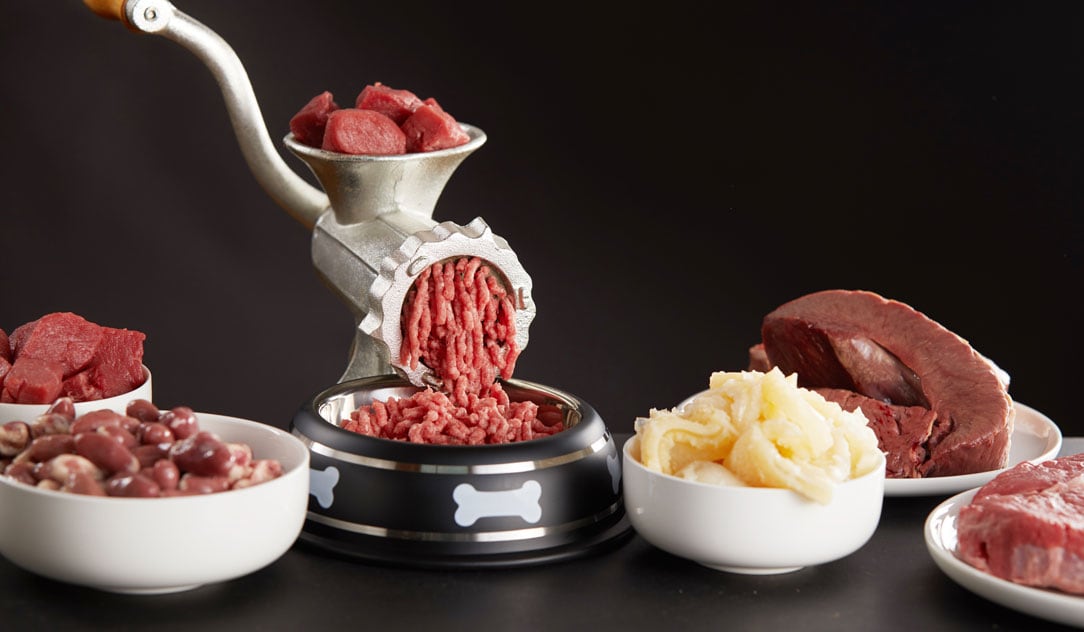
Organ meats are by no means inferior waste, but fulfill a vital function in the food. From a medical point of view, however, the individual organs must be considered differently:
| Organ | Properties & Nutrients | Feeding Note |
|---|---|---|
| Liver | The most nutrient-dense organ of all. Provides a lot of Vitamin A, B vitamins, copper, and iron. | Since Vitamin A is fat-soluble and stored in the body, liver should only appear in dog food in finely dosed amounts to avoid an overdose. |
| Kidney | Rich in trace elements, selenium, and proteins. | However, like the liver, it is a detoxifying organ, so it should only make up a small portion of the food. |
| Lung | Consists largely of connective tissue and is very low in calories. | Due to the high connective tissue content, however, it is harder to digest and can cause gas in large amounts. |
| Heart | Functionally a muscle. | Provides high-quality, lean protein. |
| Tripe (and Omasum) | The forestomach of ruminants is particularly popular with dogs. | It is higher in fat and connective tissue, making it harder to digest than pure muscle meat. |
Taste and Tolerance: Checking the Protein Sources
| Protein Source | Medical & Nutritional Evaluation |
|---|---|
| Poultry (Chicken, Turkey) | Poultry meat is considered highly digestible and is naturally lean. It is the ideal choice for puppies, seniors, or dogs with a sensitive gastrointestinal tract. Furthermore, due to its mild taste, it is very readily eaten by most dogs. |
| Duck | Duck is a particularly tasty poultry meat with a stronger, darker meat character. From a medical perspective, duck is often an excellent alternative for dogs that are allergic to chicken. However, duck meat has a higher fat content than chicken or turkey, which is why it should be rationed more restrictively for overweight dogs or sensitive stomachs. |
| Fish | Fish (such as salmon, trout, or whitefish) is an excellent source of protein and naturally provides large amounts of Omega-3 fatty acids. These fatty acids have a strong anti-inflammatory effect and support the skin barrier, the immune system, and the joints. Fish protein is extremely easy to digest and is often used for dogs with chronic skin or coat problems. |
| Beef | Beef is an excellent energy provider and rich in iron and B vitamins. It has a robust flavor but is slightly harder to digest compared to poultry due to its firmer fiber structure and higher fat content. It is ideal for very active dogs. |
| Lamb | In practice, lamb is often sweepingly praised as "gentle" and easily digestible. This statement is only partially correct: although lamb has an excellent amino acid profile, it is often naturally very high in fat. For dogs with sensitive stomachs or four-legged friends prone to pancreatitis (inflammation of the pancreas), lamb that is too fatty can severely strain the digestion. It is therefore only easily digestible if lean cuts are specifically processed in the food. |
Hypoallergenic Dog Food: What Helps with Food Allergies?
More and more dogs suffer from itching, ear infections, or chronic gastrointestinal problems. A food allergy is often behind it. But what exactly does "hypoallergenic meat" mean?
A type of meat is not inherently "hypoallergenic" by nature, as in principle any meat can trigger an allergic reaction. It only becomes hypoallergenic for a specific dog if that dog's immune system has never had contact with this protein source before. Meat types that rarely occur in conventional food, so-called "exotic" proteins, are therefore often referred to as hypoallergenic.
If an allergy is suspected in your dog, an elimination diet with such exotic protein sources is often recommended:
- Horse: Considered a classic meat for allergy sufferers, as it is very lean and highly digestible.
- Rabbit and Venison/Game: These varieties provide lean meat with a high biological value and are usually excellently tolerated by sensitive dogs.
- Exotics (Kangaroo, Ostrich, Goat): These types of meat are the "jokers" in allergy therapy. They should strictly only be fed if an allergy is suspected or has already been proven, in order to preserve backup options for the future.
Are Dogs Allowed to Eat Pork?
Raw or insufficiently heated pork (as well as wild boar meat) poses a danger because it can transmit the Aujeszky's virus. This virus triggers pseudorabies in dogs. This disease is always fatal within a few days and is incurable. Although domestic pig stocks in Switzerland are officially considered virus-free, the risk remains through wild boars or imported meat.
Is Cooked Pork or Pork in Dog Food Safe?
The Aujeszky's virus is reliably killed at temperatures above 60 °C. Cooked, fried, or sterilized pork in ready-made dog food is therefore absolutely safe for your dog.
From a nutritional perspective, pork is actually an excellent energy provider. It has an excellent amino acid profile and is highly digestible for healthy dogs.
Conclusion
- Ensure Digestibility: Look for high-quality muscle meat with low connective tissue content. Organ meats such as liver, kidney, lung, heart, and tripe belong in the bowl only in clearly defined quantities as valuable nutrient boosters.
- For Sensitive Stomachs: Rely on easily digestible poultry. Take a closer look at lamb due to its natural fat content.
- The Pork Rule: Never feed raw! Cooked or as an ingredient in high-quality wet and dry food, it is completely safe and nutritious.

Set ipet.ch as a preferred source on Google
Never miss a tip: Set ipet.ch as a preferred source in your Google account so that our veterinary advice and pet care guides appear higher up in your search results. Optional and can be undone at any time.
Set as preferred source →Useful information at a glance
What is the best meat for dogs?
Lean poultry such as chicken and turkey is highly digestible. Fish, beef, and lean lamb are also excellent choices depending on your dog's individual needs.
Can dogs eat pork?
Yes, but only if it is thoroughly cooked or included in commercial dog food. Raw pork may carry the Aujeszky virus, which is fatal for dogs.
Are organ meats healthy for dogs?
Yes. Liver, heart, and kidneys provide essential vitamins and minerals and are valuable components of a balanced canine diet.
What meat is best for dogs with food allergies?
Novel proteins such as horse, rabbit, venison, or kangaroo are commonly used in elimination diets because they are less likely to trigger allergic reactions.
Why is muscle meat important?
Muscle meat provides highly digestible protein and essential amino acids needed to maintain healthy muscles and overall body function.
Is fish good for dogs?
Yes. Fish is an excellent source of high-quality protein and omega-3 fatty acids, which support healthy skin, a shiny coat, strong joints, and the immune system.
Is lamb easy to digest?
Lean lamb is generally well tolerated. However, fattier cuts may be harder to digest for dogs with sensitive stomachs or pancreatic problems.