
 EN
EN  DE
DE  FR
FR Why Does My Dog Constantly Have Watery Eyes?
-
 By
med. vet. Bianca Michoud-Valente
By
med. vet. Bianca Michoud-Valente - Nov 6, 2025
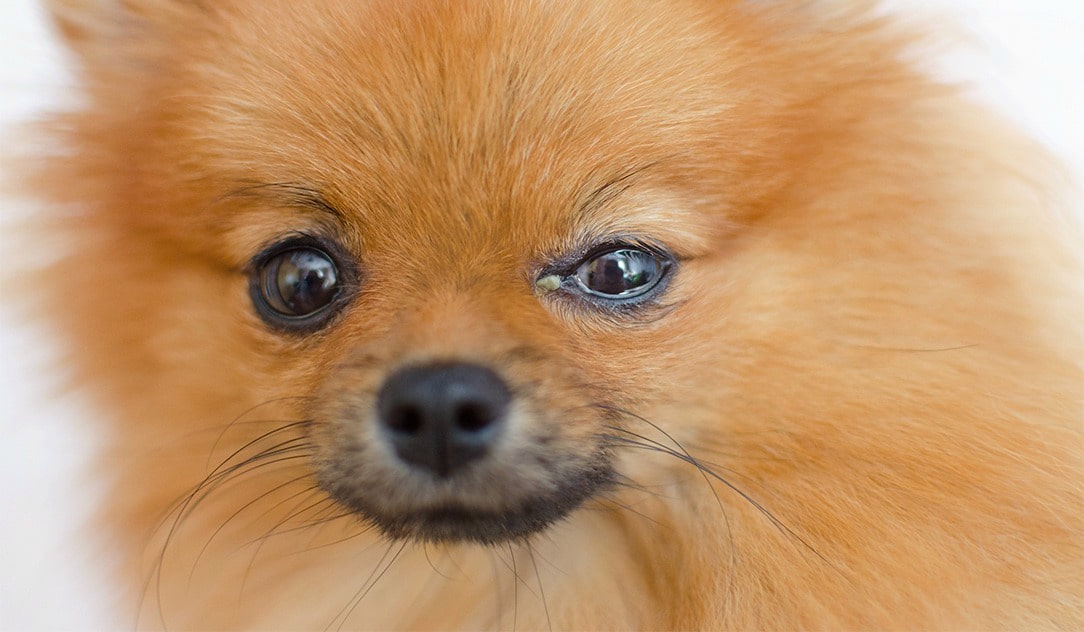
Watery eyes in dogs are a common phenomenon – sometimes harmless, but they can also indicate a more serious condition. Regardless of whether it's a temporary irritation, an anatomical problem, or an underlying eye disease, it's important to understand the possible causes and recognize the signs that necessitate a vet visit. In this article, you will learn how to identify the cause of your dog's watery eyes and take the right steps to maintain their eye health.
The Main Causes of Watery Eyes in Dogs
1. Environmental and Irritation-Related Causes
In many dogs, clear eye discharge can be observed after contact with wind, dust, smoke, or irritating substances. Walks in dry or windy weather, as well as contact with pollen, grasses, or grains of sand, can also lead to tearing. If the phenomenon quickly disappears and no redness or pain occurs, there is no cause for concern.
2. Pathological Causes
Watery eyes can also indicate an eye problem that needs to be treated:
- Infectious or Allergic Conjunctivitis: An inflammation of the conjunctiva is common and can have various causes:
- Infectious conjunctivitis: caused by bacteria or viruses. Often associated with severe redness of the eye, pain or irritation, and thick (yellowish-green) discharge.
- Allergic conjunctivitis: triggered by allergens such as pollen, dust mites, or grasses. Typically associated with severe itching, clear discharge, and sometimes redness of the eyelids.
- Corneal Injury (Corneal Lesion): Usually a microscopic injury to the cornea that is not visible to the naked eye. It can result from trauma, a foreign body, or sometimes chronic dry eyes. The dog shows clear signs of pain, blinks frequently, keeps the eye closed, and rubs its head against objects, carpets, or with its paws.
- Keratoconjunctivitis sicca (Dry Eye): Is characterized by insufficient tear production. The resulting lack of tear film leads to chronic irritation of the eye surface. This results in thick, mucous eye discharge and, over time, a dull or cloudy cornea. Without treatment, eyesight and well-being gradually worsen.
- Injuries and Foreign Bodies: A scratch, a grass awn, a grain of sand, or any other foreign body in the eye can cause a strong reaction. Typical signs include a squinted eye, severe redness, pain, increased discharge, and in severe cases, even bleeding.
- Other Medical Causes: Eye discharge can also be a symptom of deeper problems, such as Glaucoma, tumors, general illnesses (e.g., diabetes, hypothyroidism, Leishmaniasis), dental infections, or metabolic disorders. A veterinary examination is necessary to rule out these causes.
3. Morphological and Breed-Related Causes
Some dogs have an anatomy that favors chronic tearing:
- Blocked or Malformed Tear Duct: Typical in brachycephalic breeds (Pug, Bulldog, Shih Tzu) or small dogs with narrow tear ducts (Bichon, Poodle, Pomeranian). Tears run over the edge of the eye, along the nose, and the hairs under the eye turn brownish due to the oxidation of porphyrin in the tear fluid. Normally, tears drain through the tear duct into the nose. The problem is primarily cosmetic in nature. Flushing or opening the duct under anesthesia usually provides only temporary relief, as the duct quickly closes again.
- Entropion / Ectropion: Malpositions of the eyelids, which are turned inwards (entropion) or outwards (ectropion). These anomalies hinder tear drainage, irritate the cornea, and cause persistent tearing. Breeds particularly affected include St. Bernard, Neapolitan Mastiff, Basset Hound, Shar-Pei, or Clumber Spaniel. In cases of discomfort or risk to eye health, surgical correction may be necessary.
- Abnormal Eyelash Position: Eyelashes that rub against or grow into the eye lead to irritation and excessive discharge.
- Breeds with Protruding Eyes or Long Coat: Dogs like Yorkshire Terrier, Bichon, or Shih Tzu, which have large, round eyes or a lot of long coat around the eyes, are particularly susceptible to watery eyes.
What Does the Color of the Eye Discharge Mean?
- Clear, watery discharge usually indicates temporary irritation (wind, dust) or an anatomical peculiarity.
- Reddish or brownish discharge results from the oxidation of porphyrin in the tear fluid on the coat – common in brachycephalic or small dog breeds. However, an increase in tear flow can indicate inflammation or a blocked tear duct.
- Yellow or greenish discharge is often a sign of an infection. It frequently occurs together with pain, redness, or a squinted eye – in such cases, the vet should be consulted promptly.
- Thick or crusted discharge, especially in the morning, can be harmless. However, if it persists or increases, it may indicate conjunctivitis or a tear production disorder.
When Should You Be Concerned About Your Dog's Watery Eyes?
Some signs related to eye discharge definitely require your special attention. Contact your vet promptly if your dog:
- frequently rubs its eyes or face,
- blinks excessively or keeps one eye closed,
- shows severe redness, swelling, cloudiness, or milky eyes,
- appears dull, irritated, light-sensitive, or tired,
- has discharge that lasts longer than 24–48 hours or gets worse,
- recently had an injury or shows discomfort after a walk (foreign bodies, grass awns, etc.).
- If no pain or rapid deterioration occurs, you can first clean the eye with physiological saline solution and observe the development for a few days.
However, in case of doubt, a veterinary eye examination (corneal staining, tear measurement, slit lamp examination, etc.) is crucial to make an accurate diagnosis and initiate appropriate treatment: eye drops, antibiotics, local care – or, in the case of anatomical problems, surgery if necessary.
How to Clean Your Dog's Eyes?
Gentle, regular cleaning with a suitable product helps prevent discharge accumulation and reduces the risk of irritation or infection. Ideally, you should thoroughly rinse the eye and then gently dry the surrounding area with a clean compress. This simple routine can already alleviate mild irritation, especially after walks or in dusty conditions.
In the following video, our veterinarian shows you step-by-step how to properly clean your dog's eyes:
Prevention of Eye Discharge
- Regularly brush and dry the coat around the eyes to avoid Moisture.
- Avoid very dusty environments, especially for sensitive dogs.
- During risk periods, limit contact with pollen and allergens – a moisturizing eye gel before walks can help.
- Clean the eyes after walks if you notice any discharge.
Conclusion
Watery eyes in dogs are common and can have many causes – from mild irritation to more serious eye diseases. Signs such as discolored discharge, a squinted eye, redness, or behavioral changes should always be taken seriously.
With regular cleaning, good eye hygiene, and attentive observation, many problems can be avoided, and your dog's eyesight and well-being can be maintained in the long term.

Set ipet.ch as a preferred source on Google
Never miss a tip: Set ipet.ch as a preferred source in your Google account so that our veterinary advice and pet care guides appear higher up in your search results. Optional and can be undone at any time.
Set as preferred source →Useful information at a glance
Why are my dog's eyes watering?
Watery eyes can be caused by harmless irritations like wind or dust, but also by conditions such as conjunctivitis, corneal injuries, blocked tear ducts, or anatomical peculiarities.
When should I take my dog to the veterinarian for watery eyes?
If the eye discharge is purulent, yellow, or greenish, the eye appears severely red, swollen, or painful, or the dog squints, a veterinary visit is urgently required.
Is clear tear discharge always harmless in dogs?
Not necessarily. Clear discharge can indicate harmless irritations, but also anatomical problems or an incipient condition. If it persists for longer than 1–2 days, a veterinarian should be consulted.
What does brown or reddish discharge under the eyes mean?
The brownish discoloration is caused by porphyrins, a breakdown product in the tear film. It often occurs in small dogs or brachycephalic breeds and is usually a cosmetic issue – but can also indicate increased tear flow.
How can I properly clean my dog's eyes?
Use a sterile saline solution or a special eye care product. Gently rinse the eye and pat the surrounding area dry with a clean, soft compress. Daily cleaning can prevent irritations.
Which breeds are particularly susceptible to watery eyes?
Brachycephalic dogs (e.g., Pug, Bulldog), small breeds with narrow tear ducts (e.g., Poodle, Bichon), or dogs with protruding eyes (e.g., Shih Tzu) are particularly prone to increased tear flow.
What can I do to prevent watery eyes?
Regular brushing around the eyes, avoiding dusty environments, daily eye care, and, if necessary, applying moisturizing eye gels before walks help prevent irritations and infections.