

 EN
EN  DE
DE  FR
FR Spaying/Neutering – What are the Arguments For and Against?
-
 By
Dr. med. vet. Sabina Büttner
By
Dr. med. vet. Sabina Büttner - Aug 19, 2019
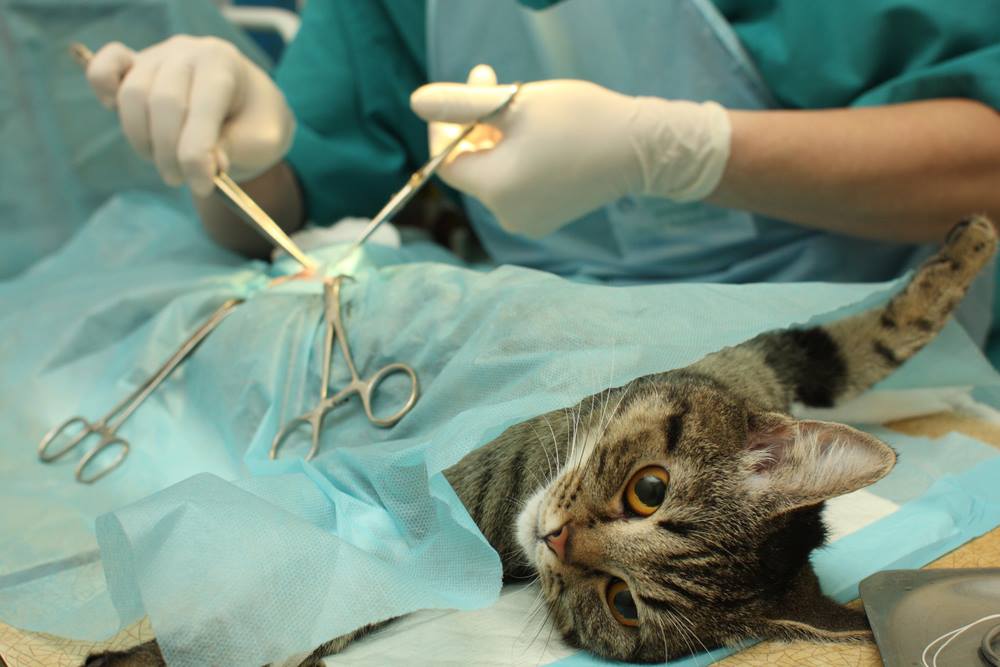
Should I have my pet spayed or neutered? This question arises for every dog and cat owner sooner or later. And it cannot be answered with a simple yes or no – at least not for dogs. The reasons for spaying or neutering clearly lie in the prevention of reproduction and the associated sexual behaviour such as roaming, marking, heat, or estrus.
For cats, spaying or neutering is the only reliable method to prevent reproduction. Even cats kept exclusively indoors should be spayed or neutered, as both female and male cats can otherwise start to leave foul-smelling urine marks. Furthermore, female cats go into estrus every two to three weeks during the summer half-year. This can lead to persistent estrus, which often results in uterine inflammation. Unneutered outdoor cats are more frequently involved in fights and travel long distances in search of a mate, exposing them to countless dangers. The only disadvantage of spaying or neutering for cats is that they subsequently tend to gain weight more easily. However, with the right feeding, spayed or neutered cats can maintain their ideal weight throughout their lives!
Pros*
- Prevents unwanted offspring
- Prevents marking indoors
- Reduces roaming
- Prevents persistent estrus
- Increases compatibility with other cats and humans
Cons*
- Surgical risk
- Promotes tendency to gain weight
*Non-exhaustive list
For cats, the positive effects of spaying or neutering clearly outweigh the risks. Therefore, all cats not used for breeding should be spayed or neutered.
For dogs, the situation is somewhat different. In Switzerland, dogs are usually supervised in such a way that unwanted offspring can be prevented even without spaying or neutering. Furthermore, spaying or neutering in dogs is associated with higher risks than in cats. Therefore, general spaying or neutering of all dogs is usually discouraged today.
There are some very clear health reasons that make spaying or neutering unavoidable: For example, perianal tumours or chronic preputial inflammation in male dogs, as well as pyometra (uterine infection) or diabetes in older female dogs.
In addition, there are sex-linked behaviours such as roaming, excessive sexual drive, severe pseudopregnancy, or hormonally induced aggression, which can be prevented or mitigated by spaying or neutering. However, many undesirable behaviours are more attributable to training and husbandry errors and cannot be influenced by spaying or neutering. While spayed or neutered dogs are often more balanced and easier to handle with their peers, the propensity for aggression can also increase in certain female dogs after spaying.
The tendency to gain weight is also one of the most common side effects of spaying or neutering in dogs, but this can be counteracted by appropriate feeding. In some breeds, significant coat changes can occur after spaying or neutering, making grooming more difficult. Especially in large breed female dogs, the occurrence of urinary incontinence is a common side effect, which, although treatable in most cases, necessitates lifelong therapy.
For a long time, many veterinarians advised early spaying of female dogs because it can reduce the risk of malignant mammary tumours. However, recent studies show that, in contrast, some other types of tumours occur significantly more frequently in spayed or neutered dogs than in intact dogs.
Pros*
- Prevents unwanted offspring
- Prevents excessive sexual behaviour
- Prevents pseudopregnancy
- Prevents sex-hormone-related aggression
- More balanced behaviour
- Disappearance of preputial inflammation
- Reduces risk of mammary tumours
- Prevents testicular tumours
Cons*
- Surgical risk
- Promotes tendency to gain weight
- Coat changes
– Urinary incontinence
- Increased aggression (in female dogs only)
- Increases the risk of hypothyroidism
- Increases the risk of urinary tract infections
- Increases the risk of various types of cancer (e.g., osteosarcoma, lymphosarcoma, hemangiosarcoma)
*Non-exhaustive list
For dogs, considering the many pros and cons of spaying or neutering, an individual decision must always be made, taking into account the breed, the dog's character traits, and the living conditions. Consultation with a veterinarian regarding this should always be carried out before any surgery.
Tips on choosing the right food for your cat or dog can be found on our Food Selection page.

Set ipet.ch as a preferred source on Google
Never miss a tip: Set ipet.ch as a preferred source in your Google account so that our veterinary advice and pet care guides appear higher up in your search results. Optional and can be undone at any time.
Set as preferred source →Useful information at a glance
Should I have my cat spayed?
Yes, spaying is the only reliable method to prevent reproduction in cats. Even indoor cats should be spayed to avoid undesirable behaviors such as foul-smelling urine marking and continuous heat cycles.
What are the benefits of spaying cats?
Spaying prevents unwanted offspring, marking in the house, roaming, and continuous heat cycles. It also increases compatibility with other cats and people.
What risks are associated with neutering dogs?
Neutering in dogs carries risks such as surgical risk, a tendency towards obesity, coat changes, urinary incontinence, and an increased risk for certain types of cancer. Individual consultation with a veterinarian is important.
When is neutering unavoidable for dogs?
Neutering is unavoidable for health problems such as perianal tumors, chronic preputial inflammation in male dogs, pyometra (uterine infection), or diabetes in older female dogs. It can also be beneficial for sex-linked behavioral issues.
How can I minimize the risk of obesity after neutering?
With the right feeding, neutered animals can maintain their ideal weight. It is important to adjust the food amount and composition to the changed needs of the animal. Further tips on food selection can be found on ipet.ch.