EN
EN  DE
DE  FR
FR Like Cats and Dogs - Our Tips for Harmonious Coexistence
-
 By
med. vet. Bianca Michoud-Valente
By
med. vet. Bianca Michoud-Valente - Jan 10, 2024
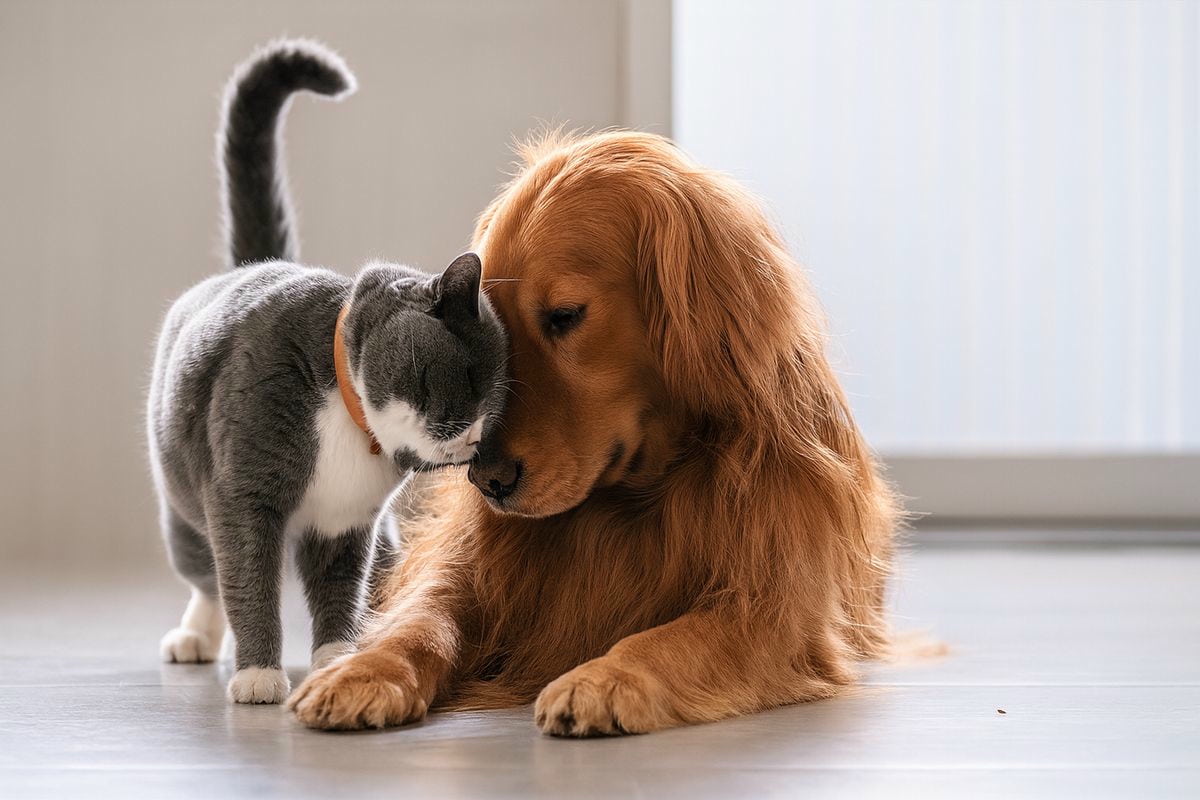
In many Swiss households, pets of different species live together harmoniously. While some dogs and cats naturally get along well, others first need to learn to coexist peacefully and safely. After all, the animals differ significantly in terms of body structure, communication, life rhythm, and daily needs. The prospects for successful coexistence are never guaranteed and depend heavily on the age and personality of the cat and dog.
As a rule, integrating a cat into a dog household is somewhat easier, as dogs tend to view a cat as a family member. If you have an older cat at home, it may be advisable to choose a dog with a gentle and calm temperament that doesn't play too boisterously. Despite the natural differences in their behavior, it is possible to foster a peaceful and harmonious relationship between the two species through suitable approaches and strategies.
If you have decided to share your life with both a dog and a cat – perhaps even with several representatives of both species – you will find some helpful tips below to help you make your home as peaceful as possible for all residents.
Understanding the Key Differences Between Dogs and Cats
Dogs and cats exhibit individual natural behaviors and differ significantly in their body language. Dogs tend to seek companionship and form close bonds with their owners. They are known for their playful and obedient nature, and they often have a desire to please their owners. In terms of communication, dogs often use very clear and distinct body and vocal signals to express their feelings and intentions.
In contrast, cats are more known for being "independent." They appreciate companionship, but in their own unique way. They can appear aloof or prefer privacy, while simultaneously forming close bonds with their owners. Unlike dogs, cats often express their needs in more subtle ways. Their communication through body posture and movements, vocalizations, and pheromones differs significantly from that of dogs.
Additionally, differences in hunting behavior between dogs and cats can influence their relationship. Historically, dogs were used in packs for hunting or helped humans hunt animals. This means they can develop a certain tolerance towards other animals. However, some dogs tend to chase small animals, including cats, due to their innate predatory instinct.
Cats have a more pronounced hunting instinct. Even when domesticated, they may continue to exhibit behaviors where they pursue imaginary or real prey. This can lead to conflicts, especially if dogs misinterpret this play behavior and try to participate or defend themselves against it. Understanding these behavioral differences is therefore crucial to anticipate potential interactions in the household and create a harmonious environment for both.
Gradual and Supervised Introduction
A common mistake when introducing cats and dogs is simply letting them run free and leaving them to their own devices. First impressions count! Therefore, the first encounter between dog and cat should be carefully planned.
A gradual approach is best. Use visual barriers or separate rooms to ensure the animals can get used to each other's presence and scent without stress. Give the new animal a few days to adjust to the new environment without having to worry about the other animal. Afterwards, it should have the opportunity to explore the area where the other animal rests and sleeps while that animal is absent – and vice versa. It can also be beneficial to rub the cat with a cloth and place it in the dog's bed, and conversely, rub the dog with a cloth and place it in the cat's bed. This way, they get used to each other's scent. In a next step, it is advisable to feed both animals on opposite sides of a closed door. This way, they associate the presence of the other animal with the positive experience of eating. With each feeding, move their bowls a little closer towards the closed door. Repeat this process until each animal can eat calmly right next to the door.
Then give them the opportunity to meet under safe and controlled conditions. Supervised, slow, and short interactions are recommended to avoid potential conflicts. Initially, you can either place the cat in its mobile kennel or let it roam freely, especially if it can retreat to a high place or a safe hiding spot. However, the dog should be kept on a leash under all circumstances. Allow the two to make eye contact from a distance. Start on opposite sides of a room and gently bring them closer together. Reward your dog with plenty of treats, and if he focuses too much on the cat, redirect his attention back to you. You can allow the cat to explore freely around the leashed dog, provided the dog manages to remain calm. Over time, let the animals come closer to each other, sniff, and get acquainted. If one of the animals shows signs of stress, end the encounter. Gradually increase the duration of their time together until both can be let loose without fear of injury and be freely together under supervision.
Pay attention to your cat's habits regarding eating, drinking, and using the litter box. If these behaviors change or do not normalize after an adjustment period, your cat might be stressed. In this case, it is advisable to return to the previous step and reduce encounters for a few days.
Patience is key: Allow the animals to gradually get used to each other without forcing the interaction. And most importantly: Never leave them unsupervised together until they have fully accepted each other's presence.
Create a Favorable Environment
The design of the environment plays a crucial role in the successful coexistence of dogs and cats. Make sure to create a separate species-specific area for each animal, which includes resting and elimination zones, as well as play areas. Note that cats love elevated places from which they can observe their territory, while dogs need space to play and romp around. Avoid one animal entering the other's preferred space. Above all, it is important that the litter box is placed in a location inaccessible to the dog, so that the cat can use it safely and undisturbed. Furthermore, conflicts between pets often arise during feeding. Dogs, in particular, can tend to aggressively defend their food, even if they are calm in all other situations. Therefore, especially at the beginning, keep feeding areas separate and inaccessible to the other pet. If feeding leads to problems, feed at fixed times and remove any food, instead of leaving it freely accessible.
Ensure your cat always has an escape route. Even the most peaceful dog can sometimes not resist the temptation to chase a cat. A cat flap installed on a normally closed door, or a pet gate with a built-in cat door often offer a good solution. A series of climbing elements or a cat scratcher that reaches from floor to ceiling can also serve as an escape option in an emergency. These areas allow the cat to observe the dog and get used to its presence while feeling in control of the situation.
Adapting the environment to the specific needs of your pets will significantly help to reduce potential conflicts.
Training and Positive Reinforcement
Training also plays a crucial role in the successful coexistence of dogs and cats. The dog should reliably respond to basic commands such as "Sit," "Stay," and "Leave it/No" so that it can be kept under control even during encounters with the cat. Use positive reinforcement by using plenty of treats to directly reward the dog for good behavior and, most importantly, to ensure that it associates the cat's presence with something positive.
Also make sure to spend regular individual time with each animal to strengthen their individual bond and avoid jealousy.
In summary, it can be stated that a harmonious coexistence between dog and cat requires patience, understanding, and a gradual, positively reinforcing approach. While it is not guaranteed that your cat and dog will become close friends, by understanding the natural differences between the two species and respecting them in the design of their environment, you can facilitate the development of a peaceful relationship between dog and cat.

Set ipet.ch as a preferred source on Google
Never miss a tip: Set ipet.ch as a preferred source in your Google account so that our veterinary advice and pet care guides appear higher up in your search results. Optional and can be undone at any time.
Set as preferred source →Useful information at a glance
What's the best way to accustom my dog and cat to each other?
A gradual and supervised introduction is crucial. Start with separate rooms and allow the animals to slowly get used to each other's presence and scent. Use visual barriers and feed the animals on opposite sides of a closed door to create positive associations. Make sure the dog remains on the leash when they first meet.
What are the most important differences in dog and cat behavior?
Dogs often seek companionship and form a close bond with their owners. They communicate more clearly with body and vocal signals. Cats, on the other hand, are more independent, sometimes prefer privacy, and communicate more subtly. Both species have different hunting instincts that can influence their relationship.
How can I avoid conflicts between my dog and cat during feeding?
Keep feeding areas separate and inaccessible to the other animal. Feed at set times and remove any food after the meal. This prevents one animal from defending or stealing the other's food.
What environment is ideal for harmonious coexistence between dogs and cats?
Create a separate area for each animal with resting and play zones. Cats appreciate elevated places, while dogs need space to play. Ensure the litter box is inaccessible to the dog and that the cat always has an escape route to retreat safely.
How can I support my dog's training to promote peaceful coexistence with the cat?
Use positive reinforcement by rewarding your dog for good behavior. He should reliably respond to basic commands like 'Sit,' 'Stay,' and 'Leave it/No.' Spend regular individual time with each animal to strengthen their unique bond and avoid jealousy.