
 EN
EN  DE
DE  FR
FR Beware of Foxtails – they are inconspicuous but dangerous!
-
 By
med. vet. Bianca Michoud-Valente
By
med. vet. Bianca Michoud-Valente - Aug 3, 2022
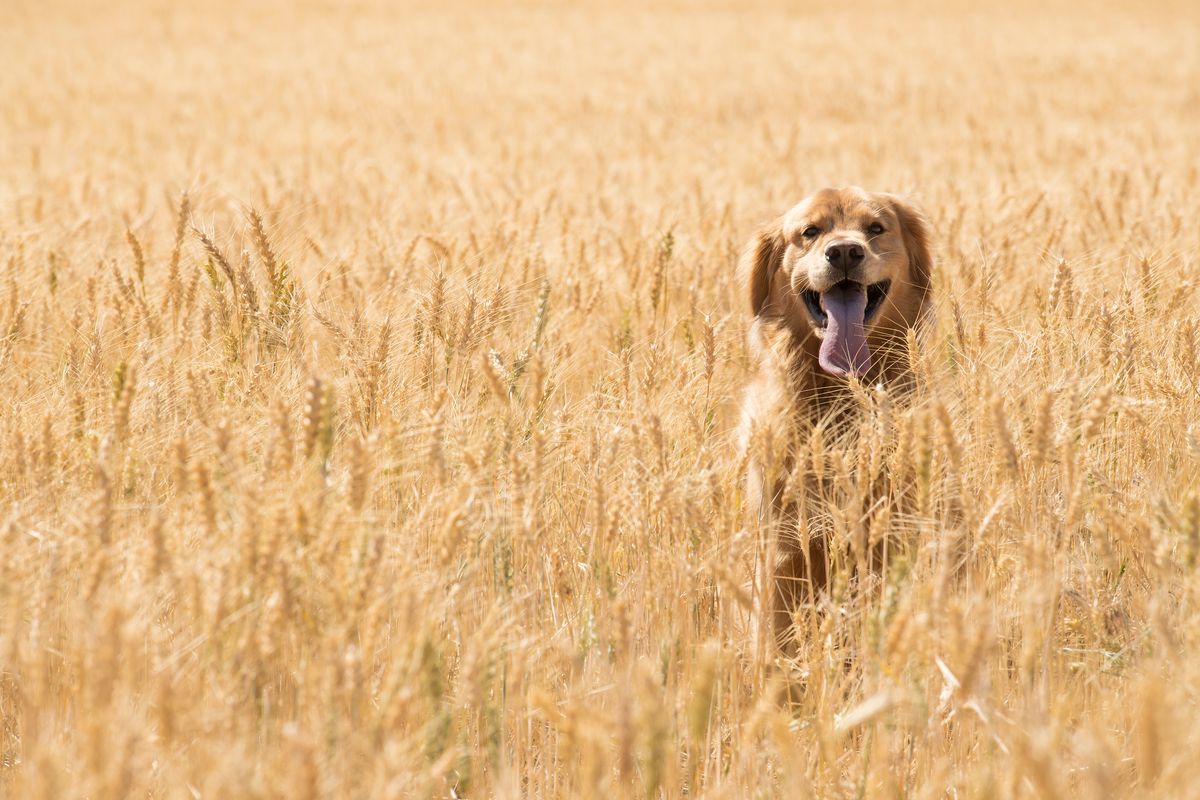
The end of spring means the arrival of summer, sun, warmth, long evening walks... but also certain grasses with awns, which can be dangerous for your dog. These dry, hard appendages on cereal ears and grasses easily get caught in dogs' coats. From there, they can burrow into the skin, causing pain and infections. So, what should you look out for when walking your dog?
Awns on cereal varieties like barley or rye are particularly well-known. However, certain grasses along fields and meadows can also develop awns. During the spring flowering season, these grasses form their seeds in ears with awns, which dry in the sun. The seeds, along with the awns, become hard and detach easily from the plant.
Awns can have various shapes, but those found in our regions that are dangerous for our dogs all look similar. They are very light, enclose the grass seeds in a V-shape, have sharp tips, and a rough surface with small barbs. Sometimes they also consist of more or less long, hard hairs that taper spindle-shaped towards a tip. They are usually between 1 and 3 cm long.
The seasonal occurrence of awns depends on the climate. Depending on the weather, they can be found from early spring to early autumn, but most commonly from May to September. Due to the variety of grass species, they can be found throughout Switzerland.
Why are awns so dangerous?
The reason why awns pose a danger is their special structure. When a dog runs through a meadow, the dry and light awns detach very easily from the ear. They then get caught in your dog's coat or penetrate one of its body openings. Due to their V-shape and rough surface, awns easily get entangled. Thanks to their barbs, they cannot fall out on their own, and most importantly, they can only move in one direction.
If an awn gets caught in the coat, it can only migrate inwards and will eventually burrow into the animal's skin or body opening. This causes pain and infections, sometimes leading to an abscess or a fistula.
All parts of your dog's body can be affected by awns. However, they are most commonly found in the ears, where they can penetrate into the ear canal. Awns in the ears greatly bother your dog. This is evident when, often immediately after a walk, your dog vigorously starts shaking its head or constantly scratches its ears. Sometimes your dog also holds its head tilted slightly. In such situations, you should definitely consult a vet who can remove the awn with long, specialized tweezers. If you wait too long, the awn will migrate further to the eardrum and eventually puncture it. This leads to severe pain and causes an infection that requires prolonged antibiotic treatment. Under no circumstances try to put liquid into your dog's ear to provide relief. You risk flushing the awn even deeper into the ear.
Breeds with floppy ears and long coats are particularly susceptible to awns in their ears. Spaniels, Golden Retrievers, Bernese Mountain Dogs, and Bichons are therefore the most commonly affected breeds.
Sometimes awns also burrow directly into the skin. They are particularly often found between the toes of the paws or under the armpits. However, they can also lodge elsewhere on the body. Your dog will start intensely licking the affected area or scratching vigorously. Some dogs also limp.
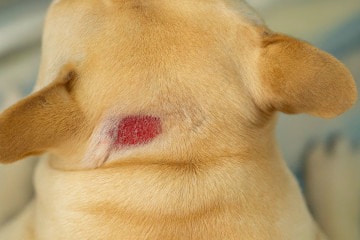
Often you can observe redness and swelling of the skin. Sometimes you can also see the tiny hole through which the awn has penetrated. If the awn has gone unnoticed for several days, an abscess will form, filling with pus and eventually rupturing. So, if your dog scratches vigorously, licks and chews at a paw, and limps, you should definitely take them to the vet - even if you don't see an obvious injury.
Awns can also be inhaled into the nose. Your dog will immediately start violently sneezing, and nosebleeds may occur. Eyes, vulva, and prepuce are other areas where awns can penetrate.
If your dog shows any of the mentioned symptoms during or shortly after a walk, you should therefore examine them thoroughly. Perhaps you'll find the awn in the coat, or it's only superficially piercing the skin. In this case, you can carefully remove it with tweezers. However, if the awn has already penetrated deeper, you should have your dog examined by a vet. An awn that remains under the skin or in a body opening for too long will penetrate deeper and deeper into the tissue, making it harder to find and remove. Often, a procedure under anesthesia is then required, and due to the infection caused by the awns, good disinfection and possibly antibiotic therapy are necessary.
Fortunately, awns are usually found simply in your dog's coat. It is then sufficient to remove them quickly and check the coat and paws for any further awns.
How can you avoid contact with awns?
There are several simple and effective measures you can take to reduce the risk of awns.
First and foremost, we recommend avoiding walks in places where awns are most common. Avoid cereal fields, parks, and lawns with tall grass, as well as overgrown green areas. If you are unsure, keep your dog on a leash until you can determine if there are awns in that location.
If you have weeds in your garden, you should mow them regularly to prevent the formation of awns.
If your dog has long or semi-long coat, we recommend trimming their coat short and clipping the fur on their paws short. Pay special attention to good coat care to avoid knots and matting, which are true "magnets" for awns.
Remember to thoroughly brush and examine your pet's coat after every walk. Pay particular attention to checking the paws, between the toes and pads, as well as the areas under the armpits, on the ears, and around the neck.
In summary: If you notice that your dog suddenly has typical symptoms after an outing (sneezing, watery eyes, lameness, itchy ears...), quickly consult your vet!

Set ipet.ch as a preferred source on Google
Never miss a tip: Set ipet.ch as a preferred source in your Google account so that our veterinary advice and pet care guides appear higher up in your search results. Optional and can be undone at any time.
Set as preferred source →Useful information at a glance
Why are foxtails dangerous for dogs?
Foxtails are dangerous because they can easily get caught in a dog's coat and penetrate the skin or body openings. Due to their V-shape and rough surface, they only move in one direction, which can lead to pain, infections, and in the worst case, abscesses or fistulas.
What symptoms indicate that my dog is affected by a foxtail?
Typical symptoms include vigorous head shaking, scratching at the ears, tilting the head, intense licking or scratching of specific body parts, sneezing, nosebleeds, or watery eyes. If you observe such signs, you should thoroughly examine your dog and, if necessary, consult a veterinarian.
How can I prevent my dog from coming into contact with foxtails?
Avoid walks in areas with tall grass, grain fields, or overgrown green spaces. Keep your dog on a leash if you are unsure. Groom your dog's coat regularly, trim it if necessary, and brush it thoroughly after each walk to remove foxtails.
What should I do if I find a foxtail in my dog's coat?
If the foxtail is superficially stuck in the coat, you can carefully remove it with tweezers. However, if the foxtail has penetrated deeper or is causing symptoms such as pain or infection, please consult a veterinarian immediately.
Which dog breeds are particularly susceptible to foxtails?
Breeds with floppy ears and long coats, such as Spaniels, Golden Retrievers, Bernese Mountain Dogs, and Bichons, are particularly susceptible to foxtails, especially in the ears. For these breeds, pay special attention to thorough coat grooming and regular checks after walks.