
 EN
EN  DE
DE  FR
FR Hotspot in Dogs – Treatment and Prevention
-
 By
med. vet. Bianca Michoud-Valente
By
med. vet. Bianca Michoud-Valente - May 12, 2025
What is a Hotspot?
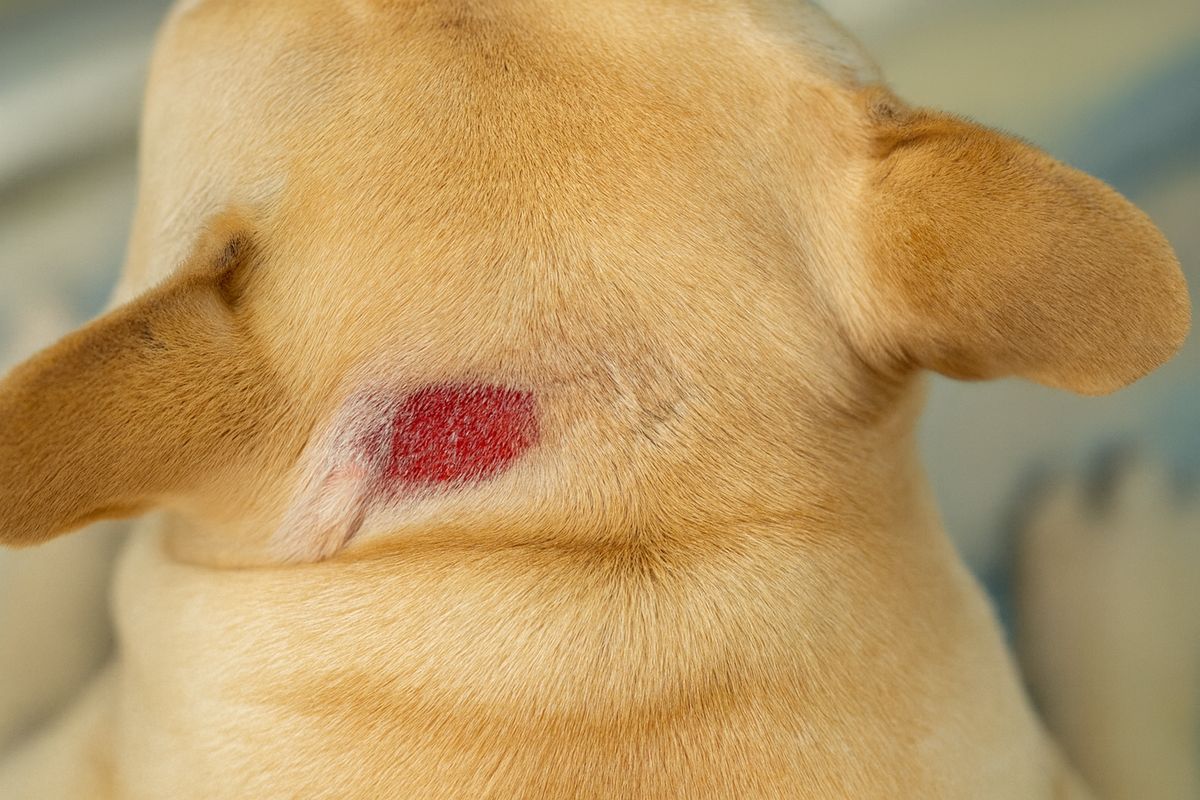
A hotspot, also known as pyotraumatic dermatitis, is a suddenly appearing, inflammatory and weeping skin lesion in dogs. It is usually painful and intensely itchy. These lesions appear as red, hairless, weeping, and sometimes purulent skin areas, often surrounded by a ring of matted hair, and can spread rapidly.
Hotspots most commonly occur on the head, limbs, hips, or neck area, but can fundamentally appear on any part of the body. Sometimes they are clearly visible, but often they are hidden under matted or pus-clumped coat.
Why Does My Dog Have a Hotspot?
A hotspot is triggered by skin inflammation, often caused by excessive licking, scratching, or nibbling. This worsens the irritation, promotes bacterial growth, and maintains a vicious cycle of inflammation and itching.
This behavior can be triggered by:
- Flea, tick, or other parasite bites
- Food allergy or environmental allergies
- Superficial injuries (scratches, abrasions, bites)
- Frequent bathing, rain, or persistent Moisture
- Insufficient hygiene or inadequate coat care
- Ear infections or anal gland infections
- Behavioral problems (anxiety, frustration, boredom)
- Pain (e.g., due to osteoarthritis)
Moisture plays a crucial role in worsening the condition: A wet dog – for example, after bathing or a downpour – is particularly at risk, as persistent Moisture under the coat promotes bacterial proliferation and skin irritation. The vicious cycle quickly sets in: the dog scratches or licks itself, which further exacerbates the inflammation, intensifies local warming, and additionally stimulates the itching. Therefore, warm and humid seasons (spring and summer) are considered particularly high-risk.
Certain dog breeds with sensitive skin or dense coat (e.g., Labrador Retriever, Golden Retriever, German Shepherd...) are particularly susceptible. A weakened skin barrier, an unbalanced diet, or existing allergies can also further increase the risk.
How is a Hotspot Treated?
A hotspot can develop very quickly from a small redness – therefore, prompt action at the first signs of skin irritation is crucial. The affected area can spread significantly within a few hours. The primary goal of treatment is therefore to break the vicious cycle of self-trauma and prevent worsening or bacterial infection. Fast and consistent treatment enables rapid healing and helps avoid complications.
Local Care:
- Clipping and Cleaning: Cut or clip the coat generously around the affected area (several centimeters) to expose the skin well. This allows for better ventilation, reduces Moisture, and facilitates the application of care products.
- Disinfecting: Clean the lesion once or twice daily with a suitable antiseptic (e.g., solution, shampoo, or wipes with chlorhexidine). A disinfectant shampoo can be used daily for 3 to 5 days, then 2 to 3 times weekly for about two weeks to keep the bacterial skin flora under control.
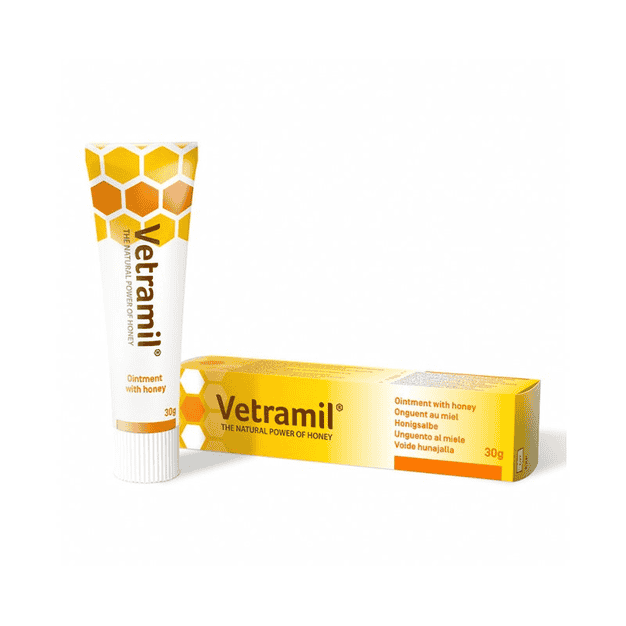
- Apply Healing Cream: Apply a soothing and wound-healing cream, such as a medical honey ointment. Depending on the severity, the veterinarian may also prescribe an antibiotic or cortisone-containing ointment.
- Prevent Licking: Prevent the dog from licking, scratching, or nibbling the wound. In the first few days, a Collar (cone) is usually essential. In some cases, a T-shirt can also help. Avoid bandages – the skin needs to breathe to heal.
Treating the Cause: To effectively heal a hotspot, it is crucial to identify and treat the underlying cause – such as parasites, allergies, ear infections, insect bites, joint pain, or other triggers.
When Should You Consult the Veterinarian?
It is important to consult a veterinarian promptly, if the skin lesion is very extensive, purulent, or foul-smelling, or if it does not improve despite several days of local care. A veterinary examination is also advisable if the dog appears severely affected, scratches intensely, or shows general symptoms such as fever or lethargy. The veterinary assessment allows for evaluating the severity of the condition, specifically treating the lesion, and identifying possible underlying causes.
How Can Hotspots Be Prevented?
Prevention relies on several measures aimed at maintaining skin health and minimizing risk factors:
- Balanced Nutrition and food supplements: Ensure a diet rich in essential fatty acids (Omega-3 and Omega-6) – they strengthen the skin barrier and have anti-inflammatory effects. If a change in diet is not desired, special food supplement can be used to support skin health.
- Regular coat care: Brush the coat regularly to remove dead hair and check the skin – especially for long-haired or dense-coated dogs. After swimming or walks in the rain, you should thoroughly dry your dog – for particularly susceptible animals, a quick rinse followed by blow-drying can also be beneficial.
- Suitable Shampoos: Use mild, dog-specific shampoos that remove allergens without disturbing the natural balance of the skin flora. Too frequent bathing or the use of unsuitable products can weaken the skin barrier.
- Parasite Protection: Regularly use effective parasite control products (spot-ons, Collars, tablets) to prevent bites from fleas, ticks, and other parasites – these are often triggers for itching and skin lesions.
- Wound Control and Care: Small injuries, scratches, or bites should be immediately disinfected and, if necessary, treated with a suitable ointment. Observe the area and your dog's behavior carefully.
- Special Caution in Spring and Summer: These seasons favor the occurrence of hotspots. Be particularly attentive during this time – especially for dogs that are susceptible or have had hotspots in the past.
In summary, a hotspot is a common skin condition in dogs – painful, but generally benign if recognized and treated early. Thorough hygiene, an adapted diet, and attentive observation of scratching or licking behavior are crucial for effective prevention. If in doubt or if the condition worsens, do not hesitate to consult your veterinarian: early treatment enables rapid healing and prevents complications.

Set ipet.ch as a preferred source on Google
Never miss a tip: Set ipet.ch as a preferred source in your Google account so that our veterinary advice and pet care guides appear higher up in your search results. Optional and can be undone at any time.
Set as preferred source →Useful information at a glance
How do I recognize if my dog has a hotspot?
A hotspot usually appears as a red, weeping, hairless, and sometimes purulent skin area, often with a ring of matted hair. The dog frequently scratches, licks, or bites the area intensely. Head, neck, hips, or limbs are particularly affected.
Do I always have to go to the veterinarian for a hotspot?
Not necessarily – for small, early-recognized lesions, careful home care can help. However, if the area spreads quickly, becomes severely purulent, or the dog shows pain, a visit to the veterinarian is advisable.
How long does it take for a hotspot to heal?
With timely treatment, the skin can regenerate within a few days to approximately two weeks. Consistent care and preventing further scratching or licking are crucial.
Can my dog get hotspots repeatedly?
Yes, unfortunately. Especially in dogs with sensitive skin, dense coats, or underlying allergies, recurrent hotspots can occur. Targeted treatment of the underlying cause and preventive measures are then particularly important.
What can I do to prevent hotspots?
Ensure a balanced diet, regular coat care, adequate parasite protection, and thorough drying after bathing. Observe your dog for unusual scratching or licking behavior – especially in spring and summer.