
 EN
EN  DE
DE  FR
FR Injuries in Dogs and Cats: First Aid Steps to Take
-
 By
med. vet. Bianca Michoud-Valente
By
med. vet. Bianca Michoud-Valente - Aug 11, 2026
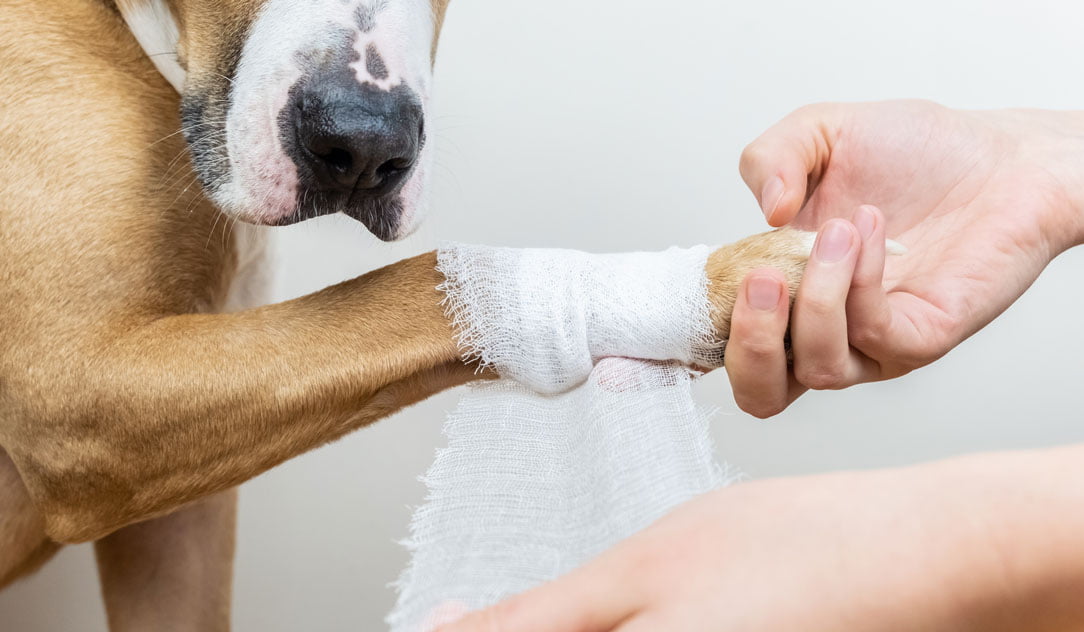
Injuries are among the most common accidents for dogs and cats. A cut on a paw pad, a scratch, a bite from a fight, or a wound caused by a sharp object can happen at any time. While some injuries are superficial and heal quickly, others can cause significant pain, infection, or require veterinary care.
Knowing how to react in the first few minutes helps limit complications and promotes good healing. Discover the right actions to take, the mistakes to avoid, and the situations that require a prompt consultation.
What are the most common injuries in dogs and cats?
Dogs and cats can injure themselves in many everyday situations. The most frequently encountered injuries include:
- Cuts on the paw pads (from glass, metal, shells, ice, etc.)
- Scrapes and small superficial wounds
- Bites and scratches, especially after a fight
- Broken or torn nails
- Injuries caused by a grass awn (foxtail), splinter, or other foreign body
- Skin tears following an accident
In cats, bites are particularly common and can rapidly develop into an abscess, even when the initial wound appears minor.
How to assess the severity of an injury?
Before handling your pet, stay calm and observe them.
Specifically, evaluate:
- the amount of bleeding
- the depth of the wound
- its location
- the possible presence of a foreign body
- your pet's pain level
- their ability to use the affected limb normally
Remember that an animal in pain, even a very sweet one, may react reflexively and bite. If necessary, ask a second person to help hold the pet calmly.
First Aid Steps in Case of Injury
1. Stop the bleeding
If the injury is bleeding heavily, immediately apply a clean compress or a clean cloth directly to the wound and maintain constant pressure for 5 to 10 minutes.
Avoid frequently lifting the compress to check the bleeding. If it becomes soaked with blood, simply add a new compress on top of it.
2. Carefully clean the wound
Once the bleeding is controlled, rinse the wound thoroughly with saline solution or clean, lukewarm water to remove dirt, small debris, or bacteria.
If fur is dirtying the wound, you can carefully trim it around the area to make cleaning easier, taking care not to further injure the skin.
Never attempt to remove a foreign body that is deeply embedded in the wound. Doing so could worsen the injury or trigger severe bleeding.
3. Disinfect
After cleaning, apply an antiseptic specifically formulated for animals, such as a chlorhexidine-based solution.
Do :
Use a pet-safe antiseptic (e.g., chlorhexidine or povidone-iodine) after thoroughly cleaning the area.
Don't :
Avoid human products like rubbing alcohol, hydrogen peroxide, essential oils, or harsh disinfectants. These can delay healing and may be toxic if your pet licks the wound.
4. Protect the injury
Small scrapes can generally be left uncovered as long as they remain clean.
However, a cut on a paw pad or an easily soiled area can be protected with a light dressing or suitable bandage. This bandage must never be applied too tightly, as it could cut off blood circulation.
My dog or cat is licking their wound: should I stop them?
Contrary to popular belief, licking does not promote healing. On the contrary, it can irritate the tissues, introduce infections, and delay recovery!
If your pet licks their wound repeatedly, you may need to use an Elizabethan collar (cone), a protective bodysuit, or a suitable bandage to protect the injury while it heals.
Paw pad injuries: a special case
Paw pads are highly exposed during walks. Broken glass, metal, sharp stones, ice, or hot asphalt can cause cuts that are sometimes deep.
After cleaning the wound and controlling the bleeding, limit walks until the injury has healed and protect the pad with a bandage or a protective bootie if necessary.
Warning! A deep cut to the paw pad often requires veterinary care, and sometimes even stitches. Contact your veterinarian promptly.
When should you consult a veterinarian promptly?
Some injuries require immediate medical attention. Even a small bite can look benign on the surface while rapidly developing into a deep-seated infection.
Seek prompt veterinary care if:
- the bleeding does not stop after 10 minutes of applied pressure
- the wound is deep or gaping wide open
- a muscle, tendon, or bone is visible
- a foreign body is deeply embedded in the wound
- the injury is located near an eye, a joint, or the genitals
- your dog or cat refuses to put weight on the affected paw
- a nail is partially or completely torn off
- the wound was caused by a bite
- the wound becomes red, swollen, hot to the touch, or oozes pus
- your pet seems lethargic, is in obvious pain, or has a fever
How to monitor healing?
In the days following the injury, check daily to ensure the wound remains clean.
Normal healing is marked by a gradual decrease in redness, swelling, pain, and discharge. Generally, a dry (non-oozing) scab will eventually form on the surface.
Conversely, if you notice increased swelling, a foul odor, pus, a purplish color, persistent pain, or a wound that simply will not close, you should consult your veterinarian quickly.
Building a Pet First Aid Kit
Having a first aid kit on hand allows you to act swiftly in the event of an injury. This kit is especially useful during walks, vacations, hikes, or sporting activities with your pet.
| Equipment | Usefulness for the Pet |
|---|---|
| Saline solution | To rinse the wound and flush out debris. |
| Sterile compresses | To clean the wound or apply pressure (avoid cotton balls). |
| Pet-safe antiseptic | To disinfect without stinging or causing toxicity. |
| Cohesive bandages | To create a light dressing that stays in place without sticking to fur. |
| Round-tipped scissors | To safely cut bandages or trim fur around the wound. |
| Disposable gloves | To handle the wound hygienically. |
| Tick remover tool | To safely extract parasites. |
| Recovery cone or bodysuit | To prevent unwanted licking of the wound. |
In Summary
Most minor injuries in dogs and cats heal well when they are promptly cleaned, disinfected, and monitored. However, a deep wound, a bite, significant bleeding, or an injury in a sensitive area requires swift veterinary care.
When in doubt, never hesitate to contact your veterinarian. Even if an injury seems minor, a simple phone call can often help assess its severity and determine if an in-person consultation is necessary. Early intervention limits complications, reduces the risk of infection, and promotes a fast, comfortable recovery for your companion.

Set ipet.ch as a preferred source on Google
Never miss a tip: Set ipet.ch as a preferred source in your Google account so that our veterinary advice and pet care guides appear higher up in your search results. Optional and can be undone at any time.
Set as preferred source →Useful information at a glance
How should I treat a minor wound on my dog or cat?
First, control any bleeding with gentle, constant pressure. Then rinse the wound thoroughly with saline solution or clean, lukewarm water. After cleaning, you can apply a pet-safe antiseptic. Keep the wound clean and monitor it closely during healing.
How can I stop a wound from bleeding?
Place a clean compress or cloth directly over the wound and apply constant pressure for 5 to 10 minutes. Avoid repeatedly lifting the compress to check the wound. If blood soaks through, place another compress on top without removing the first one.
Which disinfectants can I use on my pet's wound?
Use an antiseptic suitable for animals, such as a chlorhexidine- or povidone-iodine-based product. Avoid rubbing alcohol, hydrogen peroxide, essential oils and harsh disinfectants, as they may irritate the tissue or delay healing.
Should I let my dog or cat lick a wound?
No. Repeated licking can irritate the wound, introduce bacteria, and delay healing. A recovery cone, protective bodysuit, or suitable bandage can help prevent your pet from licking the affected area.
When does a wound require veterinary treatment?
Contact a veterinarian promptly if the wound is deep or gaping, bleeding does not stop after 10 minutes of pressure, a foreign body is embedded in the wound, or muscles, tendons, or bones are visible. Injuries near the eyes, joints, or genitals also require veterinary attention.
Do bite wounds always need veterinary attention?
Bite wounds should be assessed by a veterinarian because they can introduce bacteria deep beneath the skin. This is particularly important in cats, where apparently minor bite wounds can quickly develop into abscesses.
What should I do if my dog has cut its paw pad?
Control the bleeding and carefully clean the paw with saline solution or clean water. Limit walks while the injury heals and protect the paw with an appropriate dressing or bootie if necessary. Deep paw pad cuts may require stitches and should be examined by a veterinarian.
What should be included in a pet first aid kit?
A useful first aid kit can include saline solution, sterile compresses, a pet-safe antiseptic, cohesive bandages, round-tipped scissors, disposable gloves, a tick remover and a recovery cone or protective bodysuit.