
 EN
EN  DE
DE  FR
FR Does catnip make cats addicted?
-
 By
Dr. med. vet. Sabina Büttner
By
Dr. med. vet. Sabina Büttner - Oct 15, 2020
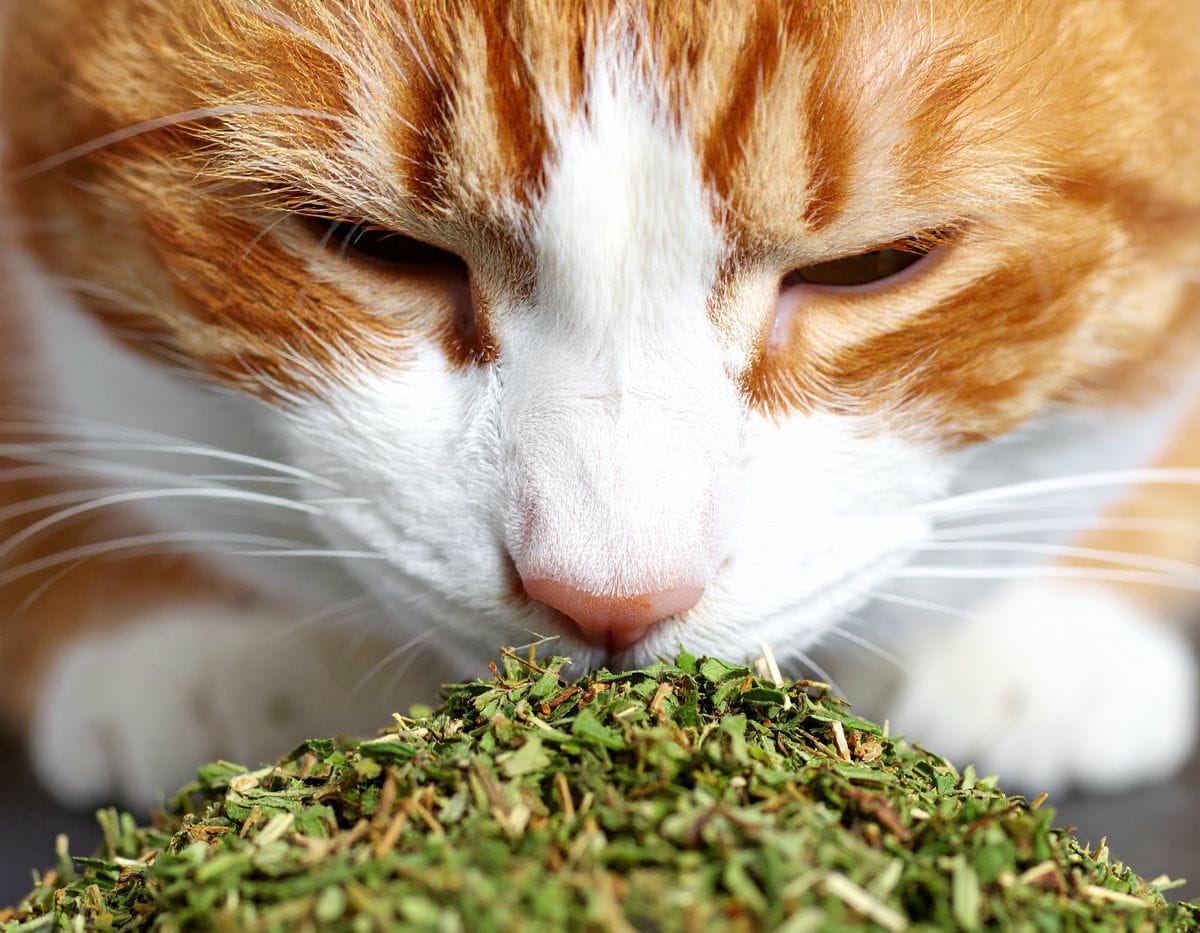
Many cat owners are familiar with the euphoric effect of catnip on their cats. It's fun to watch cats play with catnip toys, but could it be unhealthy for the cat or even make them addictive? Learn more about catnip and its effects on cats here.
What is catnip?
Catnip (Latin Nepeta / English Catnip) is a perennial herbaceous plant that got its name due to its long-known attractive effect on cats. There are about 250 different catnip species, which can grow up to one meter high and bloom white or light blue from July to September. The greatest effect on cats is produced by the so-called true catnip (Nepeta cataria), which has small, silvery-white flowers.

How does catnip work?
As soon as we give our cats a toy filled with dried catnip, they immediately start smelling and playing with it. They often hug the toy, lick it intensely, and roll around on the floor with it. This reaction lasts for about 10 minutes, after which they are temporarily immune to the effects of catnip for about 30 minutes.
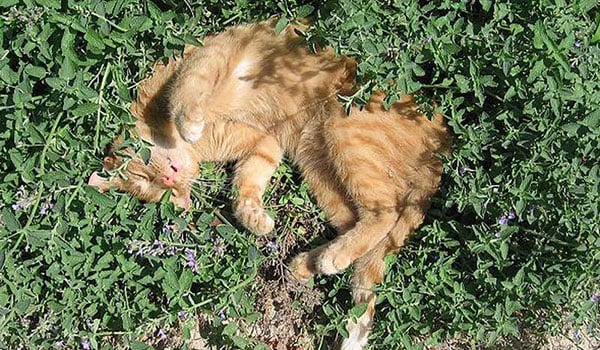
If cats encounter the plant in the garden, they behave similarly: they rub against it, roll in it, and sometimes even chew on leaves and flowers.
Around 25% of domestic cats seem to have no interest in catnip at all. Very young cats also show no reaction, and the effect diminishes in older cats. However, for these seemingly unimpressed cats, the catnip may have a strong calming effect, in contrast to the 75% of 'intoxicated' cats that are activated by catnip.
Primarily responsible for the effect on cats is Nepetalactone, formed in catnip. It is a secondary plant compound from the group of terpenes, which serves to protect the plant from harmful insects and has a strong repellent effect on many flying insects. Exactly how the effect on cats is triggered is not yet precisely known. However, it is suspected that nepetalactone acts on the opioidergic system of the animals.
Incidentally, big cats like lynxes or lions also react to the plant in a similar way to our domestic cats.
Can humans get high from catnip?
Catnip has no euphoric effect on humans. However, it is considered a herbal remedy and, when used as a tea, is said to have relaxing, pain-relieving, diaphoretic, antispasmodic, fever-reducing, and digestive-promoting effects.
Is catnip dangerous for cats that react strongly?
Even in cats that react very strongly to catnip, no negative effects have ever been observed. Addiction or dependency also cannot develop. On the contrary. If the cat has constant access to catnip or catnip toys, their interest in it will decrease. However, cleverly used, catnip can positively influence cats' behavior in certain situations!
Uses for catnip:
- Encourage play: Catnip-filled cat toys can help motivate lazy cats to play. Especially in balls and mice, it stimulates cats' hunting instincts and can thus increase their activity level.
- Increase the attractiveness of scratching furniture: spraying some catnip spray on a cat scratcher or scratching board encourages the cat to sharpen its claws there more often and leave the upholstered furniture alone.
- Acclimatization to mobile kennels: place the mobile kennel in the apartment and regularly sprinkle some catnip inside every few days – this entices the cat into the mobile kennel, associates it with something positive, and makes them feel comfortable in it. Once accustomed to the mobile kennel, the next trip to the veterinarian will be more pleasant and stress-free.
- Acclimatization to new surroundings: catnip in toys or as a spray can also help the cat relax more quickly in a new environment and thus settle in faster.

Set ipet.ch as a preferred source on Google
Never miss a tip: Set ipet.ch as a preferred source in your Google account so that our veterinary advice and pet care guides appear higher up in your search results. Optional and can be undone at any time.
Set as preferred source →Useful information at a glance
Can catnip make my cat addicted?
No, catnip cannot cause addiction or dependency in cats. Even in cats that react strongly to catnip, no negative effects are known. On the contrary, with constant access, the cat's interest in catnip decreases.
How does catnip affect cats?
Catnip contains nepetalactone, a secondary plant compound that triggers a euphoric effect in many cats. Cats smell the catnip, play with it, and roll on the floor. This reaction lasts for approx. 10 minutes, after which they are immune to the effect for approx. 30 minutes.
Is catnip dangerous for humans?
Catnip has no euphoric effect on humans. However, it is considered a herbal remedy and can have relaxing, pain-relieving, and digestion-promoting effects when consumed as a tea.
How can I use catnip effectively?
Catnip can be used to encourage cats to play, increase the attractiveness of cat scratchers, facilitate acclimatization to mobile kennels, and calm cats in new environments.
Do all cats react to catnip?
Around 25% of domestic cats show no interest in catnip. Very young cats also do not react to it, and the effect diminishes in older cats. For some cats, catnip might have a calming effect instead of activating them.