
 EN
EN  DE
DE  FR
FR Colds in Dogs or Cats – When Should You See a Veterinarian?
-
 By
Dr. med. vet. Sabina Büttner
By
Dr. med. vet. Sabina Büttner - Jul 14, 2018
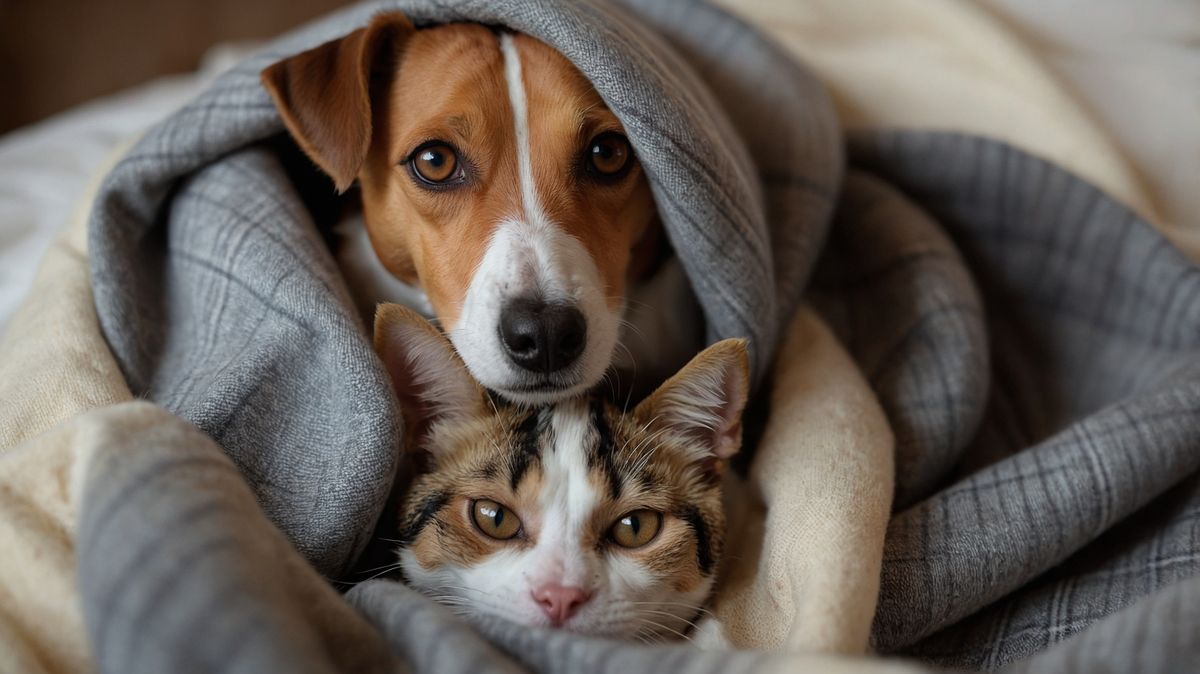
Currently, many of us are suffering from severe colds with watery eyes and runny noses. Those with such symptoms often fear infecting their four-legged family members. Is there really a danger?
No, we can immediately give the all-clear here: human cold pathogens are not transmissible to dogs or cats. And conversely, it's rare for dogs or cats to infect their humans.
Nevertheless, it's important to be attentive: while a cold in humans is usually a harmless illness that only lasts a few days, the appearance of nasal discharge and sneezing in dogs and cats is often a sign of a serious illness that needs to be thoroughly investigated and specifically treated!
Causes of nasal discharge in dogs and cats:
As in humans, viruses are also the most common cause of cold symptoms in dogs and cats. However, unlike in us, these diseases in our animals are often accompanied by severe complications or can take a chronic course. In cats, the pathogens of cat flu are particularly well-known, and in dogs, those of kennel cough. There are vaccinations against both disease complexes, which, while they cannot completely protect animals from infection, do prevent severe and chronic disease progression. For this reason, it is important that we have our cats and dogs regularly vaccinated against them.
In addition, there are a number of other causes of nasal discharge, such as allergies, fungal infections, foreign bodies, or tumors.
My pet has a cold. Do I need to go to the vet?
Not every sneeze and every drop from our pets' noses needs to immediately cause us panic. To assess whether it's a harmless condition or if a veterinary examination is indicated, the following should be considered:
What does the nasal discharge look like?
A simple irritation of the nasal mucous membrane, e.g., by dust or cold, can be the cause of nasal discharge and sneezing. In this case, the discharge is always clear and watery! If it is thick, yellowish, or comes from only one nostril, then the animal absolutely must see a vet.
What is the animal's general condition?
If it remains lively and has a good appetite, then there's no need to worry much. If, however, it is tired, sleepy, has no appetite, and has a fever for several days, it should be examined by a vet.
How often does the animal sneeze?
Sneezing is primarily a protective reflex intended to remove irritating substances from the nasal cavity. Occasional sneezing is quite common in both dogs and cats and is no cause for concern. Actual sneezing attacks occur when an animal inhales a foreign body into its nose. If this cannot be expelled with these sneezing fits, the animal may be plagued by further vigorous sneezing attacks for 1-2 days. This is usually followed by a few days without symptoms before unilateral nasal discharge occurs. In this case, the foreign body must be surgically removed as quickly as possible!
What can I do to prevent my dog or cat from getting a cold?
To prevent viral infections, in addition to regular vaccination, supporting the immune system is also important. Primarily, this is achieved through a balanced diet adapted to the animals' needs. However, if the animal is recovering from an illness, is shedding its `coat`, or is stressed by changed life situations, it can be beneficial to additionally strengthen the body's own defense system with a suitable `food supplement`.

Set ipet.ch as a preferred source on Google
Never miss a tip: Set ipet.ch as a preferred source in your Google account so that our veterinary advice and pet care guides appear higher up in your search results. Optional and can be undone at any time.
Set as preferred source →Useful information at a glance
Can humans infect their pets with a cold?
No, human cold pathogens are not transmissible to dogs or cats. Conversely, it is also very rare for dogs or cats to infect their humans.
When should I take my pet to the veterinarian if it shows cold symptoms?
If the nasal discharge is thick, yellowish, or comes from only one nostril, you should definitely consult a veterinarian. Also, if the animal is tired, drowsy, has no appetite, or has a fever for several days, a visit to the veterinarian is advisable.
How can I prevent my dog or cat from getting a cold?
Regular vaccinations are important to prevent severe and chronic disease progression. Additionally, a balanced diet supports the immune system. During stressful times or during convalescence from an illness, a food supplement can be beneficial.
What are the most common causes of colds in dogs and cats?
Viruses are the most common cause of cold symptoms in dogs and cats. In cats, feline calicivirus and herpesvirus (feline rhinotracheitis virus) are well-known causes of 'cat flu', and in dogs, kennel cough pathogens. Allergies, fungal infections, foreign bodies, or tumors can also be causes.
How do I recognize if my pet has a foreign body in its nose?
If your pet frequently sneezes and has sneezing fits, it might have a foreign body in its nose. If these bouts of sneezing do not help remove the foreign body, and a unilateral nasal discharge follows, the foreign body must be surgically removed.