
 EN
EN  DE
DE  FR
FR Collar or Harness? A Decision Guide
-
 By
Kathy Wyss
By
Kathy Wyss - Mar 24, 2026
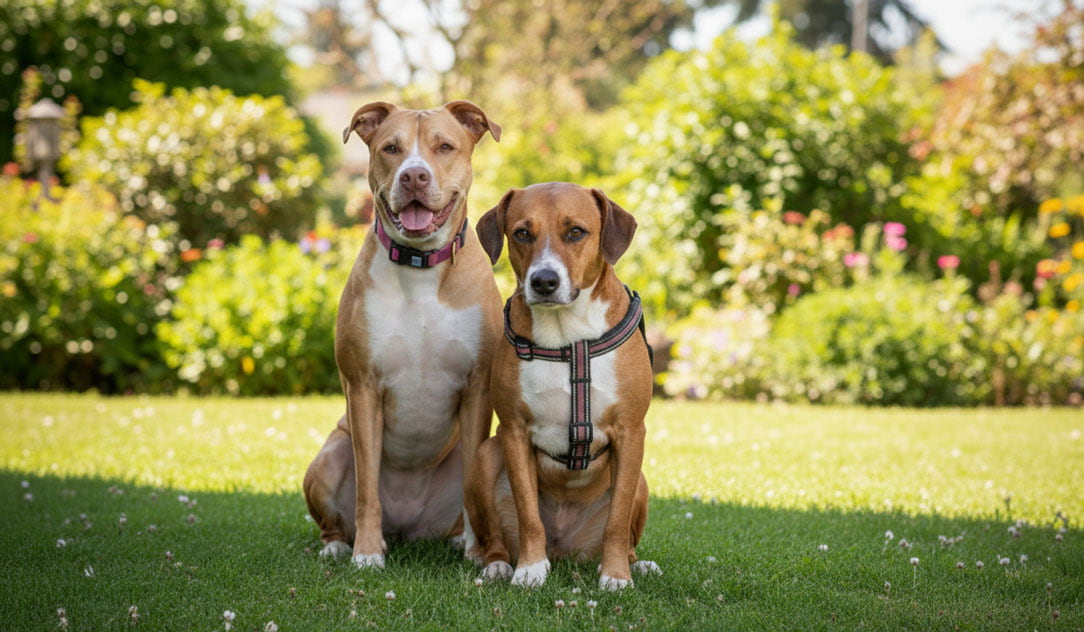
The question of whether a collar or a harness is better for a dog concerns many dog owners in Switzerland. Search queries such as "Dog harness or collar, what is better?", "Y-harness dog experiences", "Is a martingale collar useful?" or "How to adjust a dog harness correctly" highlight how much uncertainty exists.
From a veterinary perspective, there is no one-size-fits-all recommendation. Both options can be useful—provided they are used correctly, fit the dog's anatomy, and suit the specific daily situation.
The Collar – Minimal Disturbance and Practical for Daily Use
The collar is the classic solution and has been used for decades. It is lightweight, quick to put on, and very straightforward for daily life. Especially for dogs that walk calmly on a loose leash, a well-fitting collar can be perfectly sufficient.
Due to its low weight and ease of handling, it is suitable, for example, for short, structured walks or situations with little distraction. Dogs with stable leash manners usually handle it well.
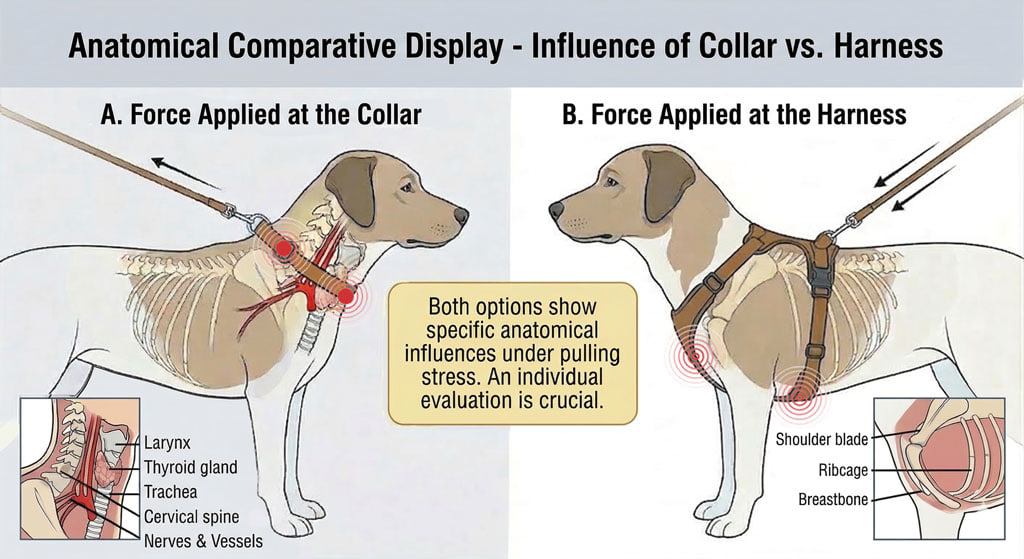
At the same time, any pulling force acts directly on the sensitive neck area. This area contains the larynx, trachea, thyroid gland, as well as vital nerves and vascular structures. In dogs that pull hard or with jerky movements, this can lead to strain on the cervical spine.
Overview of Different Collar Types
| Type | Features & Area of Use |
|---|---|
| Standard Strap Collar | Adjustable standard model made of nylon, fabric, coated material, or leather, with a click or buckle closure. |
| Martingale / Limited-Slip Collar | Tightens under tension up to a defined point, making it harder to slip out. It loosens when the dog walks nicely on the leash. Suitable for fearful dogs or sighthound breeds. |
The Harness – Distributing Pressure Across the Chest
A dog harness distributes pulling forces across the chest and shoulder area. The neck remains relieved, which can be an advantage particularly for puppies, small dog breeds, or dogs with pre-existing health conditions. A well-fitting harness can be useful for dogs that pull strongly, young dogs in training, or during athletic activities like hiking.
Potential Disadvantages: A poor fit can restrict free shoulder movement, causing the dog to change its natural gait. Many harnesses sit too close behind the front legs and chafe the sensitive skin of the armpits.
Overview of Different Harness Types
- Y-Harness: Runs in a Y-shape between the front legs in the chest area. Usually allows for good movement if it fits well.
- H-Harness: Several straight straps form an H-structure. Simple design, highly dependent on the specific model.
- Norwegian Harness: Features a horizontal chest strap; very easy to put on, but can restrict shoulder freedom.
- Safety Harness: Includes an additional belly strap behind the ribcage for increased escape prevention.
- Step-in Harness: The dog steps in with its front paws; helpful for sensitive dogs.
- Pulling Harness: Suitable for work under tension in dog sports (Mantrailing, Canicross, etc.).
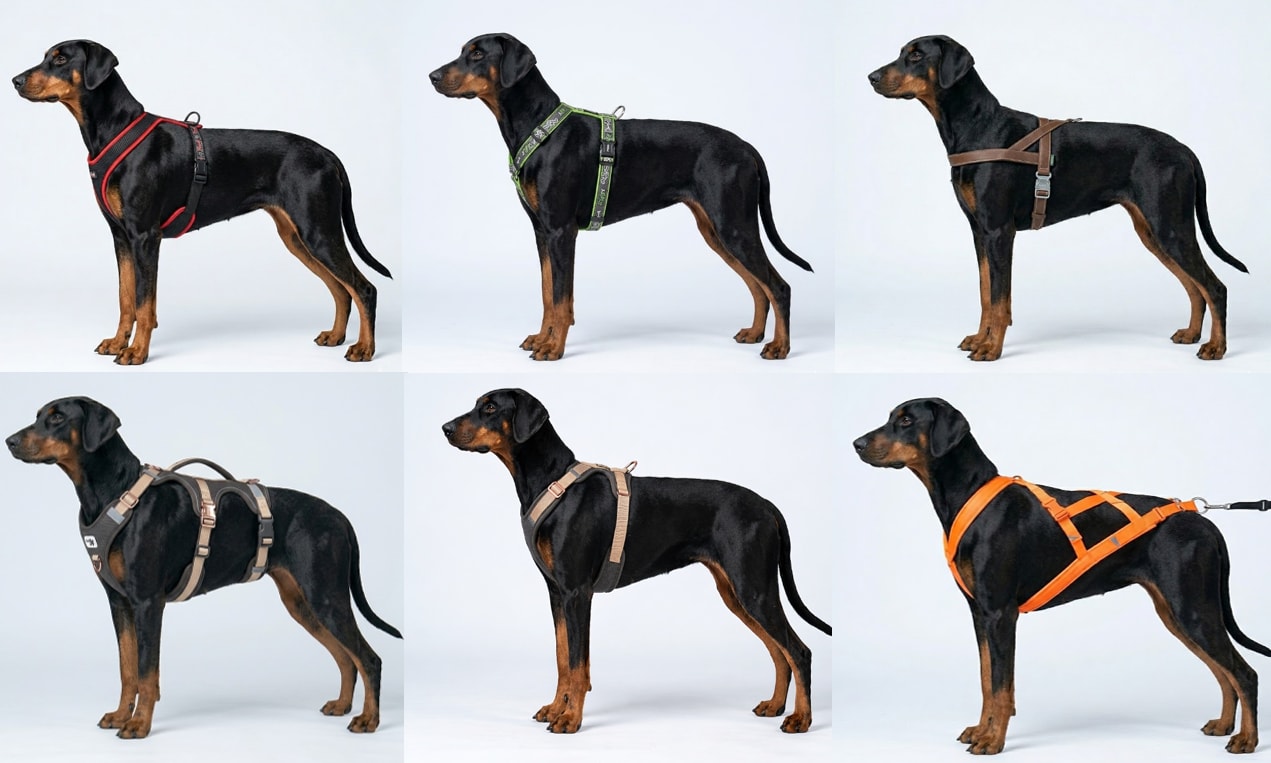
From left to right, top row: Y-harness, H-harness, Norwegian harness. Bottom row: Safety harness, Step-in harness, Pulling harness
Building Effective Leash Manners in Young Dogs
It is helpful to consciously practice leash manners on a collar during short, focused training sessions. For the subsequent everyday walk, the dog can be led on a harness. This creates a clear distinction between "concentration mode" and "leisure mode."
Advantages of this combination:
- Training quality is maintained.
- Uncontrolled pulling during daily life has less impact on the training progress.
- The neck area is relieved during relaxed walks.
Anatomy, Behavior, and Daily Life – What Really Matters
Important criteria for selection include:
- Exact size adjustment
- Soft, non-chafing materials
- Durable buckles and closures
- Regular checks for pressure points
- Regular checks of skin and coat (e.g., if the dog has been swimming frequently while wearing the gear)
- Taking the gear off regularly at home
- Adjusting for growth in young dogs
Rules for Adjusting the Collar
- Two-finger rule: You should be able to fit two fingers loosely between the neck and the collar.
- For martingale collars, the stop must be set so the collar does not choke the dog.
- Regularly check for matting under the collar.
Rules for Adjusting the Harness
- Adjust all straps according to the two-finger rule.
- Distance between elbow and chest strap: approximately two fingers to one flat hand's width.
- Rings/buckles should not rest directly on the shoulder blade or the spine.
Combination instead of either/or: From a veterinary perspective, the focus is not on the product, but on the health and well-being of the dog. Careful size selection significantly contributes to avoiding improper strain and preserving the joy of movement in the long term.

Set ipet.ch as a preferred source on Google
Never miss a tip: Set ipet.ch as a preferred source in your Google account so that our veterinary advice and pet care guides appear higher up in your search results. Optional and can be undone at any time.
Set as preferred source →Useful information at a glance
What is better: Collar or Harness?
There is no one-size-fits-all answer. The choice depends on the dog’s anatomy, temperament, and level of training. A collar is suitable for calm dogs with good leash manners, while a well-fitting harness can relieve neck pressure for dogs that pull or are still in training.
Is a harness actually safer than a collar?
A harness distributes pulling forces across the chest and shoulders, relieving pressure on the neck. However, if poorly fitted, a harness can also cause pressure points or restrict movement. Correct adjustment is crucial.
How tight should a collar or harness be?
As a rule of thumb, use the 'two-finger rule': you should be able to fit two fingers between the material and your dog's body. Additionally, a harness must provide enough clearance between the elbow and the chest strap to prevent chafing.
Should a puppy wear a collar or a harness?
For puppies, a well-fitted harness is often ideal as it protects the sensitive neck area. For short, focused sessions to practice leash manners, using a lightweight collar is recommended.
Can a harness restrict shoulder movement?
Yes, if the harness is poorly designed or adjusted too tightly. Models with a horizontal chest strap, in particular, can restrict the front leg's free movement. Therefore, careful sizing and selection are crucial.