
 EN
EN  DE
DE  FR
FR Cycling with Your Dog
-
 By
Dr. med. vet. Sabina Büttner
By
Dr. med. vet. Sabina Büttner - Mar 15, 2020
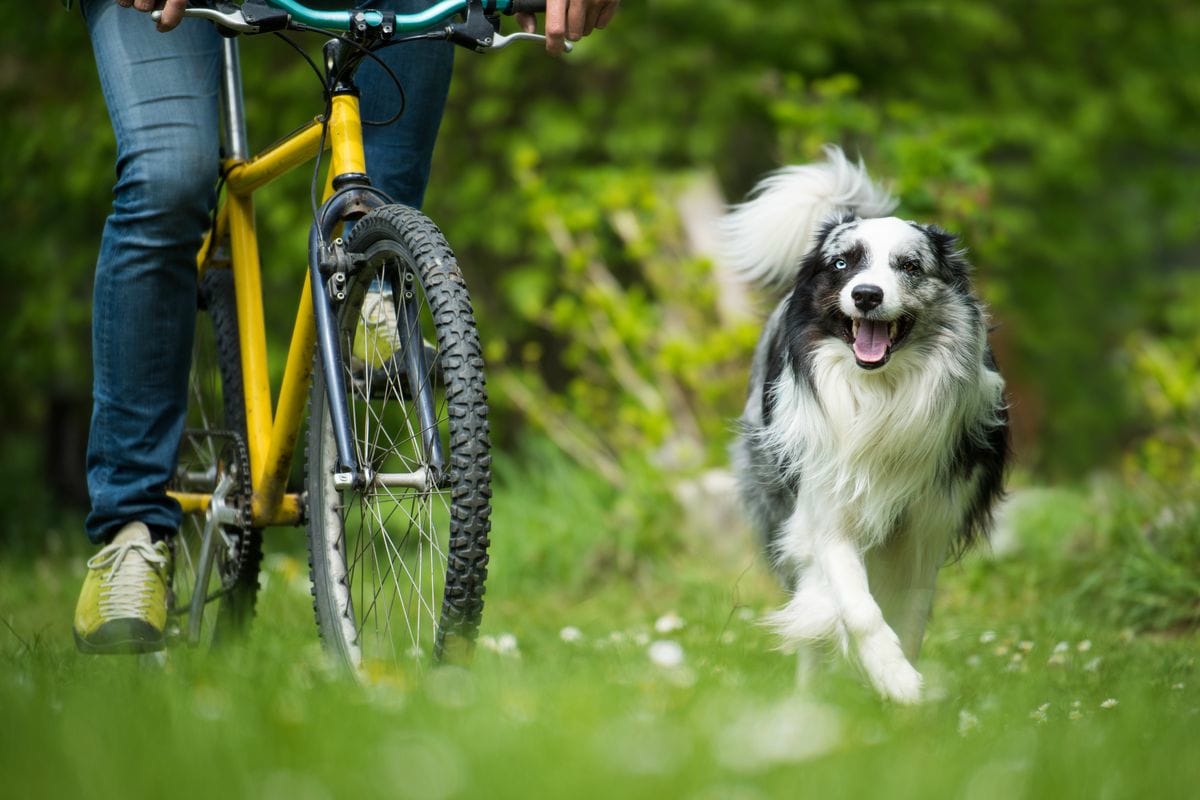
The spring sunbeams draw us all outdoors and let us enjoy shared activities with our dogs twice as much. In many places, bicycles are now being brought out of their winter quarters again – there are various ways our dogs can accompany us on bike rides. We'll show you what to consider.
Bicycle Training with Your Dog
Many active dogs enjoy satisfying their urge to move by running alongside the bicycle. However, there are a few things to consider to ensure it's not dangerous or unhealthy:
Running alongside the bicycle is only suitable for healthy, adult dogs. Neither young dogs still growing, nor heavily overweight or old dogs should accompany us on bike rides. Also, very large and bulky or very small, short-legged dogs are not suitable for bicycle training.
Dogs should not be attached by a Collar, but rather by a well-fitting harness to a special attachment on the bicycle.
To start training, short distances should be chosen, which can then gradually be extended as fitness increases.
Training should not take place on heavily trafficked roads. It's best to choose routes on country paths or through the forest. The pace must absolutely be adapted to the dog! He should be able to run alongside the bike in a steady trot on a loose leash.
Overexertion must be avoided! If the dog slows down or starts panting heavily, you should immediately take a break or stop the training altogether. Take enough water with you so you can offer your dog plenty to drink during breaks.
Trotting alongside the bicycle does not replace a walk! The dog not only needs exercise but also wants the opportunity to thoroughly explore the area. Therefore, go for additional walks or push the bicycle for stretches and let your dog sniff around extensively.
Bicycle training should not be carried out more than two to three times a week, so that the dog can fully convalescence between training sessions.
Bicycle Baskets and Bicycle Trailers
Even small or older dogs can accompany us on a bike tour in bicycle baskets, bags, or bicycle trailers. It's important that the dog can slowly get used to the new mode of transport. Place him in the basket or trailer and give him a few treats. Then slowly push the bicycle and give him a few more treats if he behaves calmly. Finally, ride slowly for a short distance and reward the dog again for his calm behavior. If he becomes restless, stop immediately and only reward him once he has calmed down again. If the dog remains calm, slowly extend the riding times. Of course, the dog should always be secured to the restraints during rides!
Whether on foot or by bicycle – we wish you much enjoyment on your spring outings with your dog!

Set ipet.ch as a preferred source on Google
Never miss a tip: Set ipet.ch as a preferred source in your Google account so that our veterinary advice and pet care guides appear higher up in your search results. Optional and can be undone at any time.
Set as preferred source →Useful information at a glance
Is cycling possible with every dog?
Cycling is not suitable for all dogs. Only healthy, adult dogs should run alongside the bicycle. Young dogs in growth, severely overweight or old dogs, as well as very large and massive or very small, short-legged dogs are not suitable for cycling training.
How should my dog be secured when cycling?
Your dog should be secured with a well-fitting harness and not a Collar. Use a special mount on the bicycle to ensure safety.
How often should I cycle with my dog?
Cycling training should not be done more than two to three times a week, so that your dog can have good convalescence between training sessions.
What do I need to consider regarding pace when my dog runs alongside the bicycle?
The pace must absolutely be adapted to the dog. He should be able to run alongside the bicycle at a steady trot on a loose leash. Make sure your dog is not overexerted.
How can I take my small or older dog on cycling tours?
Small or older dogs can be taken in bicycle baskets, carriers, or bicycle trailers. Slowly accustom your dog to the new mode of transport by first placing them inside and rewarding them with treats. Gradually increase the riding times and ensure that your dog is always securely fastened during the ride.