

 EN
EN  DE
DE  FR
FR Feline Asthma: Symptoms, Causes, and Treatment
-
 By
med. vet. Bianca Michoud-Valente
By
med. vet. Bianca Michoud-Valente - Nov 12, 2024
|
Feline asthma, also known as feline allergic bronchitis, is a chronic respiratory disease that affects between 1 to 5% of cats1. This condition can be frightening for cat owners, as it leads to breathing difficulties and sudden asthma attacks. However, with the right treatment, the quality of life for an asthmatic cat can be improved. Here are our tips on how to better understand the disease, recognize its symptoms, and take the right measures to reduce its impact.
What is Feline Asthma?
Feline asthma is a chronic inflammation of the airways that occurs in response to contact with inhaled allergens. These substances trigger an excessive immune response, causing inflammation and narrowing of the bronchi, an accumulation of mucus, and muscle spasms in the airways, which makes breathing difficult. If asthma is left untreated, chronic inflammation leads to irreversible damage to the airways. It is important to know that while asthma is not curable, appropriate therapies can significantly improve the cat's well-being.
Causes and Risk Factors
While the exact cause of asthma is not yet fully understood, some risk factors are known:
- Environmental Allergens: Common triggers include dust, pollen, cigarette or candle smoke, chemical household products, perfumes, mites, molds, and certain dusty litter.
- Genetic Predisposition: Bronchial diseases are more common in certain breeds, such as the Siamese cat2.
- Respiratory Infections: Chronic respiratory infections can increase airway sensitivity and promote allergic reactions.
Symptoms of Asthma in Cats
Symptoms can vary in intensity, but it is crucial to recognize the characteristic signs of asthma. Symptoms are primarily caused by an acute narrowing of the bronchi, which manifests as follows:
- Dry, intermittent cough: The cough associated with asthma is usually dry and repetitive. During coughing fits, the cat adopts a characteristic posture, sitting with its neck extended and making barking sounds. The duration and frequency of these attacks can vary.
- Wheezing: Whistling sounds may be audible when the cat breathes.
- Shortness of breath and rapid breathing: Some cats suffering from asthma breathe faster even at rest.
- Respiratory distress (Dyspnea): During severe asthma attacks, the cat often lies with its neck extended, breathes through an open mouth, and shows pronounced flank heaving. A bluish discoloration of the tongue in such cases can indicate acute respiratory distress. In this situation, immediate veterinary treatment is essential.
Between attacks and during rest periods, asthmatic cats typically show no symptoms.
How is Asthma Diagnosed?
Diagnosing asthma is a multi-step process. The veterinarian will first perform a physical examination to assess clinical signs and may then recommend the following further examinations:
- Chest X-rays: These make inflammation of the lungs and bronchi visible, which is a typical sign of asthma.
- Blood test: A blood test can show an increase in white blood cells, which is often an indicator of an allergic reaction.
- Bronchoscopy with bronchoalveolar lavage: This involves inspecting the lungs with a bronchoscope and simultaneously collecting mucus from the airways using a lavage fluid. The analysis of these samples ideally leads to a definitive diagnosis and the exclusion of other causes.
Treatment and Management of Feline Asthma
Since asthma is an incurable chronic disease, the goal of treatment is to reduce the frequency and intensity of attacks, as well as the inflammation of the airways. The most common treatment methods are:
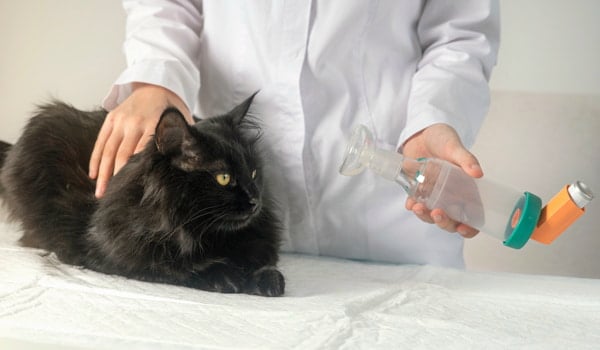
- Corticosteroids: These medications, in oral, injectable, or inhalable form, reduce bronchial inflammation and allergic reactions. Inhalers like the Aerokat, developed for animals, allow for direct administration of the medication with a controlled dosage, thereby reducing side effects compared to oral or injectable use.
- Bronchodilators: Administered via inhalation, these medications help to open the airways and are particularly helpful during acute attacks.
- Environmental Management: It is important to identify and reduce allergens in the home to minimize the immune response and thus the inflammatory changes in the airways.
To achieve optimal effect, these treatments are often combined. The veterinarian can adjust the dose or try different formulations to find the combination that is best suited for the cat.
Tips for Improving Daily Life for Cats with Asthma
To improve the quality of life for an asthmatic cat, it is advisable to make some adjustments in daily life:
- Keep the environment clean: Vacuum regularly to remove allergens, and use air filters if possible. Avoid air fresheners, candles, irritating cleaning products, and smoking in enclosed spaces.
- Use suitable cat litter: Opt for a low-dust cat litter, as dust can irritate the cat's airways.
- Strictly follow the treatment plan: Administer medications strictly according to your veterinarian's instructions, even if the cat seems to be feeling better. Regularity is important to prevent attacks.
Using the Aerokat Inhaler: Practical Tips
An inhaler is often an excellent tool for cats with asthma, as it delivers medication directly to the lungs, thereby reducing the side effects of oral or injectable administration. To accustom your cat to the inhaler, it is recommended to follow these steps:
- Create a positive association with the inhaler: Offer treats or petting every time the cat approaches the inhaler, so it associates it with a pleasant experience. If your cat is afraid of the inhaler, first introduce only the mask.
- Be patient: Some cats may be hesitant at first, but patience is essential. Never force a stressed cat, as this can worsen the situation. Slowly accustom your cat to tolerating the presence of the mask on its face by gradually increasing the duration.
- Use the inhalation chamber: Devices like the Aerokat have an inhalation chamber that allows the medication to be administered without the cat having to breathe directly into the mask. Start by pressing the inhaler medication while holding the inhaler away from your cat's face, then place the mask over your cat's nose. Begin with short periods here and gradually increase (one breath, then two, ...). Ideally, after a few days or weeks, your cat should voluntarily keep its nose in the inhaler mask during the press and for the duration of ten breaths.
A detailed guide on how to use and accustom your cat to the Aerokat inhaler can be found on the manufacturer's YouTube channel.
Asthma in cats is a chronic but manageable condition. With the right treatment and environmental management, cats with asthma can lead comfortable lives. Understanding this disease and recognizing its signs is crucial to providing your cat with a healthy environment and appropriate treatment. If your cat shows asthma symptoms, you should consult a veterinarian immediately to get a definitive diagnosis and establish a treatment plan. With proactive management, asthma is not a dire fate, and it is entirely possible for your cat to live a happy and long life despite this condition.
Sources:
1 Trzil JE. Feline Asthma: Diagnostic and Treatment Update. Vet Clin North Am Small Anim Pract. 2020 Mar;50(2):375-391. doi: 10.1016/j.cvsm.2019.10.002. Epub 2019 Dec 4. PMID: 31812220.
2 Venema C, Patterson C, Venema CM. Feline Asthma: What’s New and where might Clinical Practice be Heading? Journal of Feline Medicine and Surgery. 2010;12(9):681-692. doi:10.1016/j.jfms.2010.07.012

Set ipet.ch as a preferred source on Google
Never miss a tip: Set ipet.ch as a preferred source in your Google account so that our veterinary advice and pet care guides appear higher up in your search results. Optional and can be undone at any time.
Set as preferred source →Useful information at a glance
What are the most common symptoms of feline asthma?
The most common symptoms of feline asthma are persistent, dry coughing, wheezing, shortness of breath, and difficulty breathing. In severe cases, a bluish discoloration of the tongue may occur, indicating acute respiratory distress.
What are the causes and risk factors for feline asthma?
Feline asthma is often triggered by environmental allergens such as dust, pollen, or smoke. Genetic predispositions, especially in breeds like the Siamese cat, as well as chronic respiratory infections can also be risk factors.
How is feline asthma diagnosed?
Diagnosis is made through a physical examination and can be supplemented by X-rays, blood tests, and bronchoscopy with bronchoalveolar lavage. These examinations help to visualize airway inflammation and rule out other causes.
What treatment options are available for cats with asthma?
Treatment typically involves the administration of corticosteroids and bronchodilators, often in the form of inhalations. Additionally, it is important to make the cat's environment allergen-free to alleviate symptoms.
How can I improve the quality of life for my asthmatic cat?
Keep the environment clean, use low-dust cat litter, and avoid irritants such as air fresheners or smoke. Follow your veterinarian's treatment plan precisely and patiently accustom your cat to the inhaler to facilitate medication administration.