
 EN
EN  DE
DE  FR
FR Cat Flu: Why Does Your Cat Sneeze and How Can You Protect Them?
-
 By
med. vet. Bianca Michoud-Valente
By
med. vet. Bianca Michoud-Valente - Oct 5, 2025
What is Cat Flu?
Cat Flu is a collective term for infectious respiratory diseases that are primarily viral in origin. It is mainly caused by the feline herpesvirus (FHV) and the feline calicivirus (FCV), but also by certain bacteria such as Chlamydophila felis or Bordetella bronchiseptica. The pathogens are transmitted via nasal, ocular, and salivary secretions, often through direct contact between cats, but also through the environment (bowls, litter box, textiles). Cats living in groups, outdoor cats, as well as kittens, senior cats, or immunocompromised animals are particularly at risk of infection.
Symptoms of Cat Flu
The symptoms can vary greatly from cat to cat, depending on the pathogens involved and, above all, on the sensitivity and immune system of the affected cat:
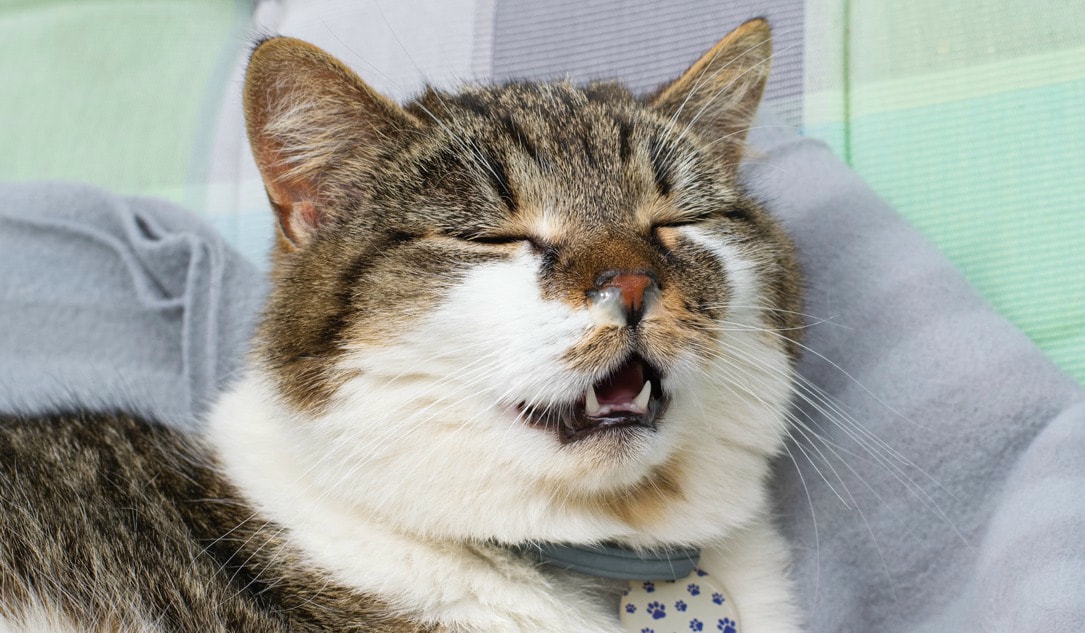
- Repeated sneezing, with or without nasal discharge
- Nasal and ocular discharge (clear or purulent)
- Watery, red, painful eyes (eye frequently blinks or remains closed)
- Fever, lethargy, loss of appetite
- Coughing, painful mouth, excessive salivation, oral or nasal ulcers (especially with Calicivirus infections)
- Difficulty breathing, abnormal breathing sounds
Attention: In small kittens and sensitive animals, the disease can progress to pneumonia, cause severe ulcers that prevent eating, or lead to severe eye damage.
Diagnosis of Cat Flu
Not every cat that sneezes necessarily has Cat Flu. Your veterinarian will also consider other diagnoses: allergies, irritant rhinitis, foreign bodies in the nose, Dental problems, etc. The diagnosis is primarily based on a thorough clinical examination, combined with the anamnesis (e.g., young animal, return from a cattery, etc.).
Sometimes additional examinations are necessary: blood tests, swabs of secretions or cells, or X-rays if other causes are suspected.
Transmission and Risk of Infection
Cat Flu is highly contagious among cats. It is very easily transmitted through droplets produced by sneezing. But infection is also possible through eating from the same bowl, mutual grooming, etc. Indirect transmission can also occur via objects or clothing that have come into contact with virus-containing secretions.
In group housing, strict isolation of sick animals is crucial to contain the spread of infection.
Important to know: Cat Flu is not transmissible to humans!
Prevention of Cat Flu
Vaccination remains the most important preventive measure, which can be carried out from an age of 8 to 9 weeks, followed by regular boosters. The vaccine covers the most important viral strains (Herpesvirus, Calicivirus), but does not completely eliminate the risk of infection or carrier status. Therefore, good hygiene and attentive observation are of great importance even for a vaccinated animal.
Hygiene and environmental management are crucial, especially in group housing (animal shelters, breeding facilities, boarding kennels, multi-cat households, farms):
- Frequent cleaning of food bowls, litter boxes, and cushions
- Regular ventilation
- Limiting the number of cats in the same room
- Stress reduction (stress can weaken the immune system)
- Isolation of symptomatic cats to protect other animals
Furthermore, when introducing a new cat, it is not advisable to immediately bring it into contact with other cats without observing a separation or quarantine phase.
Finally, there are special food supplements to strengthen the respiratory immune system, especially preparations based on L-Lysine, which are recommended if a herpesvirus is suspected.
Prognosis of Cat Flu
Most cats recover completely with appropriate treatment within one to two weeks. Afterwards, the immunity acquired after healing protects the cat from relapses. However, in some individuals, the pathogens remain in the body, causing Cat Flu to become chronic and leading to relapses with the slightest stress. In any case, veterinary care is essential.
What to do in case of frequent sneezing?
As soon as the first signs appear (frequent sneezing, discharge, lethargy), a vet visit is necessary. Treatment depends on the cause and severity of the symptoms. It may include supportive measures to encourage food and fluid intake, symptomatic treatments such as inhalations or eye care, and, if necessary, antibiotics for a secondary bacterial infection. In severe cases, a stay at a veterinary clinic or the use of antiviral or anti-inflammatory medications may be necessary.
Conclusion
Cat Flu is a common disease in cats. Repeated sneezing, discharge, and loss of appetite should prompt careful observation and a rapid consultation with your veterinarian. Vaccination, hygiene, good stress management, and early treatment are the best measures to protect your precious feline friend from this contagious disease and possible complications.

Set ipet.ch as a preferred source on Google
Never miss a tip: Set ipet.ch as a preferred source in your Google account so that our veterinary advice and pet care guides appear higher up in your search results. Optional and can be undone at any time.
Set as preferred source →Useful information at a glance
What exactly is cat flu?
Cat flu is a contagious respiratory disease usually caused by feline herpesvirus (FHV) and calicivirus (FCV).
How do I recognize cat flu in my cat?
Typical signs include frequent sneezing, nasal and ocular discharge, watery or swollen eyes, fever, and loss of appetite.
Is cat flu dangerous?
Especially for kittens, older, or weakened cats. Untreated, it can lead to pneumonia, ulcers, or eye damage.
Can a vaccinated cat still get infected?
Yes, but the course of the disease is usually much milder, and complications occur less frequently.
How is cat flu transmitted?
Via saliva, nasal or ocular secretions, often during sneezing, grooming, or through shared bowls and litter boxes.
Is cat flu transmissible to humans?
No. Cat flu is not zoonotic and cannot be transmitted to humans or other animal species.
How can cat flu be prevented?
Regular vaccinations, good hygiene, stress reduction, and the isolation of sick animals are crucial.
What should I do if my cat sneezes frequently?
Consult the veterinarian. An accurate diagnosis is necessary to initiate the appropriate treatment.
How long does recovery take?
With timely treatment, most cats recover completely within one to two weeks.
Can cat flu become chronic?
Yes, some viruses, like the herpesvirus, remain in the body and can become active again during stress or illness.