
 EN
EN  DE
DE  FR
FR How much meat is in the food?
-
 By
Dr. med. vet. Sabina Büttner
By
Dr. med. vet. Sabina Büttner - Sep 14, 2018
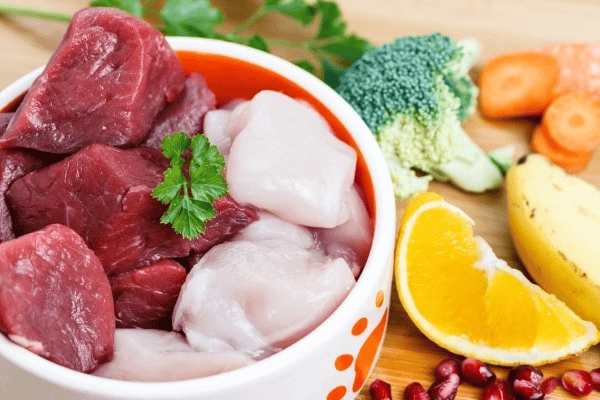
Many dog and cat owners want to feed their beloved pets food with as much meat as possible, believing that the more meat, the healthier the food. Pet food manufacturers also advertise with the highest possible meat content – but what do these declarations actually mean?
Meat is undoubtedly an important food component for dogs and cats: It provides proteins, which are used for the growth and regeneration of body cells and as energy suppliers. However, meat consists not only of proteins but to a much larger extent of water. For example, 100 grams of chicken meat contain around 72% water and only 23% protein. If the meat is dried to produce chicken meat meal, it then contains only 10% water, and the protein content rises to 74%.
A Little Math Problem
There are two methods for producing dry food: either fresh meat is used, which is dried during the manufacturing process, or meat meal is used, which has already been dried before the manufacturing process. Nutritionally, both methods are equivalent. However, the declarations on the ingredient list will differ significantly between the two types of food: For example, Product 1 declares a content of 60% fresh chicken meat, whereas Product 2 only states a content of 25% chicken meat meal.
Which food actually contains more proteins? – The fresh meat in the first food provides 13.8 grams of protein per 100 grams, but the chicken meat meal in the second product provides 18.5 grams!
Is More Protein Always Better?
Is a protein-rich diet necessarily better than food with less protein? – No! If more protein is consumed through the diet than the body uses, the excess protein is converted into energy in the liver – this process creates breakdown products that must be excreted by the kidneys. Too many proteins therefore cause a high strain on the liver and kidneys.
An optimal protein content in food ranges between 15-30% of the dry matter for dogs and between 25-45% for cats.
A direct comparison of the nutritional content of different types of food is often difficult for dog and cat owners. Many, sometimes contradictory, information and views on the optimal nutrition for dogs and cats lead to further uncertainties. That's why we are happy to advise you on your food choice! (Ask our veterinary team).
Useful information at a glance
Why is the meat content in food so important?
Meat is an important component of food for dogs and cats, as it provides proteins that are necessary for the growth and regeneration of body cells, as well as serving as an energy source.
Is a higher meat content in food always better?
Not necessarily. A high meat content does not automatically mean more proteins, as meat largely consists of water. The actual protein content in the food is crucial.
How does fresh meat differ from meat meal in food?
Fresh meat contains more water and fewer proteins compared to meat meal, which has already been dried and thus has a higher protein content.
Can too much protein in food be harmful?
Yes, an excess of protein can strain the liver and kidneys, as excess protein is converted into energy, producing waste products that must be excreted.
How do I find the right food for my dog or cat?
An optimal protein content in food ranges between 15-30% of the dry matter for dogs and between 25-45% for cats. If you are unsure, our veterinarian team at ipet.ch will be happy to assist you with your food choice. Contact us at ipet.ch.