
 EN
EN  DE
DE  FR
FR How to Administer Medication to Your Cat
-
 By
med. vet. Bianca Michoud-Valente
By
med. vet. Bianca Michoud-Valente - Jan 13, 2022
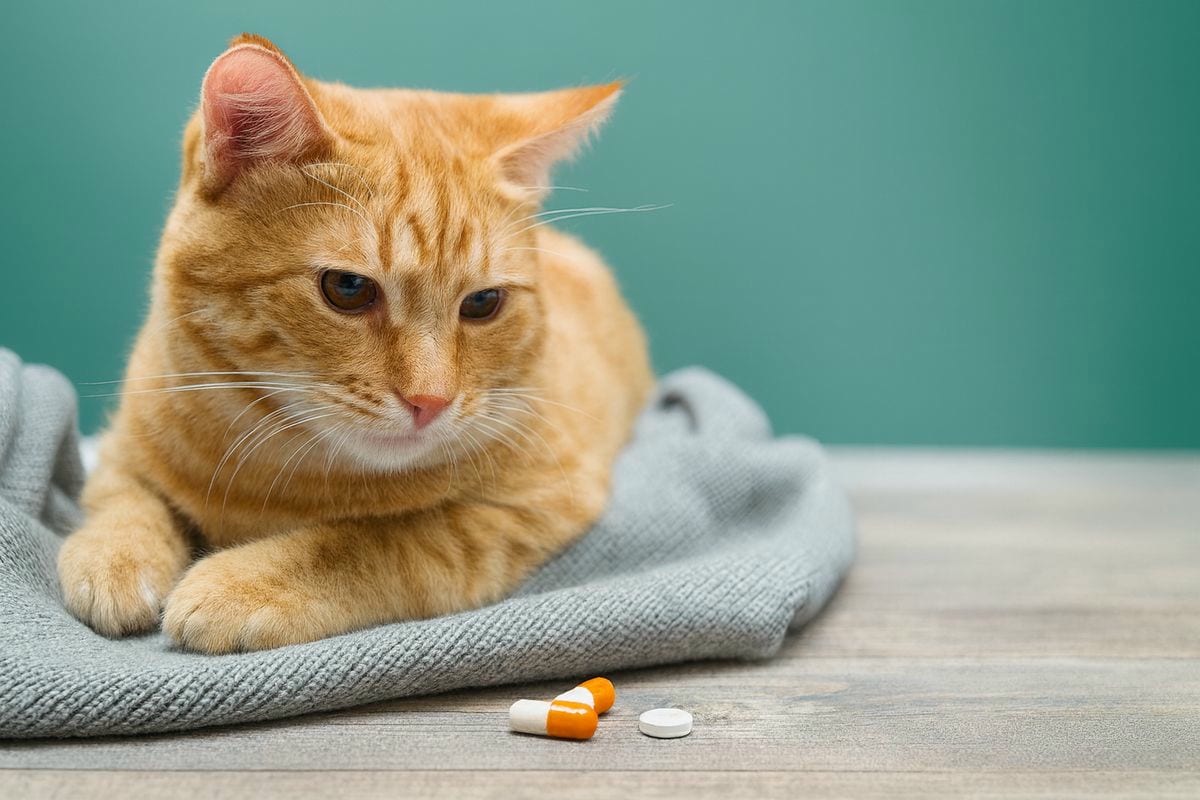
Your cat needs to take medication, and you're unsure how to administer it? Discover the various methods for giving medication to a cat – from the simplest approach to more complex techniques – always with the necessary consideration for your feline friend.
Indeed, our beloved cats are known for their independence, and it can therefore prove very difficult to get them to swallow medication they don't want to take. At the same time, cats are highly sensitive pets, so under no circumstances should you use force or be rough.
All methods shown here must be carried out gently, with controlled movements, and calmly.
We also advise you not to become impatient, as many cats become stubborn when they sense their owners' unease. Because cats are creatures of habit, any change in their daily routine immediately arouses their distrust. However, if you can convince them that the new ritual is something positive, they will quickly get used to it. For this, it is important to always use a friendly and gentle tone of voice.
Practice makes perfect! Ask your veterinarian during the consultation to show you specific techniques that you can then replicate and practice at home. Over time, you will master the method you prefer best.
1 – I need to administer liquid medication to my cat
If the medication prescribed for your cat is liquid, that's good news, as liquids are usually easy to give! These products are typically administered using a pipette. You only need the medication, a few treats, and some patience.
Sometimes a slightly trickier method needs to be applied, but in any case, it is crucial to ensure that your cat actually swallows the liquid.
The following methods can be used:
- Give your cat the liquid directly from your hand, by dripping it onto your finger. If the preparation tastes good and your cat isn't too picky, this will work well!
- Mix the liquid with your cat's food, by simply adding it over dry food, a treat, or wet food. Make sure to mix everything well and ensure your cat eats all the food quickly.
- Spread the liquid directly onto your cat's front paws or lips. She will immediately start cleaning herself with her tongue and thus ingest the medication. This method works if the amount to be administered is small and the cat is sufficiently clean.
- If the above methods don't work, you can try to give the liquid directly into your cat's mouth. To do this, hold your cat in your arms or have a second person hold her for you. Then, gently hold her head with one hand, place the pipette tip into the corner of her mouth, and instill the contents of the pipette. Your cat then only needs to swallow the medication.
This method is only recommended for one-time or short-term administration of medication, as your cat will probably not like it very much, even if she appears cooperative!
In any case, it is important that you always speak lovingly to your cat, praise her, and give her a treat or stroke her after she has swallowed her medication. This way, she will associate this moment with a positive experience and will be more willing to cooperate in the future!
2 – I need to administer a tablet to my cat
If your veterinarian has prescribed tablets for your cat, there's no need to worry: there are various helpful methods to manage the administration. You will surely find a way that suits both you and your cat. Ask your veterinarian during the consultation to show you directly how to administer the tablets. They can certainly give you some additional advice. However, it often seems easy to give a cat a tablet during the consultation. At home, it can sometimes still be difficult to implement. This is because cats are in a safe and familiar place at home and therefore tolerate taking tablets less well. In the vet's office, on the other hand, they are inhibited and stressed and allow the administration more easily.
So, you need to arm yourself with patience, gentleness, good humor, and a little cunning. After all, your cat should perceive the ritual as pleasant and enjoy the moment of attention. So, spoil her with lots of cuddles or treats!
The following methods can be used to get your cat to swallow a tablet:
- The Optimistic Method
If you are lucky enough that your cat is very greedy or the tablets are very palatable, you can try to offer them directly from your hand, as if they were real delicacies.
- The Optimistic Method with Tricks
If your cat doesn't find the tablets particularly interesting, you can try to hide them in a piece of ham, cheese, fish, or pâté, depending on what she prefers. There are also treats specifically designed for administering tablets. These are exceptionally palatable and, due to their special consistency and smell, mask the taste and smell of the tablets.
If the tablets are very large or your cat is not easily fooled and spits the tablet out, you can crush them into small pieces or grind them completely and mix them into wet food, yogurt, pâté, or these special treats.
Caution: Please always ask your veterinarian beforehand if the tablets may be divided. Crushing the tablet can alter the dosage, absorption, or taste, or even cause irritations. Some tablets are coated with a special layer that masks the bitter taste or ensures the stomach lining is protected. However, uncoated and easily divisible tablets can usually be divided and crushed without problems.
- The Tricky Method
If your cat proves resistant despite all efforts, you can try to grind the tablets, mix them with water, and administer them to your cat with the help of a syringe. Give the liquid mixture directly into the mouth, as explained above for liquid methods. However, this method is only suitable if the medication administration is time-limited, as it is not pleasant for your cat.
- The Professional Method
A cat is a fast and very intelligent animal. If the simple methods don't work, you must therefore display the same qualities to successfully get her to swallow her medication. Caution, we recommend this method only for short-term or one-time administration of medication, e.g., for deworming. Your cat will not like it, and it is important to use as little force as possible so that the cat's well-being is not too severely restricted and the relationship with you is not permanently damaged.
With this method, hold your cat firmly on your lap or on a table, possibly with the help of a second person to hold her for you. Then, you must gently grasp her head and tilt it slightly backward, while pressing on the corner of her mouth with your thumb on one side and your forefinger on the other side, so that she opens her mouth. When the mouth is open, you should use your free hand to quickly place the tablet far back on the tongue, close the mouth again, and gently massage her throat to encourage swallowing and prevent the tablet from being spat out.
This hand movement should be precise, gentle, and quick. Then release your cat and praise her warmly, cuddle with her, or give her a treat!
Please note that this method is not without risk, as an unhappy and uncooperative cat can scratch you or close her mouth if your fingers are still inside. However, there are special, very practical syringes, so-called pill dispensers. With these, you can give the tablet directly into your cat's mouth without using your fingers. Thanks to the rubber tip, you also cannot injure the cat. You can obtain such pill dispensers from your veterinarian or pharmacy.
What to do if you can't administer medication to your cat?
Sometimes your cat refuses all medication, and no matter what you try, she won't swallow them! Or the administration of the medication causes too much stress, both for the cat and for you, which cannot continue in the long run.
If you live with a very stubborn or very sensitive cat, we recommend that you contact your veterinarian. Some medication is also available for external application (creams, drops), as an injection that lasts for several days, or as a powder that can be sprinkled over the food. Sometimes, medication can also be replaced by a suitable veterinary diet food.
In some cases, home visits are offered, or you can bring your cat to the clinic once a day so that the medication can be professionally administered until the treatment is completed and your cat is healthy again.
Ultimately, it doesn't matter which method you choose – the most important thing is that you feel comfortable, that you carry out the administration in a positive atmosphere, and that your cat tolerates it well. This way, your relationship will continue to be based on trust and bonding!
Useful information at a glance
How do I administer liquid medication to my cat?
Liquid medication can be administered to your cat relatively easily. You can give the liquid directly from your hand by dripping it onto your finger. Alternatively, you can mix the liquid with food or spread it on your cat's front paws or lips. If these methods don't work, you can give the liquid directly into your cat's mouth using a dropper. It is important to always praise your cat and give them a treat after they have swallowed the medication.
How can I give my cat a tablet?
There are various methods for administering a tablet to your cat. You can try giving the tablet directly from your hand, or hiding it in a piece of ham, cheese, or a special treat. If your cat does not accept the tablet, you can crush it and mix it with food, provided this is permitted by the veterinarian. Another option is to mix the tablet with water and administer it with a syringe. If necessary, you can also use a pill dispenser.
What should I do if my cat refuses to take the medication?
If your cat refuses the medication, you should contact your veterinarian. There are alternative administration methods such as creams, drops, or injections. In some cases, the medication can also be replaced by a veterinary diet food. Your veterinarian can also offer home visits or administer the medication at the clinic.
How can I ensure my cat swallows the medication?
To ensure your cat swallows the medication, you should praise and reward them with a treat after administration. Make sure the medication is well mixed with the food if you choose this method. If you administer the liquid directly into the mouth, gently hold your cat's head to encourage swallowing. For tablets, you can gently massage your cat's throat to aid swallowing.
What tips are there for making medication administration stress-free?
To make medication administration stress-free, it is important to remain calm and patient. Use a friendly tone of voice and reward your cat with petting or treats after they have taken it. Practice the techniques your veterinarian has shown you, and choose a method that is comfortable for both you and your cat. A positive atmosphere helps your cat perceive the ritual as pleasant.