
 EN
EN  DE
DE  FR
FR How do I determine the correct food amount?
-
 By
Dr. med. vet. Sabina Büttner
By
Dr. med. vet. Sabina Büttner - May 14, 2020
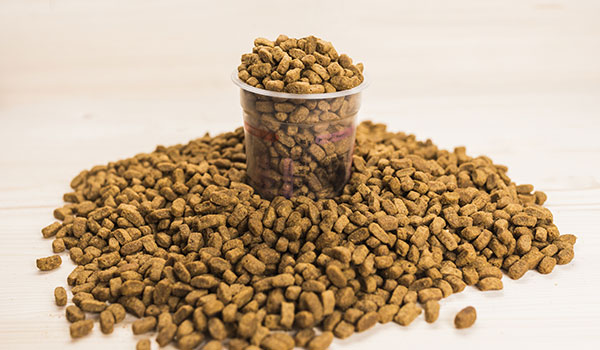
By far the most common mistake when feeding dogs and cats is giving them too much food. Accordingly, obesity in dogs and cats is now a widespread nutrition-related problem. It is therefore important that we as pet owners know the amount of food our pet needs so that it neither gains nor loses weight.
Many pet owners don't know how many calories their pet needs and assume that the pet itself knows when it's full. However, most dogs and many cats do eat more than they actually need to maintain their weight! We must therefore ration their food.
What does the amount of food depend on?
On the one hand, the amount of food depends on the pet's energy requirements, which vary greatly individually. It is influenced by various factors, including the pet's size, weight, and age. But breed, activity level, health status, metabolic condition, and the environmental conditions in which the pet lives also play a role.
On the other hand, the energy content of the food is crucial in determining the amount of food. It results from the amount of energy-supplying nutrients in the food and is usually given in kilocalories (kcal) per 100g. Fats provide the most energy, followed by proteins and carbohydrates. Indigestible fiber and water in the food, however, provide no energy. For wet food with an average water content of 80%, the amount a pet can consume is therefore significantly higher than for dry food which contains only 10% water.
Energy-reduced dry food for dogs and cats prone to overweight contains a larger amount of indigestible dietary fibers, such as carrots, beet pulp, or cellulose. This increases the amount of food in the bowl, leading to better satiety without adding extra calories.
High-energy food, on the other hand, contains a high proportion of fats to cover the increased calorie requirements of sporting or hunting dogs.
The energy content of regular food for adult dogs can vary greatly. Therefore, it is important that when changing food, the amount of food is always adjusted to the new food.
How do I determine the correct amount of food for my pet?
A starting point for the correct amount of food can be found in the feeding recommendations provided on the food packaging. However, since the energy requirements of pets vary greatly individually, these can only ever be rough guidelines. The necessary amount of food can, of course, also be calculated by determining the pet's daily energy requirements and then, based on the food's energy content, determining the amount needed to meet these requirements.
You have two options for this:
-
Our food calculator, which calculates the amount of food to be fed daily.
You can easily use our iPet food calculator . Based on your pet's weight and activity, you can determine the energy requirements and then calculate the daily food ration by entering the analytical constituents (Moisture, Crude protein, Crude fat, Crude fiber, and Crude ash) specified on the packaging.
The calculations used only take into account some of the individual differences, so the results obtained are only guidelines and may sometimes need to be adjusted individually if necessary.
-
Calculate the daily required amount of food yourself
To do this, you must use the formula provided below.
|
Energy Requirements Calculation: Basal Metabolic Rate = 70*(Body weight)0.75 Daily Energy Requirements = Basal Metabolic Rate * individual factor according to the following table Individual Factor: |
|
Food Requirements Calculation The daily amount of food is then calculated as follows: Amount of food per day = Energy Requirements / Energy content in the food * 100 |
|
Examples For a 5kg neutered cat, the daily energy requirements are: 70*(5)0.75*1= 234 kcal If the food has an energy content of 364kcal/100g, then the daily amount of food is 234/365*100=64g For a 25kg unneutered dog, the daily energy requirements are: 70*(25)0.75*1.6= 1252kcal If the food has an energy content of 435 kcal/100g, then the daily amount of food is: 1252/435*100=288g |
What else is being fed?
Pet owners often forget to consider the treats, rewards, and chews given throughout the day when determining the amount of food. However, these usually contain a relatively high energy content and should therefore definitely be included when determining the daily amount of food. For example, a dried pig's ear weighing 50g contains over 200kcal, a dried chicken breast fillet weighing 20g contains almost 100kcal, and 10g of dried lung cubes contain almost 40kcal. Often, however, the energy content of snacks and rewards is not specified, making it difficult to determine how many calories are being supplied to the pet.
Regularly check the weight
The decisive criterion for determining the correct amount of food is therefore always the weight development of the pet. Therefore, the pet's weight should be checked regularly, preferably weekly after a food change. If the pet is at its ideal weight and can maintain it, this means it is receiving the correct amount of food. If the pet gains weight, the amount of food must be reduced; if it loses weight, it must be increased. This way, intervention can occur before major deviations from the ideal weight occur.
Provide food adapted to the needs
Our pets do not live on energy alone. Through their food, they must also absorb all essential nutrients such as vitamins and minerals in an amount appropriate to their needs.
To avoid over- or under-supply of these nutritional components, it is important to give the pet food adapted to its needs. For example, if the pet is overweight, it is not sensible to simply drastically reduce the amount of food. It is better to switch to a lower-energy food that, despite its lower calorie content, ensures the dog or cat is otherwise adequately supplied with all vitamins and minerals. For an active sporting or hunting dog that needs a lot of energy to maintain its weight, it is better to give high-energy food than large amounts of regular food.
Conclusion:
The energy requirements of our pets are so individually varied that both the manufacturers' quantity specifications and the quantity calculations can only provide guidelines for the daily amount of food to be administered. Regular weight checks and the corresponding adjustment of rations are the best guarantee that the pet maintains its ideal weight.

Set ipet.ch as a preferred source on Google
Never miss a tip: Set ipet.ch as a preferred source in your Google account so that our veterinary advice and pet care guides appear higher up in your search results. Optional and can be undone at any time.
Set as preferred source →Useful information at a glance
How do I determine the correct food amount for my pet?
The correct food amount depends on your pet's individual energy requirements. This is influenced by factors such as size, weight, age, breed, activity level, and health status. A good starting point is the feeding recommendations on the food packaging. For a more precise calculation, you can use our iPet food calculator, which calculates the energy requirements based on your pet's weight and activity.
How do I calculate my pet's daily energy requirements?
The daily energy requirements are calculated using the formula: Basal Metabolic Rate = 70*(Body Weight)^0.75. Multiply the Basal Metabolic Rate by an individual factor (e.g., 1.6 for an adult, normally active dog) to obtain the daily energy requirements. This calculation provides only guidelines and should be adjusted individually.
How do I account for snacks and treats when determining the food amount?
Snacks and treats often have a high energy content and should be considered when determining the daily food amount. For example, a dried pig ear weighing 50g contains over 200kcal. Be sure to include these calories in the total food amount to avoid overweight.
How often should I check my pet's weight?
Your pet's weight should be checked regularly, especially after a food change. Weekly monitoring helps ensure your pet maintains its ideal weight. If there are deviations, the food amount should be adjusted accordingly.
Why is it important to provide food tailored to specific needs?
Food tailored to specific needs ensures that your pet receives all essential nutrients in the correct amount. For overweight animals, it is better to switch to a lower-energy food rather than drastically reducing the food amount. For active sport or hunting dogs, a high-energy food is more appropriate to meet their increased caloric needs.