EN
EN  DE
DE  FR
FR Lumps or Bumps on the Skin: When to See the Vet?
-
 By
Dr. med. vet. Sabina Büttner
By
Dr. med. vet. Sabina Büttner - Apr 13, 2021
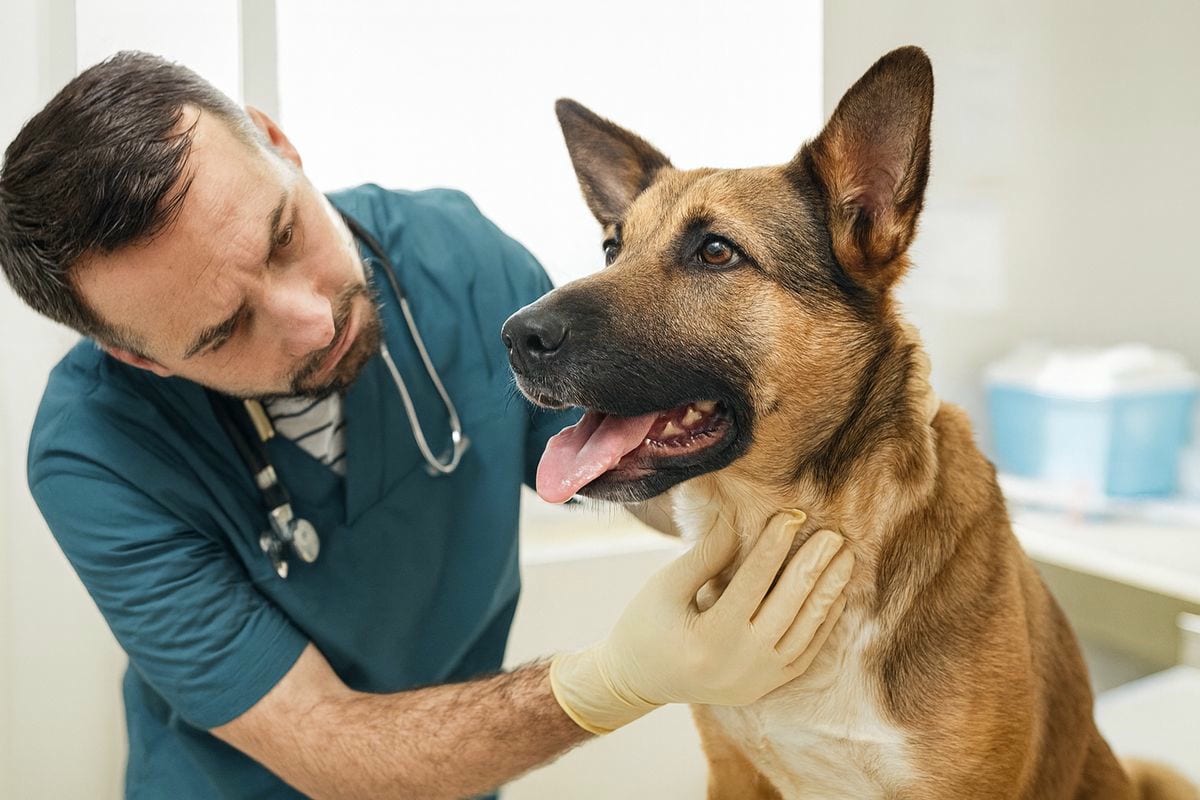
Has this ever happened to you? While stroking your pet, you suddenly feel an unusual lump in the skin and don't know what it is. Here, we show common causes for such skin changes and give tips on what to do.
Lumps, bumps, or warts in the skin are relatively common in dogs and cats. When owners notice such changes, they are often worried. Could it be cancer, or is it just a harmless wart? There are many causes for lumps in the skin, and fortunately, they are rarely malignant tumors.
Tick Bites and Insect Stings
During the warmer seasons, ticks are often the cause of suddenly appearing lumps in the skin. The area around a tick bite can swell and is often red. After immediate removal of the tick, such spots should be well disinfected and further observed. If swelling and inflammation do not subside within 1 to 2 days, a veterinarian should be consulted.
Insect stings, especially from bees or wasps, can also cause quite large swellings in the head area. Most such insect stings are harmless. The swollen area should be carefully examined, and any remaining stinger should be removed. Cooling compresses reduce the swelling. If animals are stung in the mouth or throat area, the mucous membranes can swell significantly, which can lead to shortness of breath and choking symptoms. In such cases, the animal must, of course, receive immediate veterinary treatment.
Blocked Sebaceous Glands
Especially in older dogs, blocked sebaceous glands are a common cause of lumps in the skin. The sebum produced in the glands is normally continuously released and ensures supple skin. If the excretory duct of a sebaceous gland is blocked by shed skin cells or dried sebum, the sebum can no longer drain and accumulates in a cyst under the skin, which slowly grows. Usually, the veterinarian can express such cysts, and the problem is thus resolved. Occasionally, such cysts become inflamed, and then it is advisable to remove them surgically.
Abscesses
If you suddenly notice a swelling or a skin lump on your animal, it could also be an abscess. Such pus-filled swellings often develop after bite or claw injuries from cats, dogs, or wild animals. They are often very painful initially and, if they remain unnoticed for some time, can burst and drain the pus outwards. Painful swellings should therefore always be examined by a veterinarian.
Reaction to a Vaccination or Injection
Sensitive animals can react with swelling at the injection site after a vaccination or another injection. Such injection reactions usually subside after a few days. If this is not the case, a veterinarian should be consulted to ensure that no abscess has formed.
Skin Tumors
Growths in or under the skin can also be tumors. In dogs and cats, the skin is even the organ most frequently affected by tumors. Some of these are benign and do not cause major problems, but there are also malignant skin tumors for which one should react as early as possible. In dogs, only approx. 20-30% of skin tumors are malignant, but in cats, it's 40-70%. Common skin tumors include warts, basal cell tumors, lipomas, squamous cell carcinomas, mast cell tumors, or fibrosarcomas.
Based on appearance alone, it is never possible to say exactly what type of tumor it is. For example, benign warts can look identical to malignant squamous cell carcinomas, or harmless tumors of fatty tissue (lipomas) cannot be reliably distinguished from malignant mast cell tumors. Therefore, if you discover a lump in your pet's skin whose cause you cannot explain and which has not disappeared after 1 to 2 days, you should show it to a veterinarian.
While in the past, it was often advised to wait and observe whether a skin tumor grew, today, efforts are made to determine the exact type of tumor as quickly as possible. Only in this way can the course and prognosis be estimated, and a sensible therapy be determined for the individual animal. The veterinarian will therefore usually not only assess the lump by its shape, color, mobility, and location but also take a small tissue sample for microscopic examination. If it is a benign tumor, you can now wait with a clear conscience and only intervene if the lump grows, causes mechanical discomfort, or becomes inflamed. If it turns out to be a malignant tumor, no valuable time has been wasted, and it can now be surgically removed at the earliest possible time.
When to See the Vet? Better Safe Than Sorry
We advise regularly palpating your dogs and cats all over their bodies to detect any lumps, warts, or knots in the skin as early as possible. If you notice a change whose cause you cannot explain, then you should not wait too long before consulting a veterinarian.
If you notice the following, you should see a veterinarian as quickly as possible:
- You discover a new lump of unknown origin
- an already known lump begins to grow
- an already known lump changes in color
- an already known lump changes in consistency
- a lump begins to bother the dog or cat
- the dog or cat starts to gnaw at or scratch a lump

Set ipet.ch as a preferred source on Google
Never miss a tip: Set ipet.ch as a preferred source in your Google account so that our veterinary advice and pet care guides appear higher up in your search results. Optional and can be undone at any time.
Set as preferred source →Useful information at a glance
When should I take my pet to the vet if I discover a lump on the skin?
If you discover a new lump of unknown origin, an already known lump starts to grow, changes in color or consistency, or your pet begins to bother or scratch the lump, you should consult a veterinarian as quickly as possible.
What are common causes of lumps on the skin in dogs and cats?
Common causes of lumps on the skin include tick bites, insect stings, clogged sebaceous glands, abscesses, reactions to vaccinations or injections, and skin tumors. It is important to have the exact cause clarified by a veterinarian.
How should I treat a tick bite on my pet?
After immediately removing the tick, you should thoroughly disinfect the affected area and continue to observe it. If swelling and inflammation do not subside within 1 to 2 days, you should consult a veterinarian.
What can I do if my pet develops swelling after a vaccination?
Sensitive animals may react to a vaccination with swelling at the injection site. These usually subside after a few days. If this is not the case, you should consult a veterinarian to ensure that an abscess has not formed.
How do I know if a lump on my pet's skin is malignant?
Based on appearance alone, it is not possible to definitively say whether a lump is malignant. A veterinarian will assess the lump based on its shape, color, mobility, and location, and may take a tissue sample for microscopic examination. This helps determine the type of tumor to plan an appropriate therapy.