
 EN
EN  DE
DE  FR
FR Treats for Puppies as a Training Aid – Using Them Effectively from the Start
-
 By
Kathy Wyss
By
Kathy Wyss - Mar 31, 2026
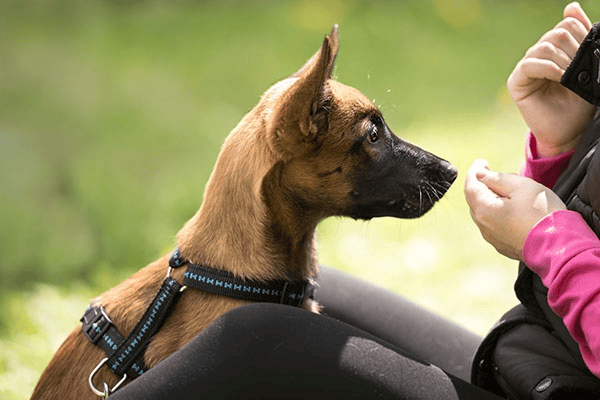
A puppy moves in – bringing lots of joy, curiosity, and often a few challenges in everyday life. During this time, many dog owners like to use treats to reward good behavior. When used correctly, they can be a helpful support in training. They are a tool in puppy training, but they do not replace clear rules, patience, and consistent guidance from the owner.
Training begins on the first day
A very common thought in the first days with a puppy is: it is still so small and cute. As a result, many things that will not actually be desired later on are tolerated.
However, puppy training begins on the very first day. The young dog learns from the beginning what is allowed in the new home and what is not. Behavior that seems cute today can quickly become problematic in an adult dog.
Therefore, it is worth considering a simple question:
„How should the adult dog behave in everyday life?“
Those who ask themselves this question early can guide rules in the right direction from the start. There is no universal right or wrong. What matters is that the rules are clear, consistent, and understandable.
If a puppy that has not been given any boundaries feels that the whole world belongs to it, this can become difficult later on. Conflicts often arise especially during adolescence: suddenly, many things are forbidden that were previously allowed. This often leads to frustration and resistance in the dog, which is already going through a challenging phase due to hormonal changes.
Clear structures from the beginning therefore not only make everyday life with the puppy easier but also support the dog’s later development.
Why treats can be helpful in puppy training
Puppies learn very strongly through positive experiences. A tasty reward can therefore help to quickly reinforce desired behavior.
Typical situations in which puppy treats can be used effectively include:
- recall training at home and during walks
- calm behavior in new situations
- house training
- first basic commands such as sit or down
- relaxed behavior at the veterinarian or when being put on the leash
- walking on a leash without pulling
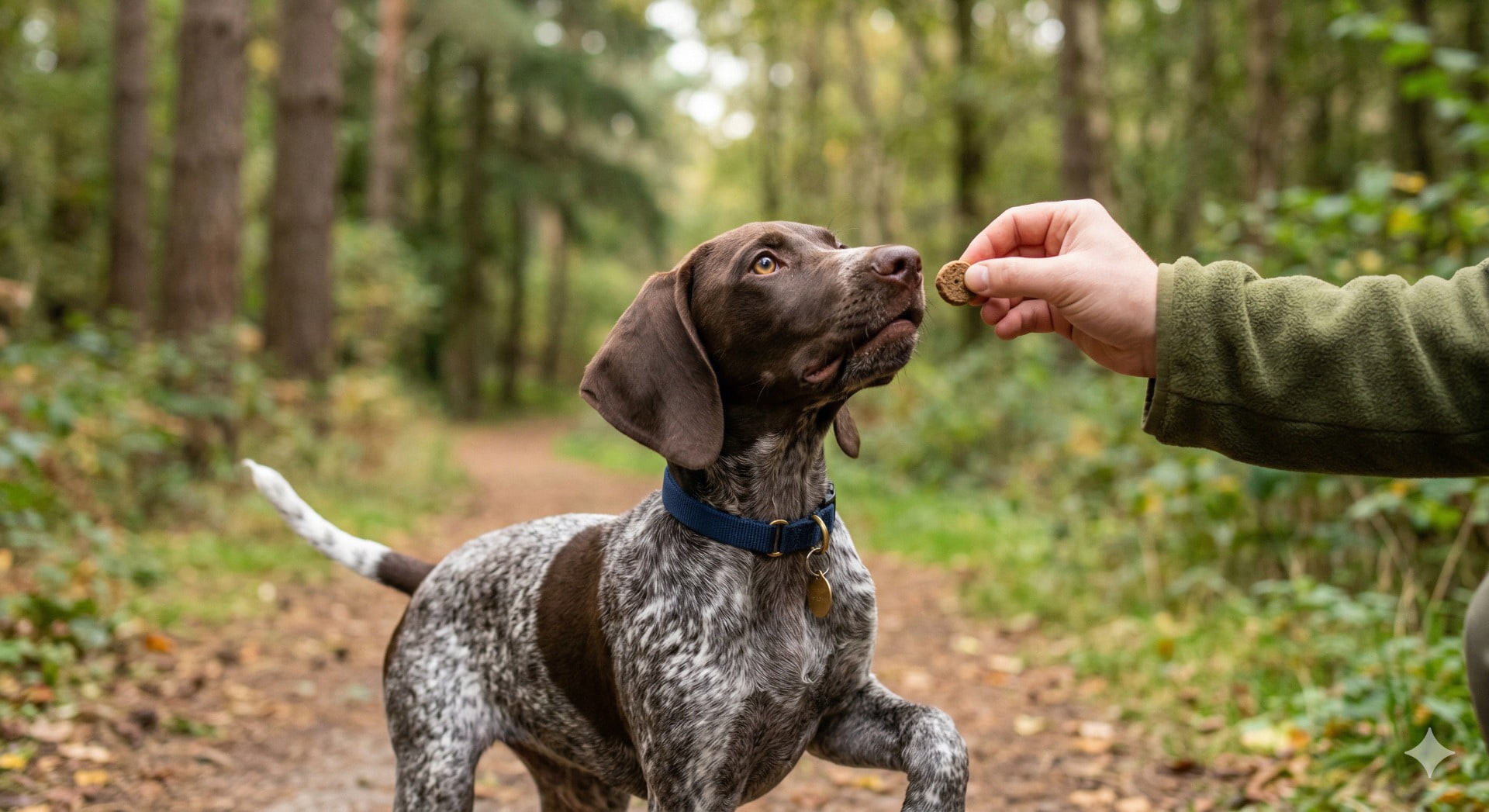
Timing is crucial: The reward should be given immediately after the desired behavior. This helps the puppy quickly understand which behavior leads to success.
Which treats are particularly practical for puppies
Not every treat is equally suitable for every situation. Depending on the context, different options can be useful.
Small and soft treats for training on the go
During walks or training sessions, small, soft puppy treats or dog pâté from a tube are especially practical.
- quickly eaten
- short reward without long interruption
- easy to portion
- highly motivating due to intense taste
The puppy can consume the treat quickly, and attention remains on the owner. This is especially helpful for recall training or socialization exercises.
Larger and harder treats for activity at home
At home, treats can be a bit larger. Chews or firmer treats offer several advantages:
- longer engagement
- natural chewing needs are satisfied
- chewing has a calming effect
- meaningful activity during rest phases
Especially for young dogs, chewing can help them settle down again after exciting situations.
Please note: Puppies should never eat chew snacks unsupervised, as there is a risk of swallowing pieces that are too large without chewing them properly. This can lead to choking or intestinal blockage. For training to stay alone, fillable natural rubber toys such as a “Kong” are a safer alternative without the risk of swallowing.
How many treats are appropriate?
Even though puppy treats are practical, they should be used in moderation. Too many snacks can quickly lead to an unbalanced energy intake.
These simple rules can help:
- subtract treats from the daily food portion
- prefer small portions
- choose high-quality ingredients
- do not reward every behavior
Training is not only about treats
Positive reinforcement is important, but puppy training consists of more than just rewards. Dogs need:
- clear structures in everyday life
- calm and consistent guidance
- sufficient sleep and rest periods
- clear boundaries when behavior is not desired
Treats can help show the right path. However, boundaries and guidance provide security and calm. Especially in situations where calm behavior is desired, setting boundaries is often more effective. If the dog is constantly waiting for a treat, it remains in a state of expectation and finds it harder to relax.
Conclusion: use treats purposefully
Treats for puppies are a practical and meaningful support in training. When used correctly, they help to quickly reinforce positive behavior and facilitate learning processes.
However, what really matters is the combination of clear rules from the beginning, consistent guidance in everyday life, targeted rewards with suitable puppy treats. This creates a relaxed everyday life step by step with the growing dog.

Set ipet.ch as a preferred source on Google
Never miss a tip: Set ipet.ch as a preferred source in your Google account so that our veterinary advice and pet care guides appear higher up in your search results. Optional and can be undone at any time.
Set as preferred source →Useful information at a glance
When should treats be used in puppy training?
Treats can be used from the very first day. It is important to use them purposefully to reinforce desired behavior and to combine them with clear rules from the beginning.
Which treats are best for puppies?
Small, soft treats are ideal for training on the go, as they can be eaten quickly. At home, larger and firmer chews are suitable and also provide additional activity.
How many treats can a puppy have per day?
Treats should be given in moderation. They should be deducted from the daily food portion to ensure a balanced diet.
Can treats replace training?
No, treats are only a support. Successful puppy training also requires clear rules, consistent guidance, and sufficient rest periods.
Why is timing important when giving treats?
A puppy only correctly associates behavior with a reward if it is given immediately afterward. This helps the puppy understand more quickly which behavior is desired.