
 EN
EN  DE
DE  FR
FR What to Consider When Feeding Young Dogs?
-
 By
Dr. med. vet. Sabina Büttner
By
Dr. med. vet. Sabina Büttner - Jul 13, 2018
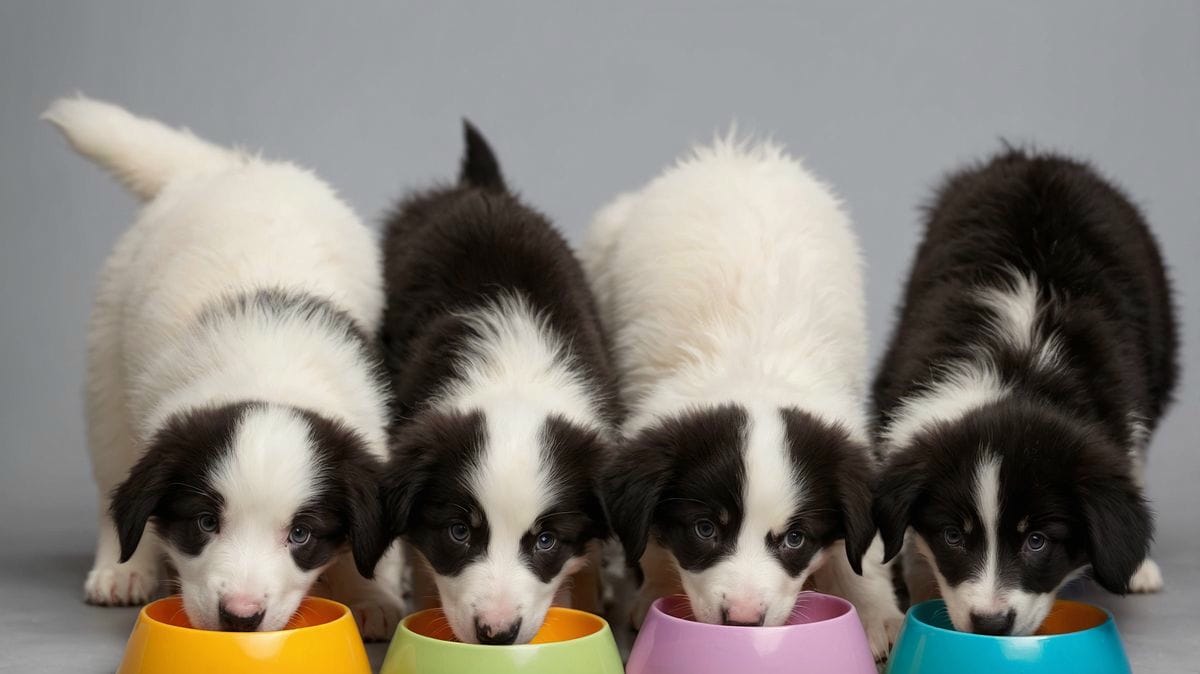
Nutrition plays a crucial role in the healthy development of young dogs, as it directly influences the immune system, growth, and skeletal development. Here you will learn the most important points regarding feeding growing dogs.
Growth Curve of Young Dogs

Young dogs grow incredibly fast up to the 8th month of life. Depending on the breed, they have already reached 50% of their adult weight by 4-6 months of age. Small breeds are fully grown by approx. 10 months, medium breeds by approx. 12 months. For large breeds, it can take 18 to 24 months to reach their final weight
| Breed Size | Fully Grown (Estimated) |
|---|---|
| Small Breeds | approx. 10 months |
| Medium Breeds | approx. 12 months |
| Large Breeds | 18 to 24 months |
To prevent growth disorders, a balanced diet is very important. In particular, a moderate energy intake adapted to growth and a balanced mineral ratio are of great importance.
Key Nutritional Factors
Energy Intake
While an adult dog becomes overweight with too much energy, excessive energy intake in a growing dog primarily causes it to grow too quickly. This increases the risk of bone growth disorders. Daily rations must be regularly adjusted to the dog's weight during growth. The feeding recommendations of feed manufacturers serve as a starting point. Since these figures are only guidelines and the actual energy requirement can vary greatly from dog to dog, it is necessary to regularly check weight development and adjust the amount of food if the young dog gains weight faster or slower than expected.
Check the Label: Always ensure whether the manufacturer's feeding amounts refer to the current weight of the puppy or the expected adult weight!
Protein
Growing young dogs have a high protein requirement, which should be met through high-quality and easily digestible protein sources. Contrary to earlier assumptions, an excess of protein in the food does not lead to skeletal development disorders – but it can cause diarrhea, especially if the food contains a lot of hard-to-digest or low-quality protein.
Minerals: Calcium & Phosphorus
The balance between calcium and phosphorus is critical. Too much, too little, or the wrong ratio of these minerals can lead to serious growth disorders.
| Condition | Ideal Ratio (Ca:P) | Consequences |
|---|---|---|
| Optimal | 1.2 : 1 to 1.5 : 1 | Healthy skeletal development and bone stability. |
| Excess Phosphorus | e.g. 1:2 (too much meat in the ration) | Bone demineralisation. |
| Excess Calcium | e.g. > 2:1 (calcium supplement in addition to a balanced diet for puppies) | Skeletal deformities (particularly in large breeds). |
What is the Best Food for My Puppy?
✓ Recommended
- Commercial complete puppy food tailored to breed size.
- A combination of wet and dry food from the same product line.
- Home-prepared meals only with expert veterinary advice.
✗ Avoid
- Additional mineral or vitamin supplements (risk of oversupply).
- Mixing pure meat into dry food (leads to phosphorus excess).
- Frequent food changes without a transition period.
The easiest and safest way is to feed your dog a commercially available puppy complete food that is tailored to the size of the respective breed. You should definitely refrain from adding extra minerals or vitamins, as this can lead to over-supplementation. Likewise, meat should never be mixed with dry food, as this can lead to a phosphorus excess. If your young dog doesn't like to eat dry food exclusively, it is also possible to offer a combination of wet and dry food from the same product line.
Of course, a young dog can also be fed with homemade rations tailored to its needs. However, compiling the meals is demanding, and supplementation with a suitable mineral and vitamin food supplement mix is necessary. If you wish to feed your dog this way, you should absolutely seek advice from experienced breeders or specialized veterinarians.
Feeding Guidelines & Routine
Frequency of Meals
- Up to 4 months: 3 meals per day.
- 4 to 8 months: 2 meals per day.
- After 8 months: 1 to 2 meals per day.
Pro-Tip: Remove the food bowl after approx. 30 minutes, even if it is not empty. This establishes a routine and helps reduce begging between meals.
Changing Food
Don't constantly change the food! If your puppy is thriving—with a shiny coat, healthy digestion, and a happy disposition—there is no need to change its diet. However, if a transition becomes necessary, it should always be introduced gradually to avoid digestive issues like bloating or diarrhea. Simply mix increasing amounts of the new food into the old over the course of several days.
Summary
Healthy growth does not require a ‘frantic pace’, but rather a perfectly tailored energy intake and a balanced mineral content. Keep a close eye on your dog’s weight and choose a high-quality diet suited to its adult size.

Set ipet.ch as a preferred source on Google
Never miss a tip: Set ipet.ch as a preferred source in your Google account so that our veterinary advice and pet care guides appear higher up in your search results. Optional and can be undone at any time.
Set as preferred source →Useful information at a glance
Why is nutrition so important for young dogs?
Nutrition plays a crucial role in the healthy development of young dogs, as it directly influences the immune system, growth, and skeletal development. A balanced diet is important to prevent growth disorders.
How often should a young dog be fed?
Up to an age of 4 months, a young dog should receive 3 meals per day. Subsequently, it should be fed twice daily until at least 8 months of age. After that, it can be fed once or twice daily, depending on the circumstances.
What should be considered regarding energy intake for young dogs?
Excessive energy intake in young dogs can lead to rapid growth and consequently to bone growth disorders. Daily rations should be regularly adjusted to the dog's weight, with the feeding recommendations of the food manufacturers serving as a starting point.
What role do protein and minerals play in the nutrition of young dogs?
Young dogs have a high demand for protein, which should be met through high-quality and easily digestible protein sources. An excess of protein can lead to diarrhea. Minerals such as calcium and phosphorus are also important, as both too much and too little can lead to growth disorders.
Should I give my young dog additional vitamins or minerals?
When feeding a commercially available puppy Complete food tailored to the size of the respective breed, no additional vitamins or minerals should be given to avoid over-supplementation. However, for homemade rations, supplementation with a suitable mineral and vitamin food supplement mixture is necessary.