
 EN
EN  DE
DE  FR
FR Harvest Mites in Cats
-
 By
med. vet. Bianca Michoud-Valente
By
med. vet. Bianca Michoud-Valente - Aug 1, 2024
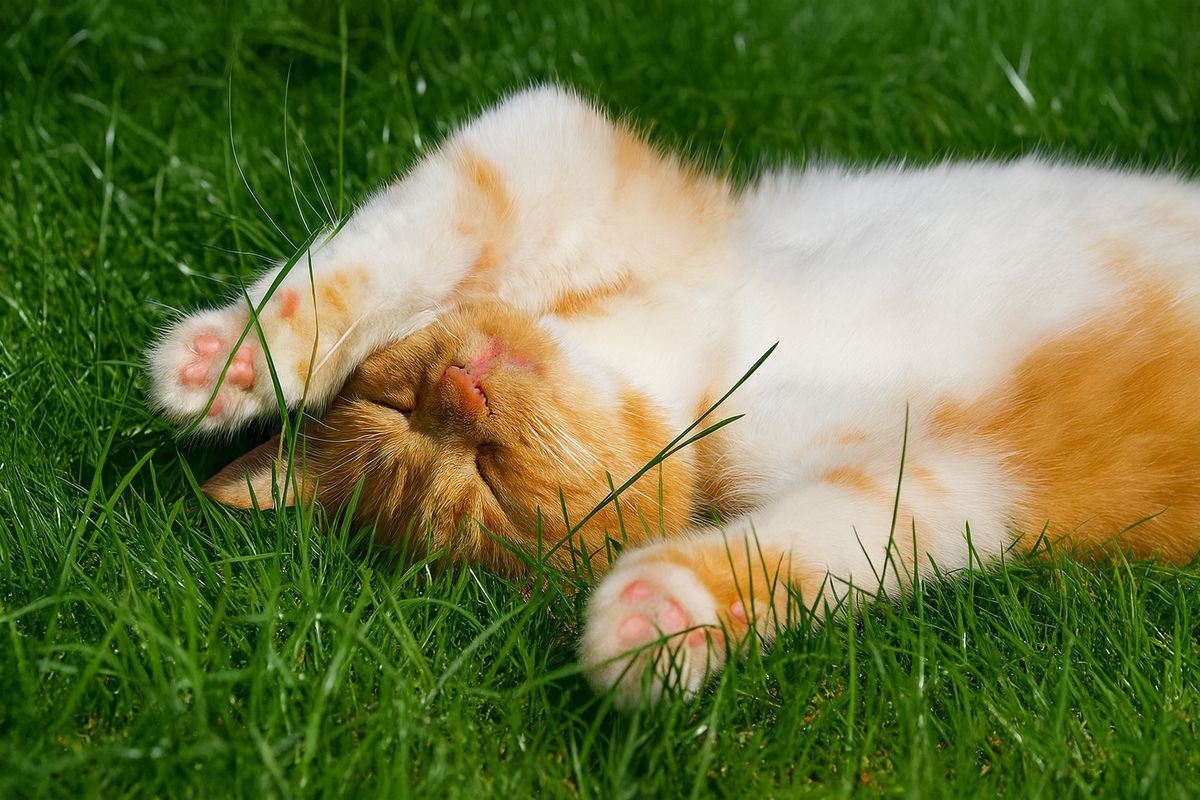
Every year, as summer with its hot and dry climate slowly comes to an end, grass mites (also known as autumn mites or harvest mites) appear. Although these parasites are generally harmless, they can cause great discomfort in some cats by triggering allergic reactions with severe itching and scabs on the skin. This worries many pet owners who are often at a loss when faced with these symptoms. So, how can you recognize grass mites and what can you do to help your cat?
What are Grass Mites?
Grass mites, as the name suggests, belong to the mite family and are related to spiders. They are often found in rural areas on meadows and lawns. They are almost microscopic, only 0.4 mm in size and orange-coloured.
In their larval stage, they cling to various mammals, including humans, cats, and dogs. The larval stage is when they feed on the tissue of warm-blooded hosts. In all other stages, the grass mite lives in the environment and feeds on plants.
Female grass mites are active in dry, sunny weather and lay numerous eggs in the environment. Grass mite larvae are therefore mainly found in late summer (August-September), which is why they are also called autumn mites. They are found especially on lawns and in gardens where cats roam. The larvae are active during the day. When a warm-blooded animal comes into contact with the larvae, the larvae cling to the animal and settle on the skin, especially in finely haired areas. The larvae feed on the host for two to three days and, once satiated, fall back to the ground to complete their life cycle. The mite larva is orange-coloured and barely visible to the naked eye.
How do I recognize grass mite infestation in my cat?
The larvae of the grass mite live on the skin surface. When they feed, they bore into the skin with their small mouthparts and release a salivary secretion that liquefies the skin cells. The liquefied cells are then absorbed by the larvae. This salivary secretion irritates the skin and triggers allergic reactions, which manifest as severe itching. This itching causes the cat to nibble, lick, or scratch its skin, sometimes until it bleeds. The resulting skin lesions range from scab formation and hair loss to moist, bloody, bare patches.
In cats, grass mites are usually found in the following areas:
- around the ears and in the ear flaps
- between the toes
- on the inner thighs or under the armpits
- but they can also be present almost anywhere else on the body.
Theoretically, grass mites are easily recognizable with the naked eye as clusters of tiny orange dots. However, because they are so tiny, they can sometimes still be difficult to spot due to the cat's coat. Therefore, examine your cat very carefully if it scratches frequently, especially in the armpits and between the toes, where the skin is thin.
How do I treat my cat infested with grass mites?
Wounds resulting from scratching due to itching can occasionally become infected and then require medical treatment. It is therefore advisable, even if the cause of the symptoms is known, to take your cat to the vet. The vet can examine your cat and identify any remaining larvae to confirm the cause of the itching and initiate appropriate treatment.
In most cases, your vet will prescribe treatment with a topical insecticide (spray) to eliminate any remaining larvae on your cat's body. There is currently no product specifically approved for the treatment of grass mites in cats and dogs. Nevertheless, many insecticides used against fleas also effectively eliminate grass mites when applied correctly. We recommend spraying the areas to be treated shortly before feeding your cat so that she is occupied and doesn't think about licking herself while the product dries. If your cat still cannot resist licking, you can temporarily put an Elizabethan collar on her.
If the allergic reaction is severe, your vet will also prescribe treatments to relieve the itching and skin inflammations caused by the enzymes. Various therapeutic options are available, administered in the form of tablets or ointments. In some more severe cases, antibiotic treatment may also be necessary.
If your cat shows only very mild symptoms, you can simply and carefully disinfect the areas where you find grass mites with a disinfectant and apply an appropriate insecticide or repellent. On the scabs, you can apply a soothing cream.
How can you prevent grass mite infestation in your cat?
The regular application of a flea preventative reduces the risk of grass mite infestation. During the season preferred by grass mites, use a spray on your cat's paws, under the belly, and around the ears.
Grass mites are most active during the hottest and driest hours of the day. You can therefore also reduce your cat's exposure risk by keeping her indoors during the day and only letting her outside early in the morning and/or after sunset.
In addition, you should keep your lawn well mowed to limit the presence of grass mites. We recommend mowing the lawn regularly as short as possible and then watering it thoroughly.

Set ipet.ch as a preferred source on Google
Never miss a tip: Set ipet.ch as a preferred source in your Google account so that our veterinary advice and pet care guides appear higher up in your search results. Optional and can be undone at any time.
Set as preferred source →Useful information at a glance
What are harvest mites and how do I recognize them in my cat?
Harvest mites, also known as autumn mites, are tiny, orange-colored parasites found in lawns and gardens in late summer. They are difficult to see with the naked eye. If infested, your cat will show symptoms such as severe itching, crusting, and hair loss, especially around the ears, between the toes, and on the inner thighs.
How can I help my cat with a harvest mite infestation?
In case of a harvest mite infestation, you should take your cat to the veterinarian. They can confirm the diagnosis and initiate appropriate treatment, usually with a topical insecticide. For severe itching, additional medication may be prescribed to alleviate the symptoms.
Can I treat harvest mites in my cat myself?
For mild symptoms, you can carefully disinfect the affected areas and apply a suitable insecticide or repellent. A soothing cream can be applied to the crusts. However, for more severe symptoms, a visit to the veterinarian is advisable.
How can I prevent a harvest mite infestation in my cat?
Regularly use a flea preventative, especially during harvest mite season. Keep your cat indoors during the hottest parts of the day and only let them outside early in the morning or after sunset. A well-mowed and watered lawn can also reduce the risk of infestation.
Are harvest mites dangerous for my cat?
Harvest mites are generally harmless, but they can trigger allergic reactions with severe itching and skin irritations in some cats. Timely treatment can help alleviate discomfort and prevent infections.