
 EN
EN  DE
DE  FR
FR Why is my cat vomiting?
-
 By
med. vet. Bianca Michoud-Valente
By
med. vet. Bianca Michoud-Valente - Mar 31, 2025
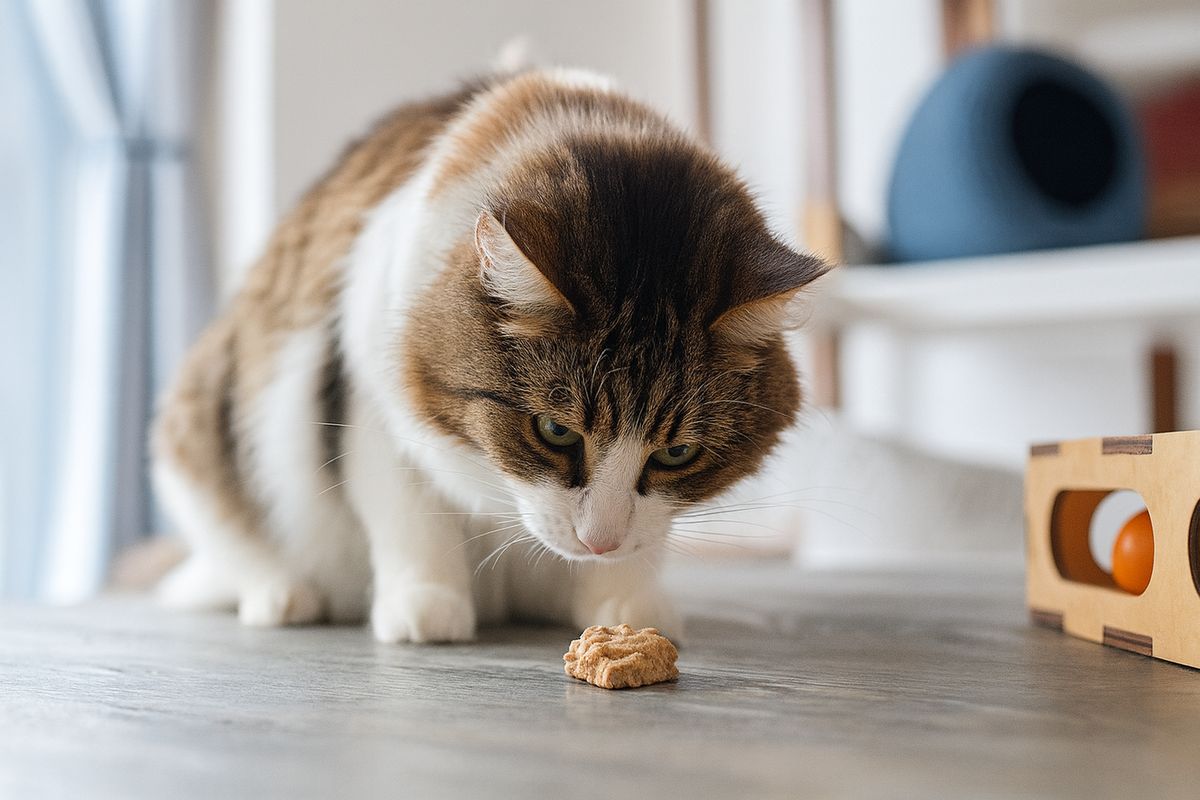
Vomiting is common in cats and not always a sign of a serious illness. It can be harmless and temporary or indicate a serious health problem. In this article, you will learn what the most common causes of vomiting in cats are, what signs you should look out for, and what you can do about it.
Common Causes of Vomiting in Cats
1. Hairballs
Cats spend a lot of time grooming their coat. When licking, they swallow hair, which can accumulate in the stomach and form hairballs (trichobezoars) there. These are sometimes vomited or can cause digestive issues in certain cases.
What to do?
- Brush your cat regularly – ideally daily, especially if they have a long coat.
- Give them a fiber-rich diet or special complementary food against hairballs, such as malt paste.
2. Eating too quickly
Some cats are real gobblers! They wolf down their food hastily and consume large quantities – this can lead to immediate vomiting, often with undigested pieces.
What to do?
- Divide the daily food ration into several small meals – ideally at least 6 small portions per day, if your cat cannot regulate itself.
- Use an anti-gulping bowl, puzzle toys or food dispensers.
3. Eating grass or nibbling on plants
Eating grass is a completely normal behavior in cats and serves as a natural self-cleaning mechanism. Vomiting often occurs afterwards – often along with hair or bile. This is usually harmless, as long as it only happens occasionally. Caution is advised, however, when nibbling on houseplants or garden plants: Depending on the plant species, this can be toxic for cats.
What to do?
- If your cat vomits several times a week, remove the cat grass.
- Make sure they have no access to toxic plants.
4. A food intolerance or Food allergy
A change in food or an allergy to a specific ingredient can trigger vomiting, diarrhea, or chronic itching.
What to do?
- Avoid abrupt food changes. Always implement a transition phase of 7 to 10 days.
- Try a hypoallergenic food or one with only a single protein source (e.g., rabbit).
- If an allergy is suspected, an elimination diet under veterinary supervision is necessary.
5. A foreign body
Cats – especially young animals – can swallow toys, rubber bands, or strings. These foreign bodies can block the digestive tract and lead to repeated vomiting, lethargy, and refusal to eat.
What to do?
- Do not leave toys unattended.
- Keep strings and rubber bands out of reach.
- Observe for possible warning signs: repeated vomiting, abdominal pain, fatigue, refusal to eat.
- Consult your veterinarian immediately.
6. An underlying illness
Some illnesses can manifest in cats through vomiting:
- Chronic Renal insufficiency
- Hyperthyroidism
- Pancreatitis
- Inflammatory Bowel Disease (IBD)
- Tumors in the digestive tract
- Parasitic infestation
What to do?
- Have a comprehensive health check performed by your veterinarian.
- Early diagnosis improves the chances of stabilizing the illness.
When should you be concerned and consult a veterinarian?
Please seek veterinary advice promptly if you notice one or more of the following signs in your cat:
- Frequent or persistent vomiting
- Vomiting blood
- Weight loss, altered eating behavior, or noticeable behavioral changes
- Signs of pain or discomfort
- Apathy or withdrawal behavior – for example, if your cat hides significantly more than usual.
Practical General Tips for Preventing Vomiting in Cats
- Don't let your cat eat too hastily: Use special anti-gulping bowls or automatic feeders to slow down eating.
- Offer several small meals a day: Cats should ideally consume about 15 small portions per day. Therefore, several small meals a day are better than one large one.
- Avoid sudden food changes: Always introduce new food gradually over several days.
- Brush your cat regularly: Especially for long-haired cats, regular brushing helps prevent hairballs.
- Pay attention to what your cat might swallow: Threads, rubber bands, strings, toxic plants, or household cleaners can be dangerous – keep such things out of reach.
- Go for regular veterinary check-ups: This way, illnesses can be detected early.
- Ensure a high-quality diet: A good food – adapted for sensitive cats – with sufficient fiber supports digestion and reduces hairballs.
- Deworm your cat regularly: Especially important for outdoor cats or those that hunt.
Conclusion
Occasional vomiting in an otherwise healthy cat is usually harmless. However, if vomiting occurs more frequently, it should be taken seriously. Often, harmless causes are behind it – such as hairballs, hasty eating, or eating grass. But more serious triggers such as chronic illnesses, allergies, or swallowed foreign bodies can also be behind it and require veterinary clarification. To promote your cat's digestive health in the long term, a balanced lifestyle, an adapted diet, and regular veterinary check-ups are crucial.
In our online shop, you will find carefully selected dry and wet food for sensitive cats as well as complementary products to support digestion.
For questions or individual advice, our veterinary team is always happy to assist you!

Set ipet.ch as a preferred source on Google
Never miss a tip: Set ipet.ch as a preferred source in your Google account so that our veterinary advice and pet care guides appear higher up in your search results. Optional and can be undone at any time.
Set as preferred source →Useful information at a glance
Why does my cat frequently vomit hairballs?
Cats swallow hair during grooming, which can form hairballs in the stomach. These are sometimes vomited. Regular brushing and a fiber-rich diet can help reduce hairballs.
What can I do if my cat eats too quickly and vomits?
Divide the food ration into several small meals and use a slow-feeder bowl or food dispenser to slow down eating.
Is it normal for my cat to eat grass and then vomit?
Yes, eating grass is normal behavior and serves for self-cleaning. Occasional vomiting afterwards is harmless. Make sure your cat does not have access to poisonous plants.
How do I recognize a food intolerance in my cat?
A food intolerance can manifest as vomiting, diarrhea, or itching. Avoid abrupt food changes and try hypoallergenic food. If an allergy is suspected, an elimination diet under veterinary supervision is necessary.
When should I take my cat to the veterinarian if she is vomiting?
Consult a veterinarian if your cat vomits frequently or continuously, vomits blood, shows weight loss, or if her behavior changes noticeably. Signs of pain or apathy are also serious warning signals.