
 EN
 DE
 FR

Drinking behavior in cats: What is normal – and when is caution required?
Cats naturally tend to drink very little – in many cases, this is completely normal for healthy animals. Nevertheless, it is worth observing drinking behavior closely: because both noticeably little and excessively much drinking can be an indication of health problems.
Why cats generally drink little
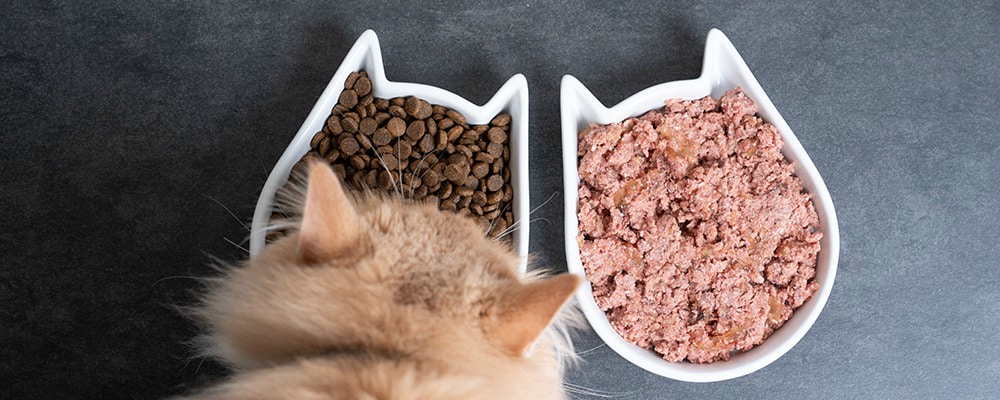
Cats originally descend from desert animals. Their bodies are designed to absorb a large part of their fluids through food – especially via prey or wet food. Dry food, on the other hand, contains hardly any moisture, which requires an increased fluid intake through drinking.
When is the drinking behavior an alarm signal?
A sudden increase or a significant decrease in the amount of drinking can indicate health-related causes. You can find more info about the amount of drinking in the guide article. In case of uncertainty, a clarification by a veterinarian is recommended in any case.
Tips on how to get cats to drink more
Especially with exclusive dry feeding or for animals with health risks, it makes sense to specifically promote drinking behavior. Since cats have very individual preferences, it is worth trying out different options.
A central point: Water should not be placed directly next to the feeding place. Many cats avoid water sources in the immediate vicinity of the bowl. Instead, it is recommended to distribute several water stations throughout the household, ideally in quiet, easily accessible places.
The type and quality of water also plays a role. While some cats prefer clear, fresh water, others show interest in stale or even rainwater. The following variants can be tried out:
- Standing water, for example in open bowls
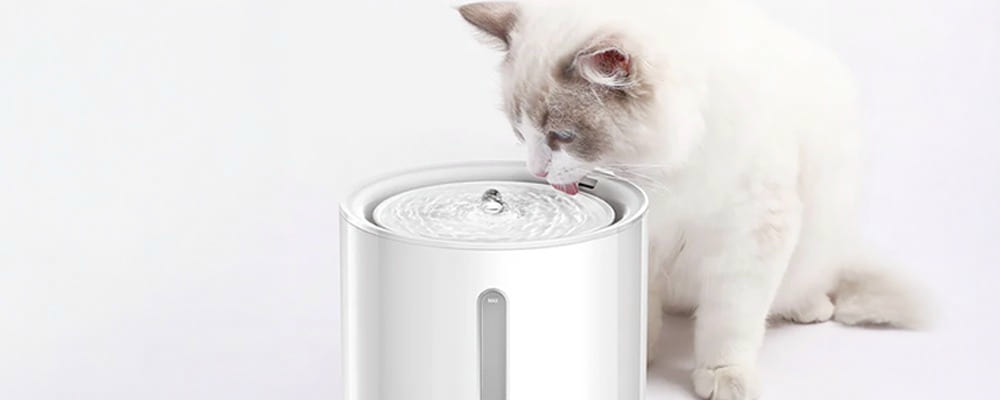
- Moving water from a fountain - new in our range: cordless fountain
- Freshly filled water or deliberately stale water
- Clean rainwater (unchlorinated)
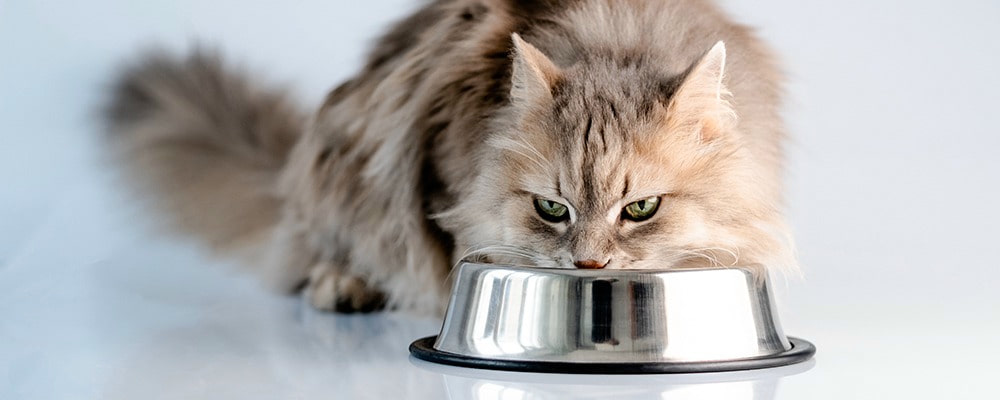
Not only the water source, but also the vessel material can be decisive. Many cats prefer bowls made of Ceramic, glass or Stainless steel, while plastic is often avoided.
Even more practical tips are offered by this guide article.
-
-
As a rule of thumb: A cat needs approx. 40–60 ml of water per kilogram of body weight per day – including the fluid it takes in via wet food. With dry food, the daily drinking amount is correspondingly higher. It is important to observe not only the quantity but also the behavior around drinking.
-
Yes – at high temperatures, the water requirement is increased. Even if cats do not pant heavily like dogs, their bodies regulate the temperature through increased fluid excretion. Especially in summer, it is important to provide fresh water and observe drinking behavior closely.
-
Signs can include a dry mouth, dull coat, less urination or constipation. A so-called "skin fold test" can also give indications of beginning dehydration. In case of uncertainty, a veterinary clarification is recommended.
-
- A little warm water over the food
- Enrich snacks or wet food with water
- Liquid snacks, which also serve as a reward
- Flavor water with a dash of salt-free bouillon or catnip
- A special drink made for cats that specifically supports water intake
-
Not necessarily – it is important that the cat additionally takes in sufficient water. Anyone feeding dry food should consciously pay attention to an appealing water supply, e.g., through additional drinking sources or wet snacks.
-
An increased thirst (polydipsia) can be an indication of diseases such as diabetes, Renal insufficiency or hyperthyroidism. If the cat drinks unusually much, veterinary advice should be sought.
-
Filters
-
 Free shipping
from CHF 91.10
PETKITCordless drinking fountain for cats and small dogs, with 3 liter filling volume
-

- - 15 %
from CHF 33.60
CHF 39.50Purina ONESupplementary feed with prebiotics to improve fluid intake in cats
-
 CHF 31.50VETRESKA
Stylish bowl set in the shape of Juicy Tangerine
-
 CHF 31.50VETRESKA
Stylish bowl set in the shape of Juicy Peach
-
 CHF 31.50VETRESKA
Stylish bowl set in the shape of Juicy Cherry
-
 Free shipping
from CHF 79.00
swisspetQuiet, cordless drinking fountain for dogs and cats
-

- - 10 %
from CHF 25.90
CHF 28.80almo natureFood supplements for cats to improve fluid intake
-

-

-
 CHF 33.70SAVIC
Drinking bowl for older cats and cats with arthritis
-

-
 Free shipping
from CHF 89.90
SAVICMelamine drinking fountain for dogs and cats
-
 Free shipping
from CHF 95.90
ebiDrinking fountain with various modes and large filling volume of 3 liters
-
 Free shipping
from CHF 63.60
D&D HOMEPlastic drinking fountain for cats with 1.5 liter volume and quiet pump
-
 Free shipping
from CHF 90.10
swisspetLarge drinking fountain with 8 l water capacity
-

from CHF 63.50
swisspetDrinking fountain for cats & small dogs with LED lighting
-

- - 15 %
Special Price CHF 13.00 Regular Price CHF 15.30Wildes LandTasty fish broth with tender pieces of tuna fillet for cats of all ages
-

- - 15 %
Special Price CHF 13.00 Regular Price CHF 15.30Wildes LandTasty chicken broth with chicken breast fillet pieces for cats of all ages
-
 Free shipping
from CHF 88.90
PETLIBROBattery-operated automatic drinking fountain for pets
-

from CHF 54.90
PETKITQuiet dog/cat drinking fountain in modern colors with 1.8l filling volume
-
 CHF 21.80WOW
Grain-free salmon soup as a snack or as a topping and acceptance booster
-
 CHF 21.80WOW
Grain-free chicken soup as a snack or as a topping and acceptance booster
-
 CHF 90.30Free shippingCroci S.P.A.
Modern drinking fountain for dogs & cats with filter and indicator light
-

from CHF 42.60
ZeusVersatile drinking fountain with waterfall, bubbler attachment and drinking basin
-
 Free shipping
from CHF 74.90
CatitDrinking fountain with stainless steel insert for cats with 2.5 l volume, quiet pump and triple filter
-

from CHF 59.90
CatitDrinking fountain for cats with 2.5 l volume, quiet pump and triple filter
-
 CHF 70.60Free shippingOralade
Supplementary feed for rehydration for cats and dogs suffering from diarrhea
-
 CHF 24.90Catit
Small drinking fountain with 1.5 l filling volume & 3 water flow options
-
 CHF 50.20Oralade
Electrolyte solution for cats for oral rehydration
-
 CHF 69.60Free shippingGranataPet
Soup with juicy pieces of beef and turkey for cats, ideal as a topping and for between meals, extra hydration
-
 CHF 34.80GranataPet
Soup with juicy pieces of salmon and poultry for cats, ideal as a topping and for between meals, extra hydration
-
 CHF 28.70Free shippingPets Deli
High-quality complete menu with delicate tuna fillet
-

CHF 16.90
United PetsSmall bowl specially developed for kittens and cats
-

- - 10 %
from CHF 28.10
CHF 31.20TrixieDrinking fountain with level indicator
-
 Free shipping
from CHF 108.20
CatitDrinking fountain with UVC sterilization, controllable via app
-
 CHF 34.50GranataPet
Soup with juicy chunks for cats, ideal as a topping and for in between meals, extra hydration
-
 CHF 34.80GranataPet
Soup with juicy chunks for cats, ideal as a topping and for in between meals, extra hydration
-
 CHF 34.80GranataPet
Soup with juicy chunks for cats, ideal as a topping and for in between meals, extra hydration
-
 CHF 38.00GranataPet
Soup with juicy chunks for cats, ideal as a topping and for in between meals, extra hydration
-

from CHF 42.10
animondaDelicious cat drink with the finest meat or fish
-

from CHF 49.80
Kattovit Feline DietCat drink for cats with kidney disease
24 x 135ml -
 CHF 49.80Kattovit Feline Diet
Delicious drink for cats, for the prevention of urinary stones
Meat juice with chicken pieces -
 Free shipping
from CHF 91.10
PETKITIntelligent and ultra-quiet drinking fountain for dogs and cats
-

from CHF 37.70
swisspetFreshly filtered water for dogs and cats