EN
EN  DE
DE  FR
FR How to encourage your cat to drink more?
-
 By
med. vet. Bianca Michoud-Valente
By
med. vet. Bianca Michoud-Valente - Jun 29, 2023
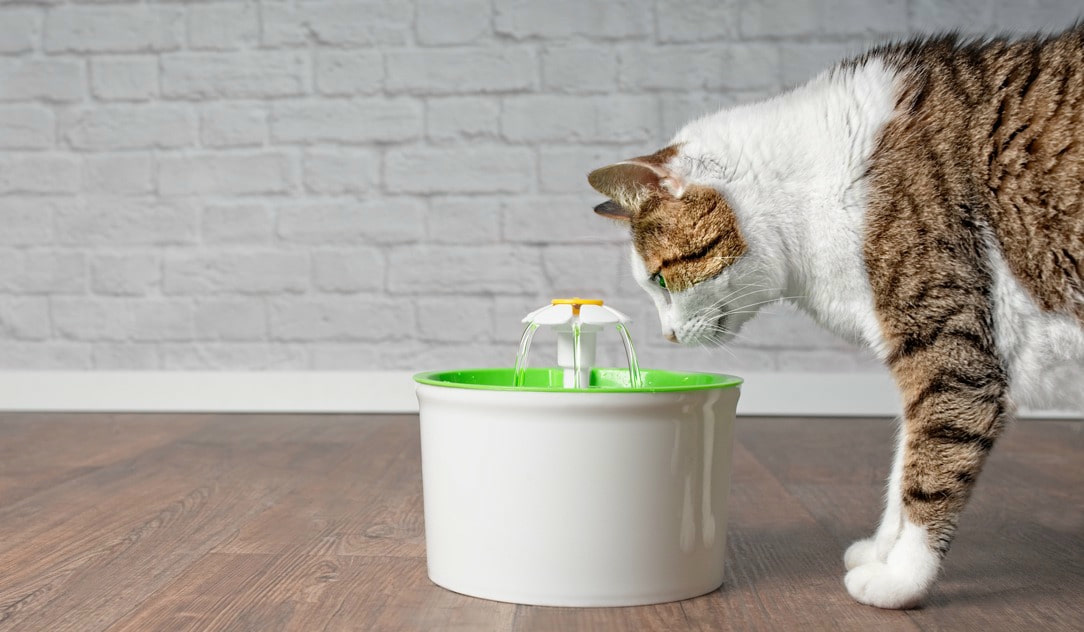
Cats naturally drink little. Nevertheless, it is crucial that they consume enough fluids to maintain good hydration and promote urinary tract health. Below you will find our tips to help you increase your cat's drinking amount.
Adequate fluid intake is essential for numerous vital bodily functions such as regulating body temperature, electrolyte balance, and food digestion.
Although it is healthy for cats, many of them don't particularly like to drink water. They are rather reserved drinkers. This circumstance has its roots in their genetic predispositions. Our domestic cats are descended from animals that live in dry desert regions. Therefore, compared to dogs, they naturally have less thirst and can survive on much less water. Their kidneys have adapted to these living conditions and developed the ability to highly concentrate urine to minimize water loss. As a result, cats can manage with a comparatively small amount of water.
Nevertheless, there are situations in which we want our cats to consume more than the usual amount of fluid. This is particularly the case with urinary tract diseases such as cystitis, urinary stones, or Renal insufficiency. Cats that drink little have highly concentrated urine and rarely go to the litter box, which promotes the formation of crystals and urinary stones in the bladder. Cats that drink more, on the other hand, produce larger amounts of diluted urine and excrete it faster, which reduces the time and risk of urinary stone formation.
Below you will find our advice on how you can encourage your cat to consume more fluids. They are based on insights into cat behavior and the preferences of our feline friends.
The Suitable Location for the Water Bowl
Although it may be tempting to place your cat's food and water bowls directly next to each other, it is advisable to place the water bowl a little distance from the food bowl. Ideally, you should distribute several water bowls throughout the house and, if your cat goes outside, also in their preferred outdoor spots. It is also recommended to elevate some bowls, especially if you have dogs in the household. Cats do not like to be disturbed while eating or drinking.
We often tend to place the bowls in a quiet corner. However, cats feel uncomfortable when they are cornered. They prefer places from which they can survey their surroundings with a quick glance and don't have to fear being surprised from behind. We therefore recommend changing the location of the water bowls and observing whether your cat uses them more frequently.
The Suitable Water Bowl
The optimal water bowl varies according to the cat's individual preferences. Some don't like their whiskers touching the rim, which is why wide and shallow bowls are recommended. Others prefer drinking from large, filled glasses or taking water directly from the tap.
Also, the material of the bowl plays an important role. It is advisable to find out whether your cat prefers metal, transparent glass, plastic, or ceramic.
Many cats don't like stale water. They instinctively prefer fresh and flowing water, for example, directly from the tap. These cats can benefit from a drinking fountain, which offers the additional Benefit of making drinking water more exciting and enjoyable.
The Right Taste
The longer the water stands in the bowl, the more particles can accumulate in it. Dust, dirt, hair, and other deposits can deter the cat from drinking from it. It is therefore important to refill the water bowl with fresh water at least once a day. However, there are also cats that like stale water and do not shy away from drinking from an aquarium or a vase.
You can also add flavor to the water by adding some meat juice. However, avoid feeding milk and cream, as this can lead to diarrhea. Sometimes, cats that prefer pure and fresh water are bothered by the taste of tap water. In such cases, water filters or still mineral water can be helpful.
The Importance of Wet Food
Water is not the only way to provide a cat with fluids. If their diet is supplemented with wet food, the cat unknowingly takes in additional fluid. In fact, wet food consists of about 70-80% water. While it is not a complete substitute for water, it helps to increase your cat's total fluid intake and prevent dehydration.
By the way, it is often recommended to feed cats with urinary tract problems exclusively with wet food, and not with dry food. However, this often fails due to the cats' individual dietary preferences. Through their mother and breeder, cats learn from an early age what is edible. Ideally, they receive food in different flavors and textures early on. This food imprinting stays with them for life, and they can stubbornly refuse to eat anything other than what they learned as kittens. So, if your cat rejects wet food, you can try soaking the dry food pellets.
Additionally, there are food supplements for cats in liquid form or as jelly like Hydracare or Hydralife, which consist mainly of water and are very palatable due to the addition of animal protein.
Every cat is unique and has its individual preferences. Therefore, you may need to try or adapt different methods to find out what your cat likes best. Providing your cat with sufficient fluids contributes to their well-being and health.

Set ipet.ch as a preferred source on Google
Never miss a tip: Set ipet.ch as a preferred source in your Google account so that our veterinary advice and pet care guides appear higher up in your search results. Optional and can be undone at any time.
Set as preferred source →Useful information at a glance
Why does my cat drink so little water?
Cats naturally drink little, as they are descended from animals that lived in dry desert regions. Their kidneys are specialized in concentrating urine heavily to minimize water loss. Nevertheless, it is important that your cat consumes enough fluids to promote their health.
How can I encourage my cat to drink more water?
There are various methods to encourage your cat to drink. Place the water bowl in a quiet but visible spot, use wide and shallow bowls, and offer fresh or running water. Adding a little meat juice can also improve the taste of the water.
What role does wet food play in my cat's fluid intake?
Wet food can make a significant contribution to your cat's fluid intake, as it consists of approximately 70-80% water. While it is not a complete substitute for water, it helps to increase overall fluid intake and prevent dehydration.
What can I do if my cat doesn't like wet food?
If your cat rejects wet food, you can try soaking the dry food pellets. Additionally, there are food supplements in liquid form or as a jelly, which consist mainly of water and are very palatable due to animal protein.
Which materials are best suited for my cat's water bowl?
The optimal water bowl depends on your cat's individual preferences. Many cats prefer wide and shallow bowls to avoid their whiskers touching the rim. The material can also play a role; try to see if your cat prefers metal, clear glass, plastic, or ceramic.