
 EN
EN  DE
DE  FR
FR Why is it advisable to microchip your cat?
-
 By
Dr. med. vet. Sabina Büttner
By
Dr. med. vet. Sabina Büttner - Nov 15, 2019
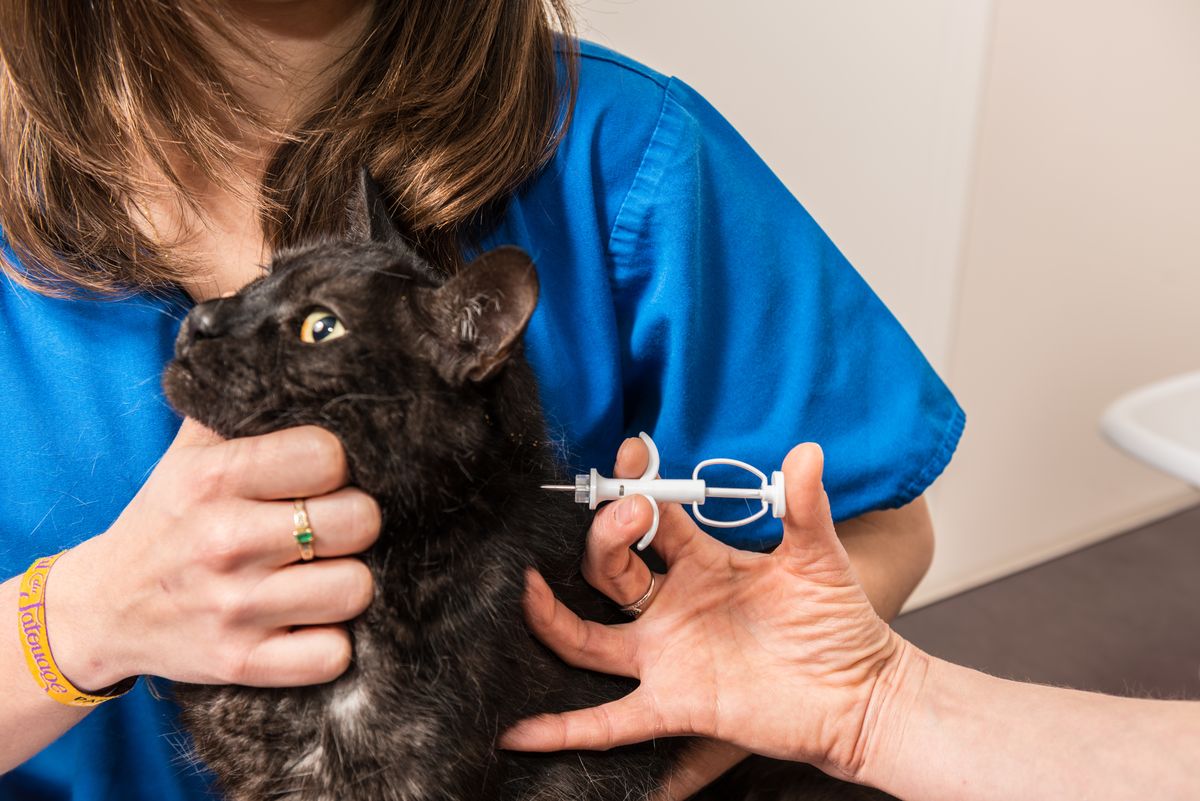
Learn more here about the identification of cats using microchips. Besides identifiability, the so-called microchipping of cats offers even more Benefits.
How Does Microchipping Work?
During microchipping, an approx. rice-grain-sized microchip is inserted under the skin on the left side of the animal's neck using a large syringe. This is absolutely harmless, no more painful than a vaccination, and well tolerated by animals. A globally unique number is stored on the chip, which can be read out using a scanner. This number is stored in a database along with the pet owner's address.
A Must for Dogs
In Switzerland, microchipping has been mandatory for dogs since 2006: Within 3 months of birth, all puppies must be microchipped and registered in the amicus database. This is intended to facilitate investigations after biting incidents, in cases of epidemics, and for lost, neglected, or abandoned dogs.
Microchipping Cats: Not in Vain
Unlike dogs, there is no general obligation in Switzerland to microchip your cat. Only in the case of international travel must a domestic cat also be registered and possess a pet passport. Nevertheless, microchipping cats is not 'for nothing': Annually, between 8,000 and 16,000 cats disappear in Switzerland! Animals that are microchipped and registered in the ANIS database can, if found by passers-by or the police, be quickly reunited with their owners and brought back home using the free Amici-App. All police stations, animal shelters, and veterinarians have a scanner to read the identification number. If injured cats are found, the microchip helps to immediately inform the owner about their health condition and necessary treatments. Using the Amici-App, you can keep your address information up to date, upload a photo of your cat, and report them as missing if you can no longer find them.
And there are even more Benefits to microchipping your cat: There are now cat flaps where the chip functions as a key. An integrated scanner only opens the flap upon a successful chip scan. Uninvited visitors are thus denied access. Furthermore, there are also automatic feeders that recognize the cat via chip and only open for registered cats. They are a very practical aid when individual cats in multi-cat households need to be fed differently!
Many veterinary practices are running a special promotion in November with reduced prices for cat microchipping. Ask your veterinarian about the current conditions.

Set ipet.ch as a preferred source on Google
Never miss a tip: Set ipet.ch as a preferred source in your Google account so that our veterinary advice and pet care guides appear higher up in your search results. Optional and can be undone at any time.
Set as preferred source →Useful information at a glance
Why should I microchip my cat?
Microchipping your cat offers numerous benefits. It facilitates the identification and return of lost or injured cats. Additionally, with the Amici app, you can keep your address information up-to-date and report your cat as missing. The chip can also serve as a key for special cat flaps and automatic feeders.
How does microchipping a cat work?
During microchipping, a microchip about the size of a grain of rice is inserted under your cat's skin on the left side of the neck using a large syringe. This procedure is no more painful than a vaccination and is well tolerated by animals. The chip contains a globally unique number that is stored with your address data in a database.
Is microchipping cats mandatory in Switzerland?
In Switzerland, there is no general obligation to microchip cats. An exception applies to international travel, where registration and a pet passport are required. Nevertheless, microchipping is recommended, as many cats go missing each year, and microchipped animals can be more easily returned to their owners.
What benefits does a microchip offer for cat flaps and automatic feeders?
A microchip can serve as a key for special cat flaps that only open upon a successful chip scan. This prevents uninvited house guests. Automatic feeders can also be equipped with a chip to open only for registered cats, which is particularly practical in multi-cat households.
Are there special promotions for microchipping cats?
Yes, many veterinary practices offer special promotions in November with reduced prices for microchipping cats. It is worthwhile to ask your veterinarian about the current conditions.