

 EN
EN  DE
DE  FR
FR Endoparasites in Dogs: Properly Recognizing and Treating Worms and Giardia
-
 By
Dr. med. vet. Sabina Büttner
By
Dr. med. vet. Sabina Büttner - Apr 20, 2026
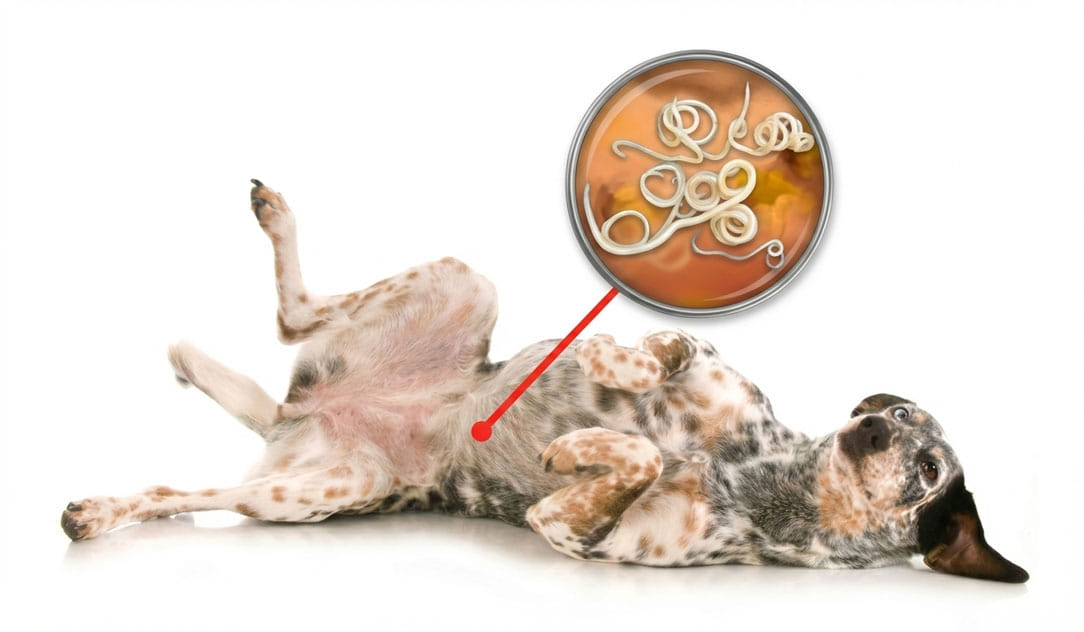
Dogs love exploring the world with all their senses. However, invisible dangers can hide in grass, puddles, parks, or during contact with other dogs. Internal parasites, such as worms and protozoa, are common in dogs and can affect their health without always causing obvious symptoms.
Many dog owners are unsure how best to protect their pet. Yet an untreated parasite infection can lead to digestive problems, weight loss, or more serious health complications. Some parasites may even pose a risk to humans.
In this guide, discover the most common internal parasites in dogs, the symptoms they can cause, and how to protect your dog effectively.
What are endoparasites in dogs?
Endoparasites are parasites that live inside (from the Greek "endo") a host animal and feed on its nutrients or blood. In dogs, they usually nest in the gastrointestinal tract, but sometimes also in organs like the lungs or heart.
The most important endoparasites in dogs include worms (e.g., roundworms, hookworms, tapeworms, and heartworms) as well as microscopic protozoa (like Giardia or Coccidia). Since these parasites often remain completely unnoticed for a long time, solid knowledge about prevention and diagnosis is crucial.
How do you recognize an infestation? The most important symptoms
From a medical perspective, the signs of a parasitic infestation are often non-specific at first. A mild infestation frequently remains completely asymptomatic in adult, healthy dogs. Nevertheless, there are some warning signs that you, as an attentive dog owner, should definitely pay attention to:
| Category | Symptoms & Signs |
|---|---|
| Digestive problems | Recurring or mucous diarrhea, soft stool, or sudden vomiting. |
| Respiratory symptoms | Unexplained cough, rapid exhaustion, or shortness of breath (common with lungworms or heartworms). |
| Weight loss | Emaciation of your dog despite normal or even increased appetite. |
| Poor appearance | A dull, lackluster coat, pale mucous membranes, or a general susceptibility to illness. |
| Behavioral changes | Apathy or the typical "scooting" (dragging the hindquarters on the ground due to severe itching at the anus). |
| Visible parasites | Occasionally, directly excreted worms or tapeworm segments can be found in the dog's feces. |
Important note: In case of severe or persistent symptoms, especially with puppies, seniors, or immunocompromised animals, a prompt visit to the vet is essential.
The most common internal parasites at a glance
1. Roundworms
These worms are a major problem, especially for young dogs, as they are often transmitted from the mother to the puppies via breast milk or in the womb. They deprive the dog of essential nutrients for growth and can severely damage the intestinal mucosa.
2. Hookworms
Hookworms are blood-sucking parasites that attach themselves to the intestinal mucosa. Infection occurs either through ingestion from the environment or – which is particularly insidious – through the active penetration of larvae across intact skin, usually on the paws. A severe infestation can lead to dangerous anemia and bloody diarrhea.
3. Tapeworms
Tapeworms are usually transmitted by intermediate hosts. If your dog eats an infected mouse during a walk outside or accidentally swallows a flea during daily grooming, it can get infected very quickly.
4. Heartworms (Dirofilaria)
The "classic" heartworm is primarily a travel disease transmitted by infected mosquitoes in southern and eastern countries. The larvae migrate through the bloodstream and develop into adult worms that settle in the large blood vessels of the lungs and in the heart. An untreated infection leads to severe heart failure.
Travel tip: If you take your dog with you to the south, prophylaxis is an absolute must from a veterinary point of view!
5. French Heartworms (Lungworms)
Despite its name, the French heartworm (Angiostrongylus vasorum) is actually a lungworm that is becoming increasingly common in our latitudes too. Dogs get infected when they intentionally or accidentally eat infected snails or slugs outside – often just chewing on a tuft of grass where a small snail was sitting is enough. The worms infect the blood vessels of the lungs and, in addition to coughing, can cause life-threatening blood clotting disorders.
6. Giardia: Stubborn protozoa
Giardia are highly resistant protozoa that commonly cause chronic, often foul-smelling diarrhea in dogs. Infection mainly occurs through contaminated water or feces, and this parasite is very common. In cases of recurrent diarrhea, it is recommended to test your dog for giardiasis.
Giardia can survive for long periods in the environment in the form of cysts, which increases the risk of reinfection. If the test is positive, strict hygiene measures (cleaning and disinfecting the environment) are essential.
For more information, please refer to our dedicated article.
Treatment and Prevention: How to protect your dog
How often should a dog be dewormed or tested for parasites? To protect your dog and your own family, the following approaches have proven effective:
1. Regular fecal examinations with modern PCR tests
Instead of routinely deworming your dog "blindly", a prior fecal examination is increasingly recommended. A state-of-the-art and extremely reliable approach here are pezz PCR tests.
- The advantage of the PCR method: In contrast to the classic observation under the microscope, the laboratory searches directly for the DNA of the parasites during a PCR test. This makes the test extremely accurate, even if the worms are not shedding eggs at that moment. The tests also reliably cover Giardia or lungworms.
- The application: You simply collect stool samples on three consecutive days using the test kit and conveniently send them to the laboratory. In the event of a positive result, you can treat targetedly, while at the same time sparing your dog's intestinal flora if the test is negative.
Important: Deworming does not work preventively! It only kills the parasites that are in the body at that exact moment.
2. Veterinary recommendations for deworming frequency
Whether you opt for prophylactic deworming or regular tests, the frequency depends heavily on your dog's lifestyle:
- Dogs with normal risk: For a typical family dog walking in the city or on normal walking paths, we recommend testing or deworming at least four times a year (every three months).
- Dogs with high risk: Does your dog like to eat feces outside, hunt mice, or live in a household with toddlers or immunocompromised people? Then, from a medical perspective, we advise a monthly examination or deworming.
Additional hygiene measures in everyday life
✓ What you should do
- Consistently pick up your dog's feces and dispose of them in the household waste.
- Ensure seamless flea and tick protection, as ectoparasites often transmit tapeworms.
- Rely on regular fecal examinations (e.g., PCR tests) to be able to treat in a targeted manner.
✘ What you should avoid
- Do not let your dog drink from stagnant puddles (increased risk of Giardia!).
- Do not think that deworming has a preventive effect.
- Do not ignore heartworm prophylaxis when traveling to southern and eastern countries.
Conclusion: Parasite protection is active health protection
Endoparasites like worms and Giardia lurk almost everywhere our dogs like to spend time. Through good observation, regular faecal examinations, and a tailor-made deworming concept, you can reduce the risk of serious illnesses to a minimum.
Endoparasites like worms and Giardia lurk almost everywhere our dogs like to spend time. Through good observation, regular faecal examinations, and a tailor-made deworming concept, you can reduce the risk of serious illnesses to a minimum.

Set ipet.ch as a preferred source on Google
Never miss a tip: Set ipet.ch as a preferred source in your Google account so that our veterinary advice and pet care guides appear higher up in your search results. Optional and can be undone at any time.
Set as preferred source →Useful information at a glance
What are the common symptoms of worms in dogs?
Typical symptoms include diarrhoea, vomiting, weight loss, a dull coat, itching around the anus, coughing or lethargy. However, a mild infestation may also be asymptomatic.
Which worms are most commonly found in dogs?
The most common internal parasites include roundworms, hookworms, tapeworms, lungworms and heartworms. In addition, protozoa such as Giardia play an important role.
Is giardia contagious in dogs?
Yes, Giardia spreads easily via contaminated water, faeces or contaminated surfaces. That is why hygiene and targeted diagnosis are particularly important.
How often should a dog be tested for worms?
For dogs at normal risk, an examination or worming treatment is usually recommended four times a year. Dogs at higher risk should be checked more frequently, in some cases even monthly.
Is a faecal examination better than routine worming?
A faecal analysis allows for targeted treatment rather than a blanket course of worming. This can prevent unnecessary treatment and protect the gut flora.
What is the point of a PCR test for parasites?
A PCR test directly detects the parasites’ DNA and is considered to be highly accurate. This also allows for more reliable detection of giardia or lungworms.
Can internal parasites be transmitted from dogs to humans?
Some parasites can also affect humans. That is why regular checks, proper disposal of faeces and good hygiene in everyday life are important.
How can I protect my dog from internal parasites?
Regular faecal examinations, a suitable worming regime, flea protection, preventing your dog from drinking from puddles, and consistently clearing up after your dog are all helpful measures.