
 EN
EN  DE
DE  FR
FR Environmentally Friendly Feeding for Dogs and Cats
-
 By
Dr. med. vet. Sabina Büttner
By
Dr. med. vet. Sabina Büttner - Jan 16, 2020
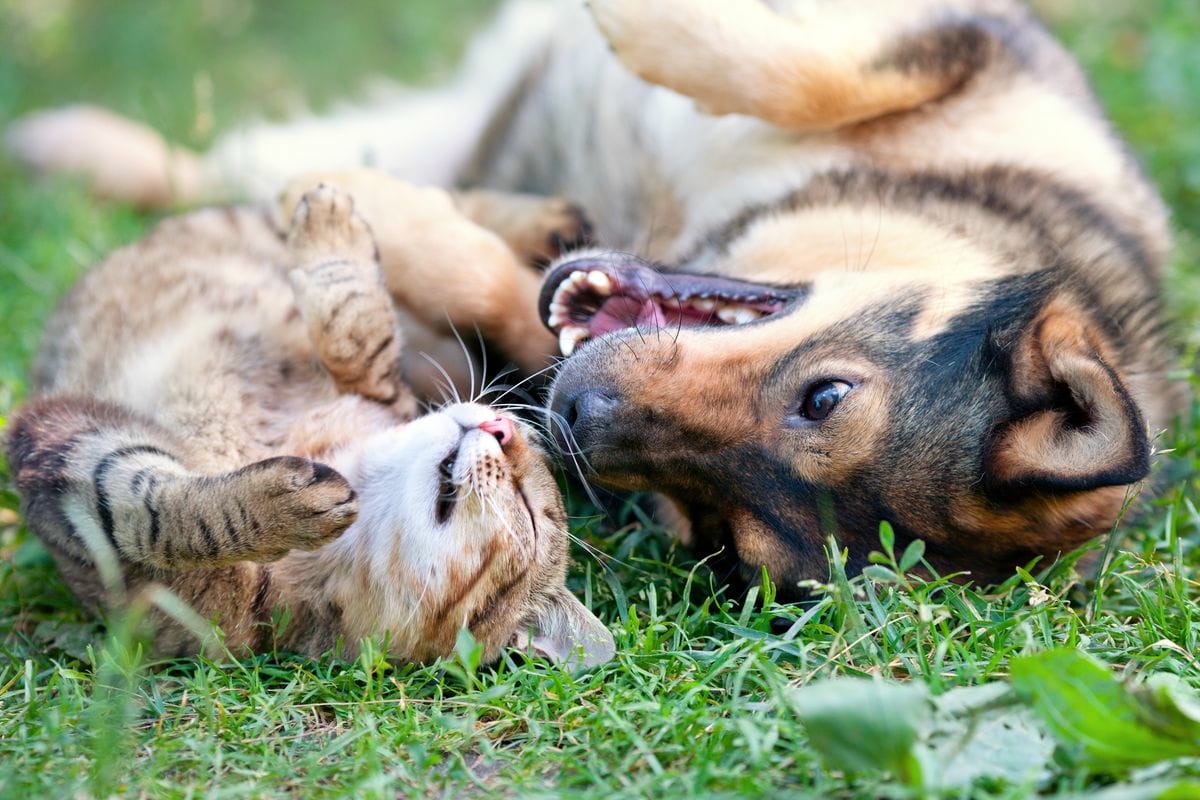
As pet lovers, environmental protection is also important to us. We'll give you a few tips on how to keep the environmental impact of owning dogs and cats as low as possible.
Personally, we are very keen to keep our ecological footprint as small as possible – which is why we avoid air travel and have drastically reduced our meat consumption. Although there are always voices that highlight the environmental impact of dog and cat ownership as particularly severe, we would, of course, never give up living with dogs and cats!
We were therefore pleased about a new Swiss study on the ecological balance of domestic and companion animals1, which concludes that pet ownership is of minor importance in terms of environmental impact. It accounts for only about 1.2% of the total environmental impact caused by Swiss consumption.
That's good news! If you still want to try to reduce the impact our pets cause, you can do so primarily through feeding. The largest share of the environmental impact is determined by what ends up in our animals' bowls.
Don't feed overly high-quality meat!
Meat is known to have a very poor ecological footprint because its production consumes a lot of land and water, and particularly in cattle farming, a lot of greenhouse gas is generated. The amount of meat a dog or cat eats therefore has a decisive influence on the environmental impact.
BARF feeding performs worst in these considerations. According to the study, it can almost triple the environmental impact because this type of feeding involves a very high proportion of animal components, and a large part of it consists of high-quality meat. Therefore, anyone who BARFs their dog or cat should preferably use poultry instead of beef and also primarily feed offal or meat that is less suitable for human consumption .
Commercial pet food has less environmental impact because the meat content is generally lower, and mainly by-products and offal are used for production. There is no need to fear a health risk for our darlings as a result (see also: Animal By-products in Dog and Cat Food ). To avoid unnecessary transport routes, the food should be produced in Europe and primarily contain regional products.
Insect Protein instead of Meat
Anyone who wants to completely forgo meat can now give their dog food that uses insects as protein suppliers. The production of insects consumes far fewer resources than meat production. In addition, insects not only provide high-quality, very easily digestible proteins, but also valuable fatty acids and minerals. Insects are also an ideal basis for hypoallergenic food, as they have rarely been used as a protein source in dog food until now.
Vegetarian Feeding
At least for dogs, vegetarian feeding is also possible, completely foregoing animal protein. Various vegetarian Complete food are available today that can cover the nutritional and vitamin needs of healthy dogs.
Of course, food should always primarily meet the needs of our dogs and cats optimally. However, if various feeding options are available, it certainly makes sense to also consider environmental impact as a decision criterion.
1 Annaheim J., Jungbluth N. and Meili C. (2018) Life Cycle Assessment of Domestic and Companion Animals. Internship report at ESU-services GmbH, Schaffhausen, Switzerland.

Set ipet.ch as a preferred source on Google
Never miss a tip: Set ipet.ch as a preferred source in your Google account so that our veterinary advice and pet care guides appear higher up in your search results. Optional and can be undone at any time.
Set as preferred source →Useful information at a glance
How can I reduce the environmental impact of feeding my dog or cat?
To reduce environmental impact, you can focus on feeding less high-quality meat and instead use offal or meat less suitable for human consumption. Commercial pet food produced in Europe and containing regional products is also a more environmentally friendly option.
Is vegetarian feeding possible for dogs?
Yes, vegetarian feeding is possible for dogs. There are various vegetarian Complete food options that can meet the nutrient and vitamin needs of healthy dogs. It is important that the food optimally covers the dog's needs.
What are the Benefits of insect protein as an alternative to meat in pet feeding?
Insect protein consumes far fewer resources in production than meat and provides high-quality, easily digestible proteins, as well as valuable fatty acids and minerals. Furthermore, it is an ideal basis for hypoallergenic food, as it has rarely been used as a protein source until now.
Why is BARF feeding less environmentally friendly?
BARF feeding is less environmentally friendly because it requires a high proportion of animal ingredients, especially high-quality meat. This can almost triple the environmental impact. A more environmentally friendly alternative is the use of poultry meat and offal.
How much does pet keeping contribute to the total environmental impact in Switzerland?
According to a Swiss study on the eco-balance of domestic and companion animals, pet keeping accounts for only approx. 1.2% of the total environmental impact caused by Swiss consumption. This shows that pet keeping is of minor importance in terms of environmental impact.