EN
EN  DE
DE  FR
FR My dog cannot stay alone - what to do?
-
 By
med. vet. Bianca Michoud-Valente
By
med. vet. Bianca Michoud-Valente - Dec 7, 2022
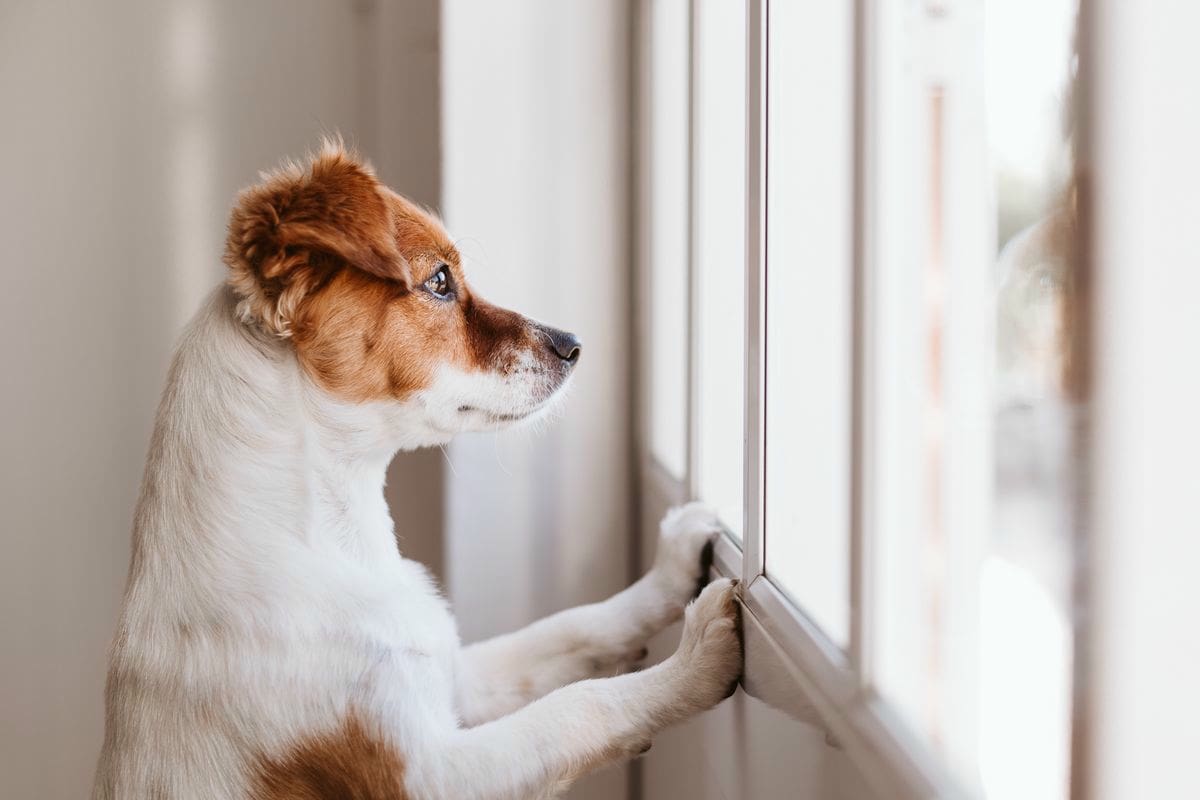
To go shopping, to the doctor, to the hairdresser – these and many other places are where we cannot take our dogs. If dogs haven't learned to stay calm alone from puppyhood, being alone can cause significant stress. Separation anxiety can manifest as loud or destructive behavior. This situation is not easy for the animal suffering from it, nor for its owner, who often feels emotionally overwhelmed in such circumstances. In our latest guide, you'll find some practical tips on how to teach your dog to be alone.
Causes of Separation Anxiety
Even as puppies, dogs feel a certain fear when they are alone, because as social animals, they feel safest when they are with their family members. Puppies must therefore gradually learn to be alone, with their owners leaving them alone first for a very short time, then for an increasingly longer period. This way, they learn that nothing bad happens when they are alone, and that their owners always return. They also learn that they can distract themselves, thereby gaining self-confidence.
If being left alone was not properly trained, certain dogs find it difficult to build such trust. Some were left alone for too long as puppies and traumatized, others were even abandoned and neglected, while still others were never left alone at all and therefore couldn't learn to cope with being alone. Such dogs then often develop significant stress, even full-blown separation anxiety, when their owners are absent.
Currently, this is the case, for example, with many puppies adopted during the Covid pandemic. They spent several months or even a whole year in constant companionship with their owners and now suddenly have to stay alone for hours because their owners can no longer work from home.
How to recognize if a dog suffers from separation anxiety?
Many dogs suffering from separation anxiety cause devastating damage in the house: they chew and destroy furniture or walls, bark for hours, empty trash cans, or scratch doors. They don't do this to attract their owners' attention; rather, this behavior is primarily a sign of their panic-stricken fear.
However, there are also dogs for whom it is not so obvious that they suffer and feel stress when left alone. They might sit panting in front of the front door the entire time or walk through the apartment without being able to relax for a second. To determine how your dog behaves during your absence, it can therefore be helpful to monitor him with a pet camera.
Although it requires a lot of time, patience, and positive reinforcement, it is fortunately possible to teach anxious dogs to stay alone!
Gradually accustoming your dog to being alone
Since the learning process of being alone for an adult dog is lengthy and can take months, we first recommend finding a care option for your dog that will look after him during your absence. Until he has learned to handle the situation calmly, you should absolutely avoid exposing him to long and stressful periods of being alone.
Since the exercises require a lot of time and commitment, it is advisable to work on being alone when you have enough time, e.g., during holidays or on weekends.
First of all, you should change your routine before leaving the house. You should try to make it as short as possible. Put your keys in your pocket beforehand and have your shoes ready to put on outside the door. Dogs are extremely observant animals, and rituals are very important to them. They therefore know your routine when leaving the house very well, and the longer this routine lasts, the more time dogs have to build up increasing anxiety. Incorporate individual routine steps, such as packing your handbag or putting on shoes, into your daily life even without subsequently leaving the house. This way, these activities will gradually lose their fear-inducing effect on the dog.
Next, you should leave the house quickly and without a big farewell ceremony. Do not give your dog any special attention during this time. If you excessively pet your dog and say a very emotional goodbye, this reinforces his feeling that your departure is an important event.
Instead, ignore your dog for at least ten minutes before leaving. When going out, either say nothing or just something casual like "see you later," something that signals to the dog "I'm leaving and I'll be back." Then turn around and come back thirty seconds to one minute later. Make sure that you open the door at a moment when your dog is neither barking nor whining. Do not greet the dog; instead, go about your activities and ignore him again for about ten minutes.
On the first day, go in and out approx. ten times, extending the duration of your absence a little each time. If you come home and your dog is stressed, reduce the time by half. Only increase it again once the anxious behavior has disappeared.
As soon as you see initial results, start varying the duration of your absence. First leave for five minutes, then only two, then seven again, then three, then ten minutes, etc. At the same time, continue to slowly extend the duration of your absence until you have reached 30 minutes, then an hour, and finally two hours.
Creating a safe retreat
Sometimes it is helpful to restrict the dog's free space during your absence. Such a retreat helps your dog to feel safe and secure. It also prevents him from roaming throughout the house and having access to things that could be dangerous for him. Ideally, choose a place where he normally relaxes and sleeps and where his bed is located. Then limit the space with a playpen or a safety gate and train him to stay alone in this retreat, even when you are at home.
Strengthening the dog's self-confidence
In addition to these gradual acclimatization exercises, there are other measures you can take to strengthen your dog's self-confidence. An obedience course at a dog school can be helpful, even if your dog is already trained. In such courses, he can learn to deal with new situations and trust you as his owner.
It is also very important that you strengthen the bond with your dog. This happens not only through petting and cuddling but also through activities that foster a strong relationship, such as agility, dog dancing, Cani-Cross, ball games, scent games, etc. All these activities promote the dog's well-being and strengthen his trust in you.
Keeping the dog occupied while alone
In addition to these exercises, it is important that you offer your dog something to keep him occupied during your absence. Your dog might initially be too anxious to play or chew during your absence. However, over time, he will start to show interest. By the way: Besides fear, boredom can also be a reason why your dog doesn't feel well. And boredom can also manifest as disruptive barking or destructive behavior.
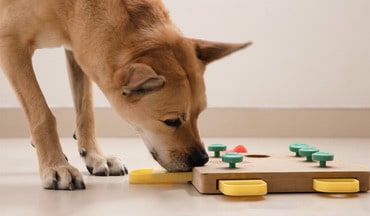
By keeping your dog occupied during your absence, you can help him forget his feelings and concentrate on a task that distracts him. Furthermore, if your dog is busy chewing on toys, he will be less likely to chew on the sofa or a door. Therefore, offer him something to keep him occupied: filled (with kibble, Kiri, peanut butter, liver pâté...) and frozen (to make them last longer) Kongs, snuffle mats, or other safe food toys.
Don't forget to reduce your dog's food ration if you give him high-calorie treats during the day!
In addition, it is also very important that your dog can expend physical and mental energy before being left alone. In this state, it will be easier for him to remain calm and relaxed. This means he is truly challenged, for example, with an "adventure walk" where physical and mental exercises alternate. Because mental stimulation is also crucial to tire out a dog. Feel free to consult a dog trainer who can help you develop a walking routine tailored to your dog's needs and level.
Food supplements that help with stress management
There are plant-based food supplements or those with natural substances that can be helpful for dogs who don't like to be alone. They are specifically designed to help combat stress and anxiety.
Such food supplements are available in tablet form, like Anxitane with L-Theanine from green tea concentrate, or as capsules and chews, like Zylkène based on milk protein. They are also available as herbal blends, like Silencio or in liquid form, like cdVet Calma,. Additionally, calming pheromones, like Adaptil, can help your dog relax better.
While these food supplements by no means replace the exercises mentioned above, they are a great support for training.
What to do if nothing works?
Behavioral disorders related to being alone and separation anxiety occur in varying degrees of severity. In some cases, the solution is simple. It is enough to provide chew toys, ensure the dog is well-exercised, and not give him attention before leaving the house. Other cases, however, may require desensitization under professional guidance. In very difficult cases, it may also be necessary for a veterinarian trained in behavioral medicine to prescribe anti-anxiety medication.
Another option that can be helpful is adopting a second dog. Of course, this is only an option if you are prepared to take on the additional responsibilities that come with it. It is beneficial to adopt an adult, confident dog known not to have separation anxiety. This way, he might help your first dog cope better with your absence. He would no longer be alone and could see how his companion experiences being alone with confidence and calm. If you can envision this, we strongly recommend seeking professional guidance during this process, so you don't risk ending up with two dogs who cannot stay alone.
Dog daycares are another excellent solution, especially for housing dogs during working hours. If your dog is not very sociable, dog sitters or private boarding homes are also a perfect solution. They allow your dog to get out of the house and have contact with people throughout the day.
Generally speaking: Even if your dog doesn't suffer from separation anxiety, you should, of course, not leave him alone at home all day. A puppy should not be left alone for more than two hours, an adult dog for no longer than four hours. A happy dog always needs attention, companionship, and exercise!
Conclusion: The most important thing is to take the necessary time to find out what works best for you and your dog. Remember that dogs are social animals, and it is difficult for them to be alone. You should also not hesitate to seek advice from a professional dog trainer. He will be able to analyze your animal, advise you individually, and, if necessary, put together a personalized training plan.
If you have a dog suffering from separation anxiety, you will definitely need a lot of patience, love, and a positive attitude.

Set ipet.ch as a preferred source on Google
Never miss a tip: Set ipet.ch as a preferred source in your Google account so that our veterinary advice and pet care guides appear higher up in your search results. Optional and can be undone at any time.
Set as preferred source →Useful information at a glance
How do I recognize if my dog suffers from separation anxiety?
Dogs with separation anxiety often exhibit destructive behavior such as destroying furniture or barking for hours. Some dogs are less obviously stressed and sit panting at the door or pace restlessly. A pet camera can help observe your dog's behavior during your absence.
What are the first steps I can take to teach my dog to stay alone?
Start by changing your routine before leaving the house to reduce your dog's anxiety. Leave the house without a big farewell ceremony and return after a short time. Gradually extend the duration of your absence and vary it to slowly accustom your dog to staying alone.
How can I strengthen my dog's self-confidence?
Strengthen the bond with your dog through shared activities such as agility, dog dancing, or scent games. An obedience course can also be helpful to foster your dog's trust. These measures support your dog's well-being and self-confidence.
What can I do if my dog cannot stay alone despite all efforts?
In difficult cases, professional help may be necessary. A veterinarian trained in behavioral medicine or a dog trainer can offer individual solutions. In some cases, adopting a second, confident dog can also help, provided you are willing to take on the additional responsibilities.
Are there food supplements that can help my dog cope with stress?
Yes, there are herbal food supplements and natural substances that can help with stress and anxiety. These are available in various forms, such as tablets or capsules. However, they should not replace the training methods mentioned above, but rather be considered as support.