
 EN
EN  DE
DE  FR
FR Osteoarthritis in Dogs and Cats: Symptoms and treatement
-
 By
Dr. med. vet. Sabina Büttner
By
Dr. med. vet. Sabina Büttner - Sep 15, 2019

Osteoarthritis is the most common cause of chronic joint pain in dogs and cats. It is not just simple "wear and tear", but a complex, progressive disease of the entire joint. Here you will learn which symptoms occur and what modern, innovative treatment options veterinary medicine offers today.
As they age, dogs and cats often suffer from wear and tear of the joints, which can sometimes lead to severe pain. Recent studies and improved diagnostics show that osteoarthritis often begins in much younger animals than previously assumed.
| Animal Species | Frequency & Prevalence |
|---|---|
| Cats |
|
| Dogs |
|
Signs of osteoarthritis in dogs and cats
Fortunately, not all changes visible on X-rays actually cause pain.4 However, especially in cats, it is often very difficult to determine if and where they are experiencing pain. While dogs with osteoarthritis often limp, a cat's symptoms are often simply attributed to the animal getting older – but with the right treatment, these patients often revive and behave as they used to.
Fortunately, not all changes visible on X-rays actually cause pain.4 However, especially in cats, it is often very difficult to determine if and where they are experiencing pain. While dogs with osteoarthritis often limp, a cat's symptoms are often simply attributed to the animal getting older – but with the right treatment, these patients often revive and behave as they used to.
Symptoms in dogs
- Moves less overall and has less stamina during walks
- Stiff gait, especially in the morning or after periods of rest ("starting pain")
- Shows lameness or an altered gait (e.g., "bunny hopping")
- Plays less
- No longer wants to jump into the car or climb stairs
- Worsening after heavy exertion and in cold, damp weather
- Avoids hard and cool resting places
- Intensely licks certain joints (often the paws or ankles/tarsus)
- Dislikes being brushed or petted
- Reacts unusually aggressively or anxiously
Symptoms in cats
- Moves less, sleeps significantly more
- No longer jumps up or hesitates before jumping (looks for intermediate steps)
- No longer sharpens its claws (claws become ingrown)
- Grooms itself less, especially on the back → dull, flaky coat
- Has difficulty using the cat flap
- Has difficulty using the litter box (often a reason for sudden inappropriate elimination)
- Withdraws, is less social, or meows more often at night
- Meows more frequently
- Reacts dismissively or aggressively to being touched on the back or joints
Treatment of osteoarthritis in dogs and cats
Osteoarthritis is incurable, but the quality of life of affected animals can be preserved better today than ever before. The modern scientific standard is multimodal pain therapy – a combination of different approaches that mutually reinforce each other.
1. Weight management and diet
The latest findings show: Adipose (fat) tissue is not just dead weight, but an active organ that releases pro-inflammatory messengers (adipokines) directly into the body. Weight reduction in overweight animals is therefore the most effective non-pharmacological measure against osteoarthritis pain.
2. Modern pain therapy
- Monoclonal antibodies (Anti-NGF): For a few years now, there has been a revolutionary form of therapy for dogs and cats. These are monoclonal antibodies (e.g., bedinvetmab for dogs, frunevetmab for cats), which are administered as a monthly injection. They specifically neutralize the "Nerve Growth Factor" (NGF), a main trigger for osteoarthritis pain. Since they are broken down via the immune system, they spare the liver and kidneys, making them ideal for older animals or cats.
- Classic anti-inflammatories: Continue to be used during acute flare-ups to quickly stop inflammation in the joint.
- Additional painkillers: For very severe pain, medications like gabapentin or amantadine (e.g., for chronic pain that has sensitized the nervous system) can be added.
3. Joint-supporting nutrients
- Omega-3 fatty acids (specifically EPA): Have the most scientifically proven anti-inflammatory effect on osteoarthritis when given in high doses.
- UC-II (Undenatured type II collagen): A newer approach that helps the immune system stop the breakdown of cartilage tissue.
- Glycosaminoglycans and chondroitin: Are still frequently used, even though the studies on their efficacy are viewed more nuancedly today.
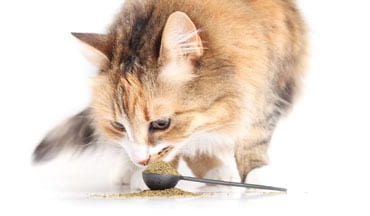
- Plant extracts and other natural substances: In addition, anti-inflammatory and pain-relieving medicinal plants such as devil's claw, willow bark, arnica, curcumin, and frankincense are often used. Furthermore, substances such as eggshell membrane, hyaluronic acid, and green-lipped mussel powder have proven effective in the supportive treatment of joint wear and tear.
Further detailed information on the various active ingredients and how they support joint health can be found in our comprehensive guide on the key molecules for the treatment of osteoarthritis.
4. Physiotherapy and exercise
- Targeted muscle building relieves the joints. Underwater treadmills (hydrotherapy) are ideal as they are gentle on the joints and train the muscles.
- Therapeutic measures such as laser therapy, passive movement exercises, or acupuncture help to relieve tension (which develops as a result of the pain).
- The motto today is: Moderate but regular exercise (rather multiple short walks than one extremely long walk per day).
5. Everyday adaptations
Warm, soft resting places, preferably in the form of special orthopedic beds with memory foam, non-slip rugs on smooth floors, shallow litter boxes, and ramps for the car make everyday life much easier for the animals.
Conclusion
If you suspect your pet has joint problems, have them examined by your veterinarian. They can rule out other possible causes of pain, make a precise diagnosis, and work with you to develop a customized treatment plan.
The younger your pet is and the earlier osteoarthritis is detected and treated, the greater the chances of quickly relieving the symptoms and slowing the progression of the disease!
1 Hardie, E.M. et al. (2002) Radiographic evidence of degenerative joint disease in geriatric cats: 100 cases (1994 –1997) Journal of American Veterinary Medical Association 220, 628-632
2 Clarke, S.P., Mellor, D. et al. (2005 ) Radiographic Prevalence of Degenerative Joint Disease in a Hospital Population of Cats. Veterinary Record, 157,793-799
3 Johnston, S.A. (1997). Osteoarthritis: joint anatomy, physiology, and pathobiology. Vet Clin North Am Small Anim Pract.;27: 699–723.
4 Owens, J.M., Ackerman, N. (1978): Roentgenology of arthritis. Vet Clin North Am 8:453

Set ipet.ch as a preferred source on Google
Never miss a tip: Set ipet.ch as a preferred source in your Google account so that our veterinary advice and pet care guides appear higher up in your search results. Optional and can be undone at any time.
Set as preferred source →Useful information at a glance
What symptoms indicate osteoarthritis in my dog?
Common signs include stiffness after resting, limping, reduced activity, difficulty climbing stairs or jumping, and decreased stamina.
What are the signs of osteoarthritis in cats?
Cats with osteoarthritis often jump less, sleep more, groom less thoroughly, become less active, or avoid being touched around the back or joints.
Can osteoarthritis in dogs and cats be cured?
No. Osteoarthritis is a progressive disease, but early diagnosis and appropriate treatment can greatly improve quality of life.
What treatments are available for osteoarthritis?
Modern treatment combines weight management, pain relief, joint supplements, physiotherapy, and lifestyle adaptations.
What are monoclonal antibody treatments for osteoarthritis?
These innovative medications target Nerve Growth Factor (NGF), an important pain mediator, and are usually given as a monthly injection.
Do joint supplements help pets with osteoarthritis?
Omega-3 fatty acids, UC-II collagen, green-lipped mussel, hyaluronic acid, and selected plant extracts may help support joint health and reduce inflammation.
Should pets with osteoarthritis still exercise?
Yes. Regular, moderate exercise helps maintain muscle strength, supports joint function, and improves mobility.
Why is weight loss important for pets with osteoarthritis?
Excess body weight increases stress on the joints and promotes inflammation. Even modest weight loss can significantly reduce pain and improve mobility.