
 EN
EN  DE
DE  FR
FR My Dog Eats Grass – Is That Normal?
-
 By
Dr. med. vet. Sabina Büttner
By
Dr. med. vet. Sabina Büttner - Mar 14, 2019
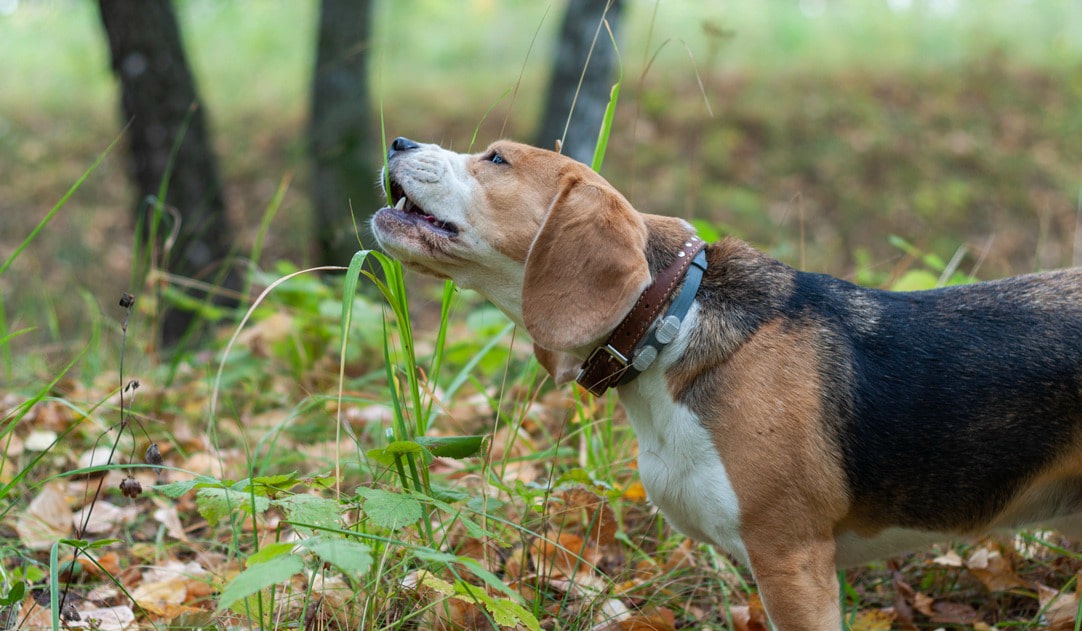
Your dog eats a lot of grass and you don't know if that's normal? Here you can read what might be causing it and what to do if it becomes too much.
Dogs eating grass: usually no cause for concern!
Most dog owners know it: now, as it gets warmer outside and the first fresh green sprouts in meadows and fields, many of our dogs love to eat the tender, young blades of grass by the roadside. This is initially a completely normal behavior and no cause for concern – many dogs simply seem to enjoy it, and there's usually no reason to stop them from doing so. Only grass at the edge of busy roads or fields treated with pesticides should not be ingested.
The assertion that dogs eat grass because certain nutrients are missing from their food has been disproven in various studies. Therefore, you don't have to worry that the food you give your dog doesn't contain enough fiber, vegetables, or fruits. Eating grass is a normal behavior that can also be observed in wolves in the wild.
Eating grass as a sign of stomach problems:
However, if your four-legged friend suddenly eats much more grass than usual and then frequently vomits, you should take a closer look, as it can be a sign of stomach problems.
Often, dogs rid themselves of indigestible bone or cartilage remnants in the stomach by eating grass and then vomiting. The problem is then resolved, and the dogs are fine again. If a foreign body is suspected in the stomach that does not come out through vomiting, a veterinary practice must, of course, be consulted as quickly as possible.
However, frequent grass eating followed by vomiting of grass and bile can also be a sign of gastric hyperacidity with subsequent gastritis. Dogs suffering from gastric hyperacidity often also show smacking, swallowing, restlessness, or vomiting of light mucus/foam, especially in the morning.
Causes for this can be:
- Feeding breaks that are too long
- Stress
- Unfavorable protein-to-Carbohydrates (NfE) ratio in the food
Treatment of Gastric Hyperacidity
If you suspect your dog is suffering from gastric hyperacidity, be sure to have him examined by a vet.
Depending on the cause, various measures can quickly provide relief:
- Give several small meals a day, instead of 1-2 large meals. Especially for dogs that often eat grass in the morning and then vomit, the last meal should be given shortly before bedtime and the first feeding as soon as possible after waking up. This ensures that the stomach never completely empties and the production of stomach acid is regulated.
- Feed easily digestible food, especially for dogs with sensitive stomachs, e.g., Hill's Science Plan Sensitive Stomach & Skin
- After consulting with your vet, you can give special bark or stomach protection preparations that can help bind excess stomach acid. Ulprecar and cdVet Magenschutz have proven particularly effective.
- If stress is suspected as the cause, minimize stress triggers in your dog's daily life and help him through behavioral therapy and supportive stress reduction aids, such as Zylkène, Adaptil , Anxitane or Veggiedent Zen.
- Change the feeding regarding the protein-to-Carbohydrates (NfE) ratio. Some dogs react to a high protein content (>30%) in their food with excessive stomach acid production. Here, it can help to give food with less protein.
- If gastritis is already present, veterinary treatment and cause identification, as well as symptomatic therapy (e.g., with acid blockers), are indicated.
In summary: Occasional grass eating is usually normal. However, if it becomes excessive, if the dog often vomits afterward, or shows other symptoms, a visit to the vet is the best way to find the cause and help your dog.

Set ipet.ch as a preferred source on Google
Never miss a tip: Set ipet.ch as a preferred source in your Google account so that our veterinary advice and pet care guides appear higher up in your search results. Optional and can be undone at any time.
Set as preferred source →Useful information at a glance
Is it normal for my dog to eat grass?
Yes, it is completely normal for dogs to eat grass. Many dogs enjoy fresh blades of grass, especially in spring when the grass is young and tender. This behavior is usually no cause for concern.
Can eating grass indicate a health problem?
If your dog suddenly eats much more grass than usual and frequently vomits afterward, this could indicate stomach problems. In such a case, it is advisable to observe more closely and, if necessary, consult a veterinarian.
Can my dog's food be the reason for eating grass?
Studies have shown that eating grass is not related to a deficiency of nutrients in the food. Therefore, it is unlikely that your dog's food is the reason for eating grass. Nevertheless, adjusting the feeding regimen can be helpful for stomach problems.
What are the signs of stomach acidity in dogs?
Typical signs include frequent grass eating with vomiting (especially in the morning), mucus or foam vomiting, smacking lips, restlessness, and empty swallowing. Causes can include, for example, long feeding breaks or stress.
What helps with stomach acidity?
Several small meals throughout the day, especially late in the evening and early in the morning, help keep the stomach consistently slightly filled. Stomach-friendly food or food supplements that bind stomach acid can also be beneficial after consulting with the veterinarian.
Should I prevent my dog from eating grass?
Only if he eats in dangerous places (e.g., roadsides or fields treated with pesticides) or regularly vomits afterward. In all other cases, the behavior can be tolerated in moderation.