
 EN
EN  DE
DE  FR
FR Feeding Dogs with Leishmaniasis – Low-Purine or Not?
-
 By
Dr. med. vet. Sabina Büttner
By
Dr. med. vet. Sabina Büttner - Oct 14, 2022

Leishmaniasis is a disease commonly found in dogs originating from the Mediterranean region. It is incurable, but with regular veterinary check-ups, targeted therapy, and supportive nutrition, affected dogs can lead long and happy lives. What should be considered regarding feeding?
Canine Leishmaniasis is a disease caused by protozoa of the genus Leishmania, particularly Leishmania infantum. It is transmitted by mosquito bites in the Mediterranean region. Therefore, dogs originating from Southern Europe or having spent holidays there are frequently affected.
Leishmaniasis is a chronic disease that is not curable. Therefore, effective prophylaxis is particularly important! But even if a dog contracts Leishmaniasis, it is now possible, with the right treatment, regular veterinary check-ups, and careful nutrition, for the dog to lead a long life of good quality.
Symptoms of Leishmaniasis
An infection with Leishmania can manifest very differently. It is often chronic and can extend over several years. Some dogs, despite being infected, do not develop any disease symptoms. In others, the disease takes a severe course and can lead to death if left untreated. Depending on the severity of a dog's illness, Leishmaniasis is divided into different stages, with prognosis and therapy differing according to the stage.
Since Leishmaniasis is a systemic disease that can affect any organ, the clinical signs are non-specific. Skin lesions are among the most common symptoms, which can occur alone or together with other clinical manifestations. The kidneys are also very frequently affected, and a resulting chronic Renal insufficiency is usually the cause when a dog dies from Leishmaniasis.
The most important clinical symptoms of canine Leishmaniasis are:
- Skin changes
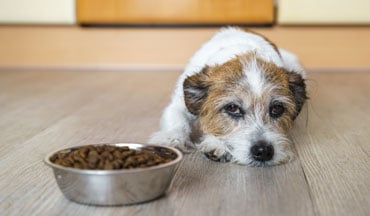
- Loss of appetite
- Weight loss
- Anemia
- Lymph node swelling
Leishmaniasis: How should I feed my dog?
Nutrition for Leishmaniasis-positive dogs without disease symptoms
If Leishmania are detected in a dog without it showing disease symptoms, therapy is usually not necessary. It is important that the dog undergoes regular veterinary check-ups so that any potential disease outbreak can be detected early. A high-quality diet is particularly important, as this is crucial for strengthening the immune system. A high content of antioxidants and an optimal ratio of Omega-3 and Omega-6 fatty acids can help strengthen the body's defenses. Furthermore, the risk of a disease outbreak can be reduced if such dogs receive Impromune to support their immune system.
Nutrition for Leishmaniasis-positive dogs with disease symptoms
Dogs that have developed the disease must take medication for treatment as long as they show symptoms. A component of such therapy is usually the drug Allopurinol. As long as dogs are treated with Allopurinol, it is important that they receive a low-purine diet.
What are Purines?
Purines are building blocks found in the genetic material of cells. They are absorbed through food on the one hand and also produced by the body itself on the other. Excess purines are normally broken down into urea and excreted through the urine.
Allopurinol prevents the breakdown of purines into urea; instead, the breakdown stops at an intermediate product (xanthine), which is less soluble and also excreted through the urine. If a dog is fed a high-purine diet during Allopurinol treatment, too much xanthine can be present in the urine, leading to the formation of xanthine crystals or xanthine stones, which can cause an obstruction of the urinary tract. To prevent this, it is important that dogs on Allopurinol treatment are fed a low-purine diet. In most dogs, the signs of illness disappear after some time under treatment, so Allopurinol therapy can be interrupted. A low-purine diet is no longer necessary in this case. However, they still need a highly digestible, high-quality food that contains all nutrients, vitamins, and minerals in optimal amounts to ensure the dog receives everything it needs.
How do I recognize low-purine food?
The amount of purine in a food is not declared for most feedstuffs. However, since many dog foods primarily contain purine-rich animal protein sources, the stated protein content can serve as an indicator for the purine content. In general, a food with a moderate protein content (< 23% for dry food, < 7% for wet food) should be chosen. The ingredient list also provides further information on the amount of purine in the food.
``
|
Purine-rich ingredients to avoid |
Suitable low-purine ingredients |
|
Offal (spleen, kidney, lung, heart, rumen, etc.) |
Eggs |
|
Chicken skin |
Dairy products (quark, cottage cheese, yogurt) |
|
Legumes and soy products |
Pure muscle meat (e.g., beef, lamb, chicken, turkey) |
|
Certain fish varieties (sardines, anchovies, tuna) |
Fruit / Vegetables |
|
Yeasts |
Grains |
|
Spinach |
|
|
Algae |
|
The food for dogs suffering from Leishmaniasis should always be very palatable so that the dog enjoys eating it and can maintain its weight or compensate for any weight loss. Since inflammatory skin changes are very common in dogs with Leishmaniasis, essential fatty acids and biotin are important to support skin regeneration. An optimal ratio of Omega-3 and Omega-6 fatty acids also helps reduce inflammatory reactions in the skin or kidneys.
Low-purine dog food
Low-purine dog foods that meet these requirements:
- Royal Canin Urinary u/c Low Purine
- Bellfor Landgutschmaus and Naturgutschmaus
- Specific Food Allergen Management CDD
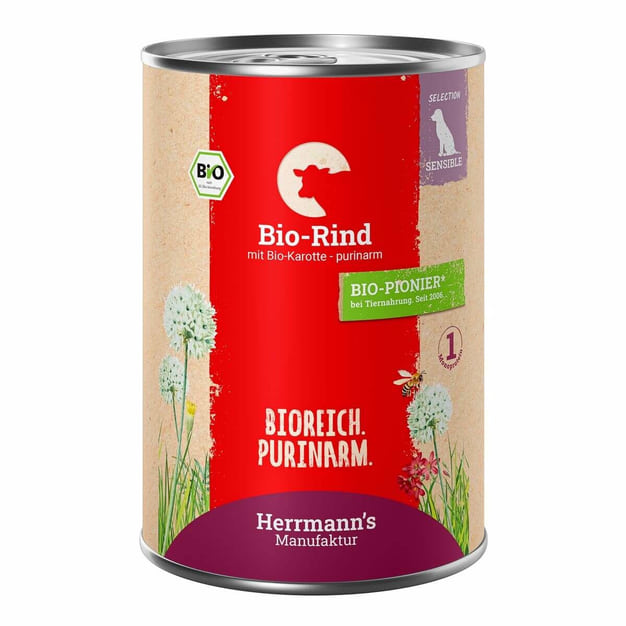
- Herrmann’s Sensible Bio Rind mit Karotten (wet food)
- Sanoro Sensitiv wet food
If there is an additional impairment of kidney function, the diet should also address this issue. Depending on the stage of Renal insufficiency, phosphorus and protein content must be restricted accordingly. Such dogs benefit from a Renal diet adapted to the stage.
Immunostimulating preparations also have a positive effect on dogs that have developed the disease and help reduce parasite multiplication.
Low-purine treats and chews
Even dogs treated with Allopurinol naturally want to be rewarded with delicious treats or occasionally spoiled with a chew.
For example, special biscuits for dogs with kidney problems or vegetarian alternatives are suitable as low-purine treats.
Many common chews are made from connective tissue-rich material, such as skin or offal, and are therefore purine-rich. Common chews like rawhide bones, pizzle sticks, tendons, or pig ears should therefore not be given. Vegetarian chews, dog biscuits made from grains, or pure muscle meat snacks without skin (dried chicken breast, Dogy’s Duck Breast) are more suitable. Also, chew sticks or chew roots are good alternatives that can also be rubbed with bacon to make them more attractive to the dog.
Conclusion: An adapted diet cannot cure Leishmaniasis – but it can help improve the dog's quality of life and increase its life expectancy.

Set ipet.ch as a preferred source on Google
Never miss a tip: Set ipet.ch as a preferred source in your Google account so that our veterinary advice and pet care guides appear higher up in your search results. Optional and can be undone at any time.
Set as preferred source →Useful information at a glance
What is Leishmaniasis in dogs and how is it transmitted?
Leishmaniasis is a disease caused by protozoa of the genus Leishmania, particularly Leishmania infantum. It is transmitted by mosquito bites in the Mediterranean region and frequently affects dogs originating from Southern Europe or those that have vacationed there. The disease is chronic and incurable, but it can be well-controlled with the right treatment and nutrition.
What symptoms occur in dogs with Leishmaniasis?
The symptoms of Leishmaniasis can vary greatly and affect any organ. Common signs include skin changes, loss of appetite, weight loss, anemia, and swollen lymph nodes. Kidney problems are also common and can lead to chronic Renal insufficiency, which is often the cause of death in affected dogs.
How should I feed my dog with Leishmaniasis?
Dogs with Leishmaniasis should receive high-quality food rich in antioxidants and an optimal ratio of Omega-3 and Omega-6 fatty acids to strengthen the immune system. If the dog is treated with Allopurinol, a low-purine diet is important to prevent the formation of xanthine crystals. After treatment, continued attention should be paid to a highly digestible and nutrient-rich diet.
What are purines and why is a low-purine diet important?
Purines are building blocks of genetic material that are ingested with food or produced by the body itself. During treatment with Allopurinol, the breakdown of purines into urea is prevented, which can lead to the formation of xanthine crystals. A low-purine diet helps to minimize this risk and protect urinary tract health.
Which foods are suitable for dogs with Leishmaniasis?
For dogs with Leishmaniasis, foods with moderate protein content and low-purine ingredients such as eggs, dairy products, pure muscle meat, and vegetables are suitable. Purine-rich ingredients such as offal, chicken skin, and certain fish varieties should be avoided. Low-purine treats and chews are also important to reward the dog without compromising its health.