EN
EN  DE
DE  FR
FR Tips for Successful Weight Loss in Dogs and Cats
-
 By
Dr. med. vet. Sabina Büttner
By
Dr. med. vet. Sabina Büttner - Sep 13, 2023
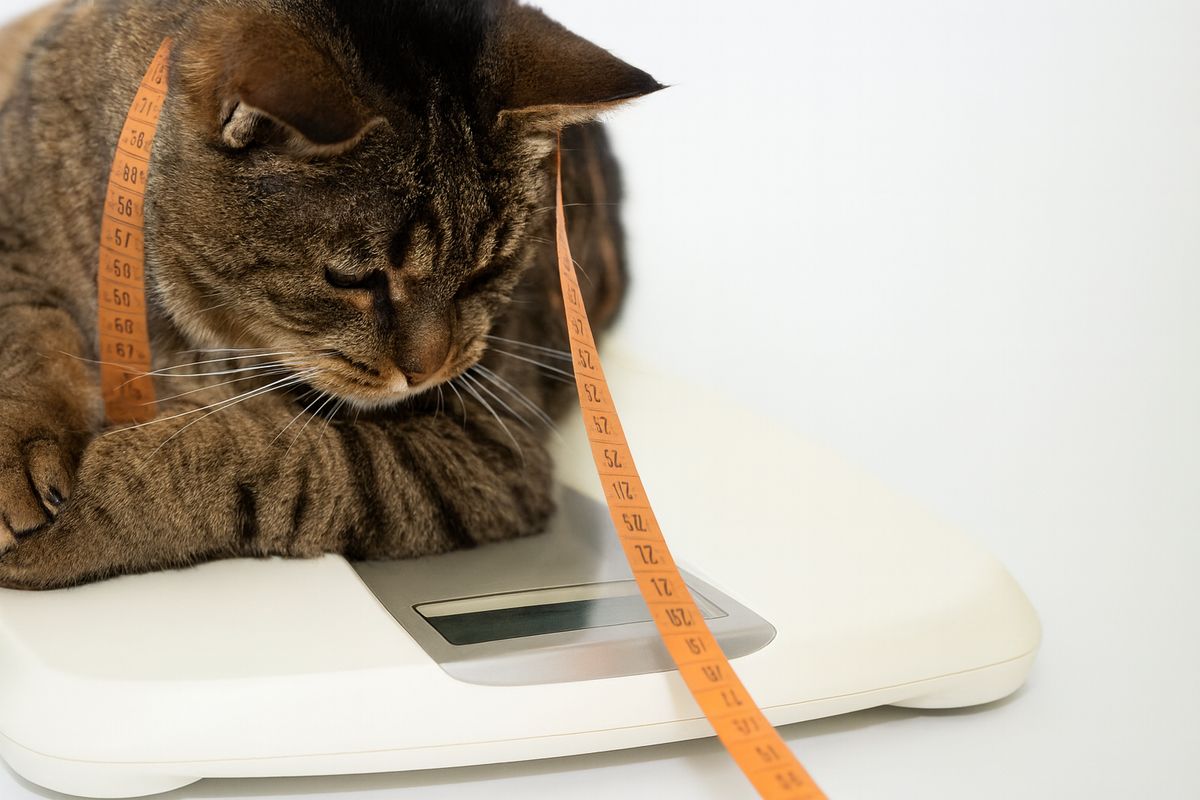
Weight problems in dogs and cats are becoming increasingly common today, which can significantly affect the health and general well-being of animals. In this article, we introduce our weight loss program for dogs and cats and share our tips and tricks for successful weight loss with you.
Is my pet too heavy?
To determine if your pet is overweight, there are several signs you can look out for. Here are some common characteristics that could indicate your pet is too heavy:
- Palpable fat layer: You can gently run your fingers along your pet's ribs and chest. At a healthy weight, the ribs should be easily palpable but not visible. If you feel a thick layer of fat over the ribs, this is a sign of overweight.
- Waist: Look at your pet's waist from above. At a healthy weight, a slight tuck-in should be visible between the ribs and hips. If the waist is barely discernible or even wider than the ribcage, your pet may be overweight.
- Visible fat pads: Pay attention to whether your pet has fat pads, especially in the abdominal area, on the flanks, and around the neck. If these areas look distinctly rounded or flabby, this can indicate overweight.
- Difficulty moving: If your pet has difficulty moving, tires more quickly, or shows signs of respiratory distress, this can indicate overweight. Overweight animals often have less stamina and cannot move as easily as animals at a healthy weight.
However, it is important to note that every animal is individual, and body structure and breed can play a role. If you are unsure, ask your veterinarian for an assessment of your pet's nutritional status during your next visit. Read more about this in our guide «Is my pet too heavy?».
Why is it important for my pet to lose weight?
There are several reasons why it can be important for an animal to lose weight, especially if it is severely overweight. Here are some reasons:
- Health Problems: Overweight can lead to a variety of health problems in affected animals, similar to humans. These include diabetes, cardiovascular diseases, joint problems, respiratory distress, and a shortened life expectancy. By reducing weight, the risk of such diseases is decreased, and the animal's overall health is improved.
- Increased Quality of Life: An overweight animal may have difficulty moving, playing, or participating in daily activities. Weight loss improves mobility, which can lead to an increased quality of life. The animal will be more active, have more energy, and be able to follow its natural instincts more easily.
- Longer Life Expectancy: Studies have shown that dogs and cats who maintain a healthy weight live longer on average than overweight animals. By helping your pet lose weight and achieve a healthy weight, you can increase its life expectancy and ensure it can spend more time by your side.
- Prevention of Further Problems: Overweight can increase the risk of other health problems, such as skin diseases, digestive problems, and certain types of cancer. Weight loss can help reduce these risks and promote the animal's overall well-being.
How do I proceed if my pet needs to lose weight?
With our personnalised weight loss program, you can easily create an individual plan for your pet in just a few steps.
1. Determine Target Weight
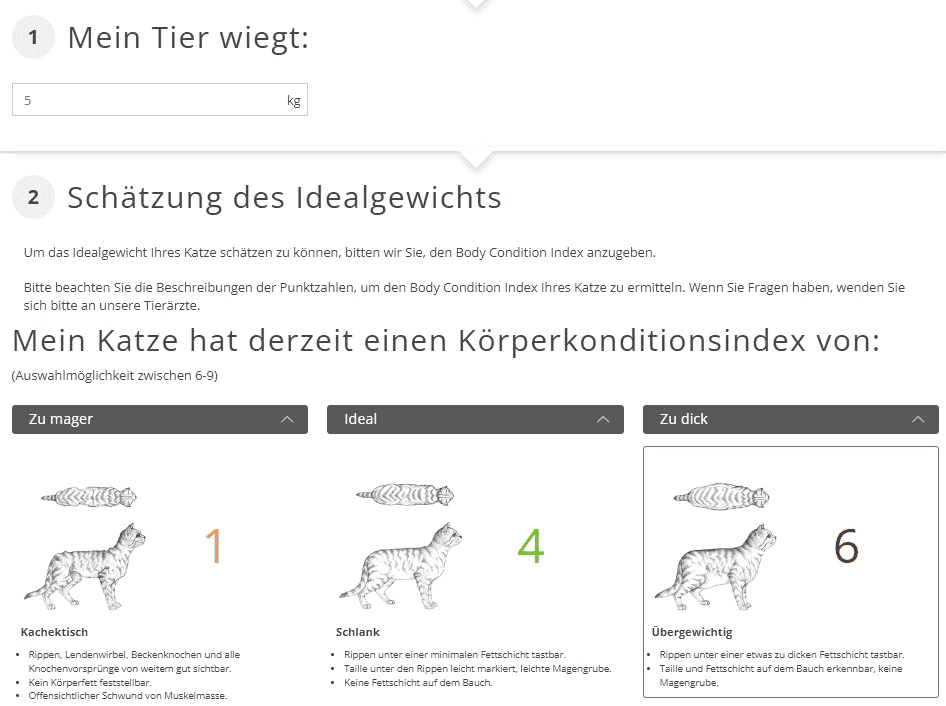
To determine the target weight, weigh your pet and enter its current weight into the designated field in our online weight loss program. Then, carefully read the descriptions for the Body Condition Score (BCS) and try to estimate which value corresponds to your pet. Once you have determined the BCS for your pet, its target weight will be calculated.
 |
 |
2. Select Food
It is important to use a Veterinary diet food that has been specially developed for animals that need to lose weight. Such a diet food contains a lower amount of calories compared to conventional dog and cat food. Nevertheless, it contains all the necessary nutrients that the animal needs, in the correct amounts. This ensures that your dog or cat receives a balanced diet despite the reduced calorie intake and does not develop any deficiencies. Diet food for animals that need to lose weight also generally contains dietary fibres and other ingredients that help to increase satiety. This helps to control the animal's hunger and keep it satisfied, even though it receives less food.
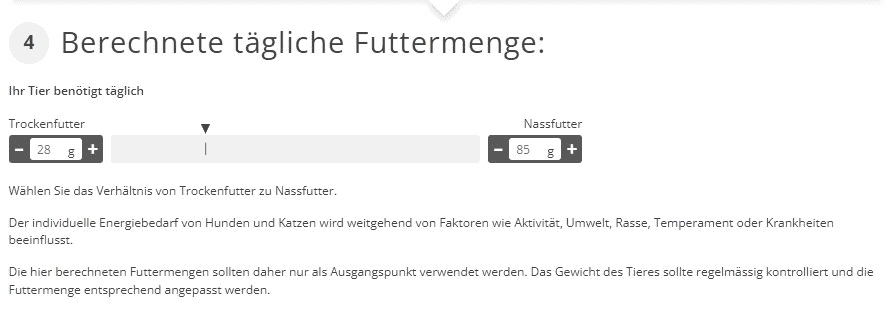
Choose a suitable food from the various types listed in our program. You can base your choice on your pet's preferences and select either only dry food, only wet food, or both wet and dry food. For dogs, you can also choose a calorie-reduced treat. The amount of food your pet needs will then be automatically calculated. If you have selected wet and dry food, you can then individually determine the proportion of wet food the animal should receive. For example, if it should receive one pouch of wet food, enter the weight of one pouch for the amount of wet food. The amount of dry food will then be automatically adjusted.
Strictly adhere to the specified amounts, and accurately measure the food and treats!
 |
3. Monitor Weight Progress
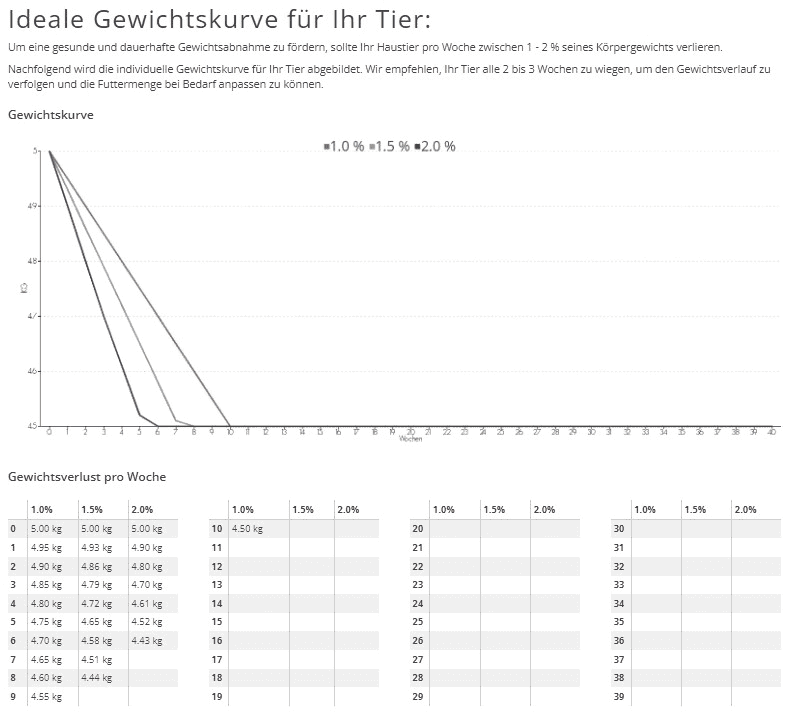
The individual energy requirement can vary greatly from animal to animal, depending on breed, activity, metabolic state, and environmental conditions. The calculated food amounts are therefore always only guidelines that may need to be adjusted during the course of the diet. For this purpose, our program will create a weight table and a weight curve, which you can use to monitor your pet's weight progress. Weigh your pet regularly and compare its weight with the information in the weight table. If your pet is losing weight slower than indicated in the table, you must further reduce the amount of food. If it is losing weight faster, you may slightly increase the amount.
 |
Common Challenges During the Diet
My dog, my cat is constantly hungry and begging!
- Develop New Routines
In living with our pets, we sometimes develop routines that can make weight reduction difficult. If your dog is used to always getting a few pieces of buttered bread from the table for breakfast, it will not be easy for him or for you to give that up. If your cat is rewarded with a few treats every time she meows and rubs against your legs, it's difficult to suddenly ignore this behavior.
For these cases, consider alternatives. For example, give your dog a treat from his daily ration for breakfast, or reward your cat with a few kibbles from the measured daily ration of the diet food. Try to distract your pet with short play sessions or small training units. This way, new routines can develop that can be maintained even after the diet. - Divide your pet's meals into several small portions throughout the day, instead of giving him a large amount of food once or twice. This can help keep his metabolism active and prevent hunger pangs.
- Increase Meal Duration.
For dogs and cats who gobble down their food in the shortest possible time, it can be useful to offer the food, at least partially, not in the bowl. For example, with dogs, you can combine part of the meals with a retrieve game using a food pouch, and for cats, there are various food toys where they have to 'hunt' for their food. Enrichment toys, food foraging games, or interactive puzzles provide mental and physical stimulation for animals and can help reduce boredom and prevent compensatory overfeeding. - Further Increase Dietary Fibres
Although Veterinary diet foods already have a high dietary fibre content, for some animals it can help to increase the dietary fibres in the food to further boost satiety. For example, raw, grated carrots or even dietary fibre mixtures that can be added to the food are suitable for this. However, the amounts should be increased slowly, and the maximum amounts indicated on the packaging should not be exceeded, otherwise it can lead to digestive problems and diarrhea. - Increase Food Volume
A simple method to increase satiety is to increase the food volume. You can simply increase the proportion of wet food. Since wet food consists of 70 – 80% water, the amount your pet is allowed to eat is much larger than if it exclusively receives dry food.
My pet is not losing weight despite the diet!
- Check if all family members are adhering to the rules.
Is your pet getting anything from the table or in between meals from anyone? Does the cat possibly have access to food at the neighbor's? Explain to everyone how important it is for the animal's health that it loses weight, and suggest alternatives on how the pet can be rewarded other than with food. - Further Reduce Food
If the weight remains unchanged for more than 2-3 weeks, reduce the amount of food by 10%. If you are unsure whether your dog or cat is still receiving sufficient nutrients with this amount of food, ask your veterinarian or our veterinary team. - Increase physical activity.
This can include longer walks, active play, or other suitable exercises. Start slowly and gradually increase the intensity to avoid injuries or overexertion.
Motivation and Perseverance:
Weight loss requires time, patience, and commitment. It can be challenging to stay motivated and consistently implement the weight loss program. Sometimes it can take longer than expected to achieve visible results, and there can be setbacks. Nevertheless, stay optimistic! Enter your pet's measured weight into the weight curve and celebrate even small successes! Take photos of your pet to document the changes. Focus on the long-term health benefits, and support each other in the family to stay motivated. Your dedication will help improve your furry friend's quality of life and lifespan.

Set ipet.ch as a preferred source on Google
Never miss a tip: Set ipet.ch as a preferred source in your Google account so that our veterinary advice and pet care guides appear higher up in your search results. Optional and can be undone at any time.
Set as preferred source →Useful information at a glance
How do I recognize if my animal is overweight?
To determine if your animal is overweight, you can look for several signs: a palpable layer of fat over the ribs, a barely visible waist, or noticeable fat pads in the abdominal area. Difficulties with movement can also be an indication. If in doubt, have your animal's nutritional status assessed by a veterinarian.
Why is it important for my animal to lose weight?
Overweight can lead to health problems such as diabetes, cardiovascular diseases, and joint issues. Weight loss improves quality of life, increases life expectancy, and reduces the risk of further health problems.
How can I help my animal lose weight?
With our weight reduction program, you can create an individual plan for your animal. Determine the target weight, select suitable Veterinary diet food, and regularly monitor the weight progression. Adjust the food amount as needed and increase your animal's physical activity.
What can I do if my animal is constantly hungry?
Develop new routines by distracting your animal with play sequences or training sessions. Divide meals into smaller portions and increase food volume with more wet food. Adding Dietary fibres can also increase the feeling of fullness.
What do I do if my animal doesn't lose weight despite the diet?
Check if all family members are adhering to the diet rules. Reduce the food amount by 10% if the weight remains unchanged for over 2-3 weeks. Increase physical activity and remain patient and motivated. You can record small successes on the weight curve.