EN
EN  DE
DE  FR
FR Dogs in the Snow: Precautions and Winter Care
-
 By
Dr. med. vet. Sabina Büttner
By
Dr. med. vet. Sabina Büttner - Jan 14, 2023
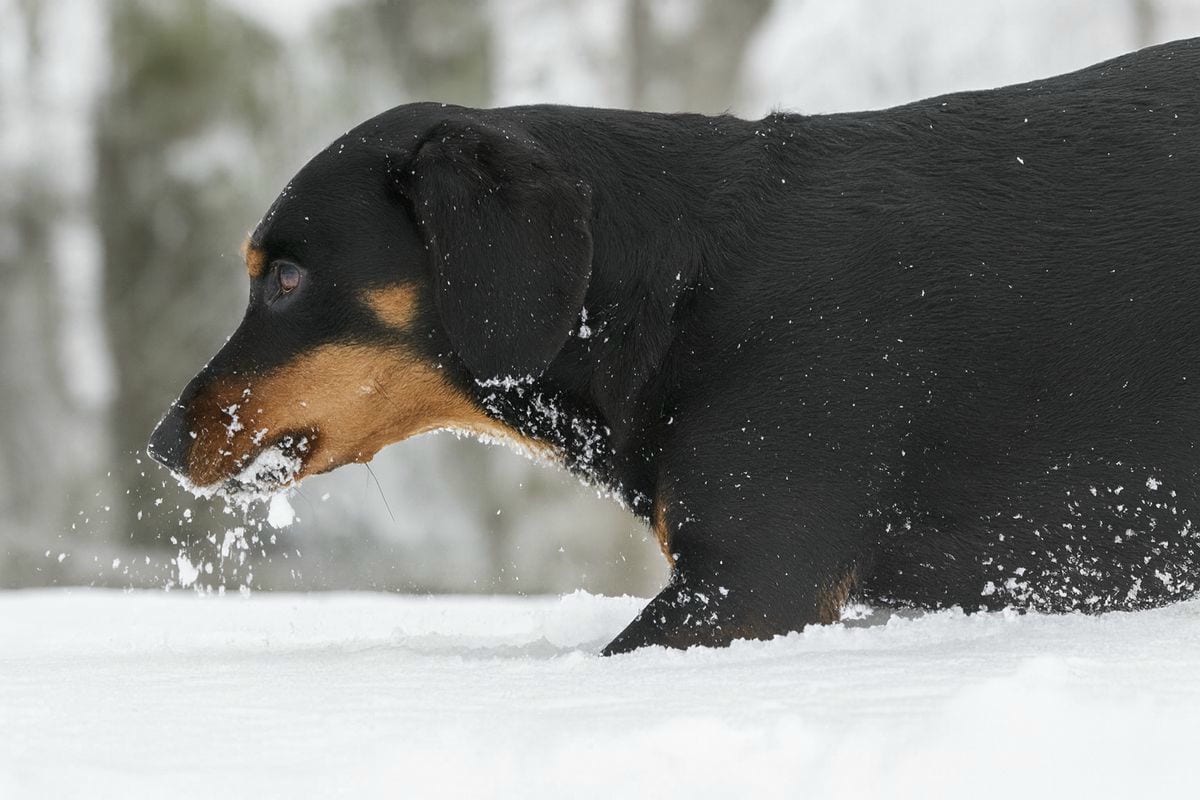
It's not just us humans who enjoy the snowy landscape and fresh powder in winter; our dogs also love to romp through the snow. To ensure your dog can play carefree in the snow, there are a few things you should consider. Here are our tips for unadulterated fun in the snow.
What to do if your dog eats snow?
Some dogs love to eat snow and can't get enough of it. While some show no problems, even with larger amounts of snow, others are very sensitive and quickly show the typical symptoms of stomach lining inflammation, known as snow gastritis.
Symptoms of snow gastritis:
- Gurgling sounds in the abdomen
- Abdominal pain, recognizable by a tense abdominal wall or an arched back
- Increased salivation or smacking
- Retching and vomiting
- Diarrhea, sometimes bloody
If your dog suffers from snow gastritis, it usually helps to administer a gastrointestinal diet for a few days. As a bland diet, there is highly digestible Veterinary diet food. However, homemade rations of cooked poultry meat with soft-boiled rice and/or potatoes and some cottage cheese are also suitable.
Feed several small meals throughout the day and ensure that both the food and drinking water are always at room temperature. The stomach lining can also be supported with an elm bark preparation. If diarrhea is severe, it is also recommended to add a probiotic to the food.
If the symptoms do not quickly improve or even worsen, a veterinarian should definitely be consulted.
Preventing your dog from eating snow
Dogs with sensitive digestion should be discouraged from excessive snow eating. Do not throw snowballs to your dog and also refrain from other fetch or search games in the snow. If the dog knows a stop signal, such as 'No' or 'Off', this can of course also be used to stop snow eating. Take the dog on the leash, if necessary, so you have better control over him. Usually, the appetite for snow subsides after a few days, so the dog can then run freely again.
Paw care in winter
Not every dog has problems with their paws in winter. Some dogs seem unaffected by snow and ice, and therefore do not require additional care. However, there are also dogs that have significant problems with their paw pads in winter, especially when exposed to a lot of road salt. To protect and care for the paws, it is advisable to wash the paws with lukewarm water after each walk to remove the salt. This also prevents the dog from licking off the salt and possibly getting diarrhea. Rough and cracked paw pads should be cared for with a suitable paw balm, which is best applied before each walk. This way, you can simultaneously prevent snow, ice, or salt from getting between the toes.
To avoid ice clumps between the toes and to make cleaning the paws easier, it is also advisable to trim the hair between the dog's toes. If the dog has significant problems with its paws in winter, dog boots can also be a good solution. However, it is important to ensure that the boots fit well to avoid discomfort and pain.
Do I need to put a coat on my dog?
Healthy dogs with a thick coat and plenty of undercoat generally do not need a coat even in frosty temperatures in the snow. As long as they are moving, they will not be cold.
Short-haired dogs with little undercoat or dogs from southern countries, however, quickly get cold in snow and cold weather and therefore benefit from a warming coat. Similarly, small dogs with short legs, whose bodies are close to the cold ground, cool down quickly and should therefore wear a sweater or a coat in frosty weather. A winter coat is also useful for old or sick dogs during the cold season.
The coat must absolutely provide good warmth, protect from wetness, and fit optimally, so that the dog is not restricted in its movement. If this is the case, the coats are usually worn by the dog without problems.
Can dogs get snow blindness?
UV rays can lead to a painful inflammation of the cornea in the eye, known as snow blindness, not only in humans but also in dogs. Since snow reflects UV rays very strongly, this risk exists especially during extended winter hikes in the mountains. Dogs that already suffer from an eye disease should definitely be protected with special sunglasses for dogs. For such glasses to be well tolerated, however, the dog must be slowly accustomed to them with a lot of positive reinforcement.
Feeding in winter
Especially when it's really cold for a longer period, we are outside a lot with the dog and take long walks, it is important to remember that the dog needs more energy to maintain its temperature. In such situations, the daily ration should be slightly increased so that he has enough energy available to keep warm. For older and sick four-legged friends with a weakened immune system, it can also be useful to mix a food supplement for strengthening the immune system into the food.
Most dogs have no problems with snow and cold. The more sensitive ones can be helped with the measures described here, so that their fun and joy in the snow is not impaired.

Set ipet.ch as a preferred source on Google
Never miss a tip: Set ipet.ch as a preferred source in your Google account so that our veterinary advice and pet care guides appear higher up in your search results. Optional and can be undone at any time.
Set as preferred source →Useful information at a glance
What should I do if my dog eats snow?
If your dog eats snow, this can lead to snow gastritis, which manifests with symptoms such as abdominal pain, vomiting, and diarrhea. In such cases, it is advisable to give your dog a gastrointestinal diet, consisting of highly digestible Veterinary diet food or homemade rations of cooked poultry, rice or potatoes, and cottage cheese. If the symptoms do not improve quickly, please consult a veterinarian.
How can I stop my dog from eating snow?
To prevent your dog from eating snow, you should avoid snowball games and use a stop command like 'No' or 'Leave it'. If necessary, put your dog on a leash to better control them. Typically, the appetite for snow subsides after a few days.
How do I care for my dog's paws in winter?
After every walk, your dog's paws should be washed with lukewarm water to remove road salt. Rough paw pads can be cared for with a suitable paw balm. To avoid ice clumps, it is advisable to trim the hair between the toes. For significant problems, dog boots can also be a solution, but pay attention to the correct fit.
Does my dog need a coat in winter?
Healthy dogs with a dense coat generally do not need a coat. However, short-haired dogs, small dogs with short legs, as well as old or sick dogs, benefit from a warming coat. The coat should fit well, provide warmth, and protect against moisture without restricting freedom of movement.
Can dogs get snow blindness?
Yes, dogs can get snow blindness, as snow strongly reflects UV rays. The risk is particularly elevated during winter hikes in the mountains. Dogs with existing eye conditions should be protected with special sunglasses. Gradually accustom your dog to the glasses with positive reinforcement.