EN
EN  DE
DE  FR
FR Tips Against Fear of Fireworks
-
 By
Dr. med. vet. Sabina Büttner
By
Dr. med. vet. Sabina Büttner - Sep 18, 2020

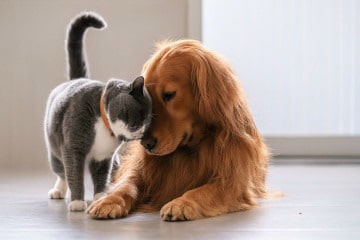
On August 1st, whistling and banging will once again be heard everywhere. For many, the National Day is only half as enjoyable without fireworks and deafening firecracker bangs. However, dogs and cats often have a panicked fear of the noise of fireworks.
Here are a few tips that can help you make this day more bearable for your pet:
- If you have a young dog or cat, accustom them to noise early on by repeatedly playing with them during noise and remaining calm yourself. Special 'noise CDs' are available at the vet that can help you with this training. Be sure to protect your young animal from loud bangs in its vicinity on August 1st. Such a shock could traumatize it into becoming a "scaredy-cat" for the rest of its life.
- Do not leave your pet alone or with a completely unfamiliar person on August 1st.
- On August 1st, only walk your dog on a leash; otherwise, it might bolt if firecrackers are set off prematurely and not return.
- Definitely bring your cat indoors; otherwise, it might run onto the street in a panic and risk being hit by a car.
- It is very important that you remain calm yourself and ignore your dog's or cat's fearful behavior. Your frightened pet will interpret your petting and comforting words as a reward for its behavior, which will only intensify its fear. Ignoring it, on the other hand, communicates that the situation poses no threat.
- Create a safe retreat with few or easily darkened windows, for example, in the bathroom or a quiet corner. Many dogs and cats find it helpful if a worn T-shirt from their owner is placed in their basket or on their blanket. The familiar scent usually has a very calming effect.
- Turn on the TV and radio to help drown out the fireworks noise. Classical music is said to have a particularly calming effect.
- Pheromones are messenger substances that individuals of a species can use to communicate with each other and that directly influence emotions and moods. Calming pheromones are secreted by the mother animal during the suckling period and convey a feeling of security and safety to the offspring. Synthetically produced pheromones are available as diffusers, Collar, or spray (Feliway, Adaptil) and can additionally help your pet overcome its fear. Pheromone products should be used one to two weeks before the expected fireworks.
- The calming protein Alpha-Casozepine is produced in the intestines of puppies when they digest mother's milk. In adult dogs, Alpha-Casozepine is no longer formed, but when supplemented, e.g., in the form of the food supplements Zylkène , it also has a calming effect and can particularly positively influence behavioral therapy. .
- Bach flowers (Drops against fear of noise), homeopathic or phytotherapeutic remedies (e.g., Felisept; Calmex; PetRemedy; Anxitane) can also help reduce stress. They should also be administered a few days before the event.
- If you have a noise-sensitive dog that reacts with panic to fireworks, the best approach is to avoid the problem: Drive with them abroad or to a secluded alp.
- Anxiety-reducing medications should only be used for extremely timid dogs and cats and only after thorough consultation with the vet. Anxiolytic and stabilizing psychotropic drugs should be administered over a certain period and ideally combined with behavioral therapy exercises.
- New studies show that counter-conditioning (reward after the occurrence of noise) and relaxation training with or without accompanying therapy with anxiolytic medications significantly reduce the fear of fireworks in many dogs in the long term. It is therefore worthwhile to address the problem with a trained behavioral therapist!

Set ipet.ch as a preferred source on Google
Never miss a tip: Set ipet.ch as a preferred source in your Google account so that our veterinary advice and pet care guides appear higher up in your search results. Optional and can be undone at any time.
Set as preferred source →Useful information at a glance
How can I accustom my young dog or young cat to loud noises?
Accustom your young pet to noise early by playing with them during loud noises and remaining calm yourself. Special noise CDs, available from the veterinarian, can help you with this training.
What should I do with my dog or cat on August 1st?
On August 1st, you should only walk your dog on a leash to prevent them from running away if firecrackers are set off prematurely. You should definitely bring your cat indoors to prevent them from running into the street in a panic.
How can I provide security for my pet during fireworks?
Create a safe retreat with few or easily darkened windows. A worn T-shirt of yours in their basket or on their blanket can have a calming effect due to the familiar scent. Turning on the TV or radio can also help to drown out the fireworks noise.
Which products can help my pet overcome the fear of fireworks?
Synthetically produced pheromones, such as Feliway or Adaptil, can help your pet overcome the fear. These should be applied one to two weeks before the expected fireworks. Also, food supplements like Zylkène or Bach flowers can have a calming effect.
When should I consider anxiolytic medication for my pet?
Anxiolytic medications should only be used for extremely timid dogs and cats after thorough consultation with the veterinarian. They should ideally be combined with behavioral therapy exercises to reduce fear long-term.