
 EN
EN  DE
DE  FR
FR What to do if your cat won't eat?
-
 By
Dr. med. vet. Sabina Büttner
By
Dr. med. vet. Sabina Büttner - Sep 14, 2018
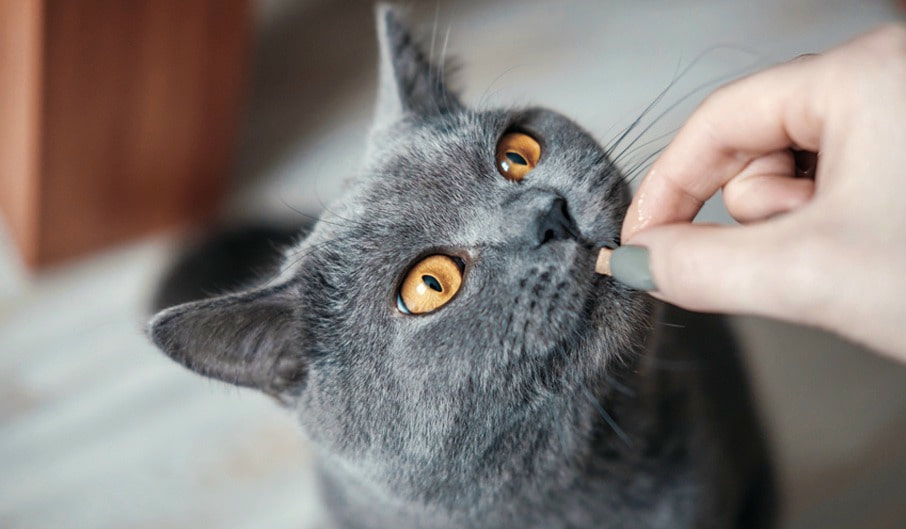
Few things cause us as caring cat owners as much worry as a cat that doesn't want to eat properly. Here we offer some tips and tricks you can try to boost your Precious's appetite again.
If your cat suddenly stops eating its favorite food, it must be examined by a vet as soon as possible so that the cause of the appetite loss can be found and treated!
Some cats are often extremely picky about their food. This can lead to problems if they need to eat a special food due to illness or particular circumstances. Whatever it is that makes our cats lose their appetite, it's nerve-wracking to watch them repeatedly turn away from a full food bowl with a 'wrinkled' nose.
We know: cats are individualists, and there's no 'magic formula' that guarantees every cat will eat. We've put together some tips here that are worth trying.
Offer the most palatable food possible
- If your cat is allowed to eat anything, then it's clear: we give them their absolute favorite food. Every cat has its individual preferences. However, especially for picky eaters, various pâté varieties are often particularly popular. You can also offer fresh meat, fish, or cat treats. During phases of reduced appetite, the food doesn't necessarily have to be balanced – the main thing is that the cat consumes some energy.
- It is beneficial if the portions are small, so that ideally no leftovers remain in the food bowl.
- If your cat needs to eat a specific diet food due to an illness, it's worth trying different varieties until you find one that your cat likes. Fortunately, the selection nowadays is very large! (Our Food Selection offers decision-making help here). Sometimes, especially with older cats, it takes up to 4 weeks or even longer for them to accept a new food. Be patient and slowly mix a little more of the new food into the old food.
- Warmed food is preferred. To do this, place the food on a plate in the microwave for 3-4 seconds or mix it with a little hot water. Stir the food well and always check that it is not too hot before feeding.
- The food can be made more palatable by adding broths or sauces. It is recommended to use special 'cat broths', 'cat sauces', or 'cat milk' (e.g., Ydolo Bone Broth, Milkies,Whiskas Cat Milk), as broths and sauces for humans are far too strongly seasoned, and normal cow's milk is not tolerated by most cats.
Offer energy-rich food
- If a cat doesn't want to eat much, it's important that it consumes the highest possible energy content with the smallest possible portion. There are various energy-rich wet foods, which usually have a very soft consistency. If you manage to give the cat a small amount of food into its mouth, this often stimulates its appetite, and it starts to eat on its own.
- High-energy pastes and gels (e.g., Virbac Nutriplus Gel) are highly accepted by cats and are licked directly from the tube by most. However, they can also be given over regular food as an appetite stimulant.
- Energy boosters, which are given in liquid form or for mixing, also provide cats with the most essential nutrients and can also be used as appetite stimulants (e.g., Reconvales Tonicum).
Try different feeding techniques
- When our cats don't eat, we go to great lengths to make the food as appealing as possible. Some cats don't like their whiskers touching the food bowl. If their appetite is lacking, this can lead to them no longer wanting to eat from their usual food bowls. Offering the food on a flat plate can help here.
- Sometimes it also helps to offer the food in a different place than usual, as this makes it more interesting. It can also be worthwhile to try going to a sleeping cat with food and waking them up. Some cats automatically start eating while half-asleep.
- Some cats can also be persuaded to eat if we hand-feed them the first few bites. We even pretend to eat the food ourselves and find it extremely good – how much they are truly convinced by this is questionable – but as a concerned owner, you eventually try everything!
What kittens don't learn, cats won't eat
To avoid one-sided food preferences, it's important to feed young kittens as varied a diet as possible after weaning. They should definitely get to know dry and wet food with as many different flavors as possible, then they will also be open to new things in adulthood.

Set ipet.ch as a preferred source on Google
Never miss a tip: Set ipet.ch as a preferred source in your Google account so that our veterinary advice and pet care guides appear higher up in your search results. Optional and can be undone at any time.
Set as preferred source →Useful information at a glance
What should I do if my cat suddenly stops eating its favorite food?
If your cat suddenly stops eating its favorite food, you should have it examined by a veterinarian as soon as possible to find and treat the cause of the appetite loss.
How can I make the food more palatable for my cat?
You can make the food more palatable by gently warming it or adding special cat broths, cat sauces, or cat milk. Make sure the food is not too hot before offering it to your cat.
What can I do if my cat needs to eat special Veterinary diet food due to an illness?
Try different varieties of Veterinary diet food until you find one your cat likes. Be patient, as it can take up to 4 weeks for older cats to accept new food.
What feeding techniques can I try if my cat doesn't want to eat?
Try offering the food on a flat plate or in a different location than usual. You can also try feeding your cat while it's half-asleep or giving it the first few bites by hand.
How can I prevent my cat from becoming picky about food?
To avoid one-sided food preferences, young kittens should be fed as varied a diet as possible after weaning. They should be introduced to both dry and wet food with different flavors.