
 EN
EN  DE
DE  FR
FR Feline Dementia: When Your Senior Cat Suddenly Acts Strangely
-
 By
med. vet. Bianca Michoud-Valente
By
med. vet. Bianca Michoud-Valente - Sep 13, 2022
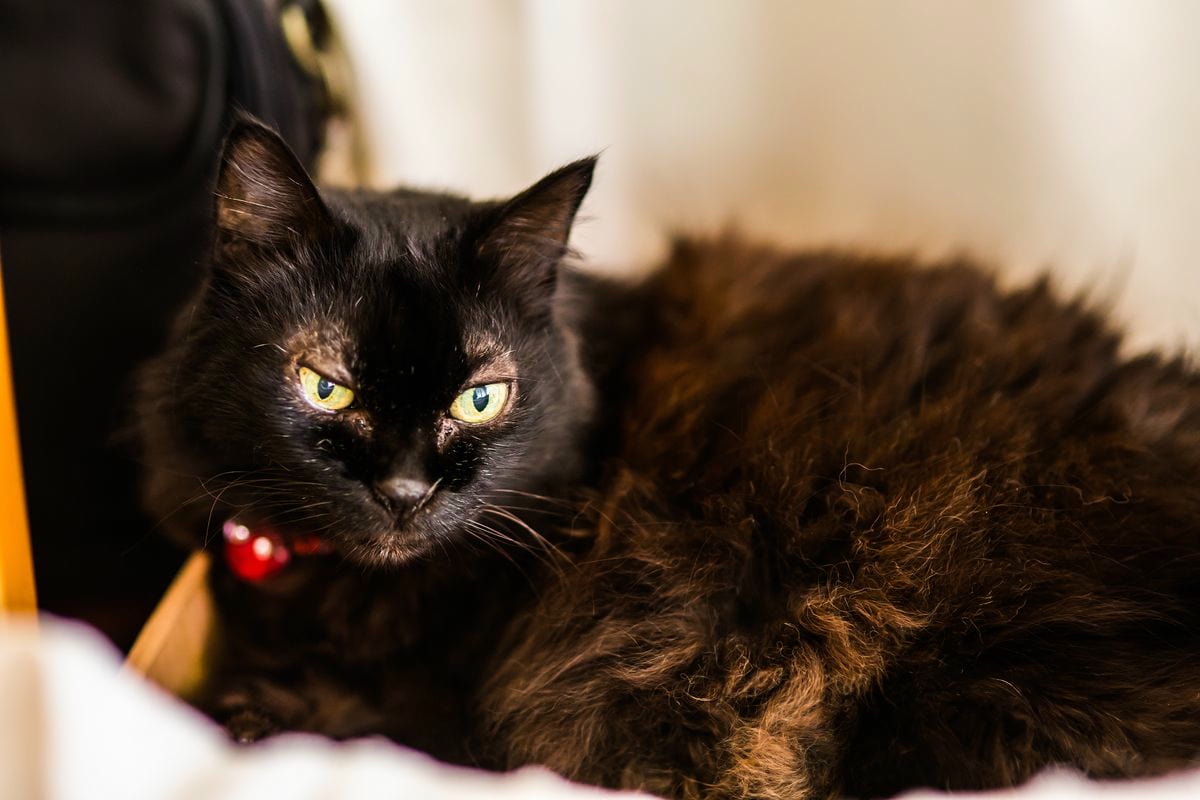
As cats age, it can happen that they gradually change their behavior, and this without an obvious reason. They start meowing loudly for no reason, seem disoriented, and become irritable. It is then important to recognize the first signs of feline dementia so that supportive measures can be taken, and your cat navigates aging well - despite its senility!
Just like in humans, aging pets also experience changes in physical and mental health. Age-related dementia in cats, also known as Cognitive Dysfunction Syndrome (CDS), can occur as the cat ages and is directly related to the aging of the brain. Thus, a cat's cognitive abilities begin to decline at 10-12 years of age, and dementia usually occurs after the age of 15.
It can affect consciousness, learning, sleep, sociability, memory, and responsiveness, and can also cause anxiety.
The exact causes are unknown, but genetic factors may play a role in the development of this condition. It is usually the result of cellular changes associated with the aging of the brain. However, it can also be caused by a reduced blood and oxygen supply to the brain due to heart disease, high blood pressure, or anemia.
Symptoms of Dementia
Unfortunately, the symptoms associated with this disorder are often overlooked under the pretext that the cat is "old". However, early diagnosis and treatment can significantly improve the quality of life for older cats.
Knowing the most common symptoms of this disorder will help you better recognize the first signs of senility in your cat. It is therefore important to observe and monitor your aging cat.
These are the most common symptoms:
- Spatial or temporal disorientation
- Changes in social interactions (avoidance, irritability, aggression).
- Anxiety, restlessness
- Excessive or lack of grooming
- Changes in sleep cycle
- Incontinence of urine or feces
- Changes in activity level
- Excessive vocalization
- Loss of learned and trained behaviors
- Loss of appetite, lethargy
Most of these symptoms can also be observed in cats suffering from various typical diseases of older cats. If you notice any of these symptoms in your cat, we recommend having her examined by a veterinarian. They can then perform examinations to rule out systemic diseases (hyperthyroidism, Renal insufficiency, diabetes, high blood pressure, ...), pain (arthrosis, Dental problems) or brain disorders (deafness, stroke, tumor, ...). Cognitive Dysfunction Syndrome is a diagnosis of exclusion, meaning this disorder is only diagnosed once other possible causes have been ruled out, although the diagnosis of other diseases does not exclude CDS.
Treatments and Support
Without treatment, the symptoms of dementia will worsen over time, and unfortunately, this condition cannot be cured. However, there are many measures that cat owners can take to slow down their cat's cognitive decline and improve clinical signs.
As a first step, it is primarily about feeding a high-quality diet tailored for older cats. High-quality specialized foods are thus enriched with antioxidants, vitamins E and C, selenium, and omega-3 fatty acids to support cognitive functions.
It is also crucial to maintain the cat's mental stimulation. The cat's living environment is a key element in preventing cognitive dysfunction. Constant activation in the form of training, games, exercises, and new toys can help maintain cognitive function. For example, you can use puzzle feeders that playfully challenge the cat to think and keep her mentally engaged. You can also place cat scratchers near windows so the cat can observe what's happening outside. There are also games, tunnels, and scratching boards that stimulate cats and offer opportunities for exploring, climbing, observing, and hunting. Daily social interaction with the cat is also enriching. You should talk to her, give her attention, cuddle with her, and play with her. The latter also promotes physical exercise.
At the same time, any change in the environment and any novelty can worsen the symptoms of senility and cause anxiety. A cat's adaptability decreases with age. It is therefore important to avoid sudden changes in the cat's daily routine and environment. Therefore, we recommend always maintaining the same rituals and times (e.g., feeding time) and trying not to move anything in the house, especially furniture, water and food bowls, and the litter box. This way, the cat will always be able to find her way around the house well, and the risk of her becoming confused or getting lost will be reduced.
Sometimes it becomes necessary to reduce the cat's living space. She may feel safer in a single room, and it can be beneficial to restrict her territory to that one room.
For anxiety or confusion, synthetic pheromones help to calm the cat. Sometimes the anxiety can be so great that a veterinarian has to prescribe anxiolytic medication.
Thanks to advances in veterinary medicine, we are now able to recognize the discomforts of dementia in old cats. And although dealing with it presents a challenge, these measures help to maintain the cat's well-being and quality of life. So there's no longer any reason to face your cat's aging with worry, as it is possible to accompany her through this stage of life with serenity!
Useful information at a glance
What are the most common symptoms of dementia in cats?
The most common symptoms of dementia in cats include spatial or temporal disorientation, changes in social interactions, anxiety, restlessness, excessive or insufficient coat care, changes in sleep cycle, inappropriate urination or defecation, changes in activity level, excessive vocalization, loss of learned behaviors, as well as loss of appetite and lethargy.
How can I support the cognitive abilities of my aging cat?
To support the cognitive abilities of your aging cat, it is important to feed a high-quality food tailored for senior cats and to maintain mental stimulation. This can be achieved through training, games, exercises, and new toys. Daily social interaction with your cat is also important.
What role does the environment play in preventing feline dementia?
The environment plays a crucial role in preventing feline dementia. It is important to avoid sudden changes in the cat's daily routine and surroundings. Maintain rituals and schedules, and try not to move anything in the house so that the cat can always find its way around easily.
When should I take my cat to the veterinarian?
If you notice some of the symptoms of dementia in your cat, you should have them examined by a veterinarian. They can perform examinations to rule out other possible causes and recommend treatment if necessary.
Are there medications that can help my cat with dementia?
For anxiety or confusion, synthetic pheromones can help calm the cat. In some cases, a veterinarian may need to prescribe anxiolytic medications to improve the cat's well-being.