
 EN
EN  DE
DE  FR
FR Feline Hyperthyroidism
-
 By
med. vet. Bianca Michoud-Valente
By
med. vet. Bianca Michoud-Valente - Mar 14, 2022
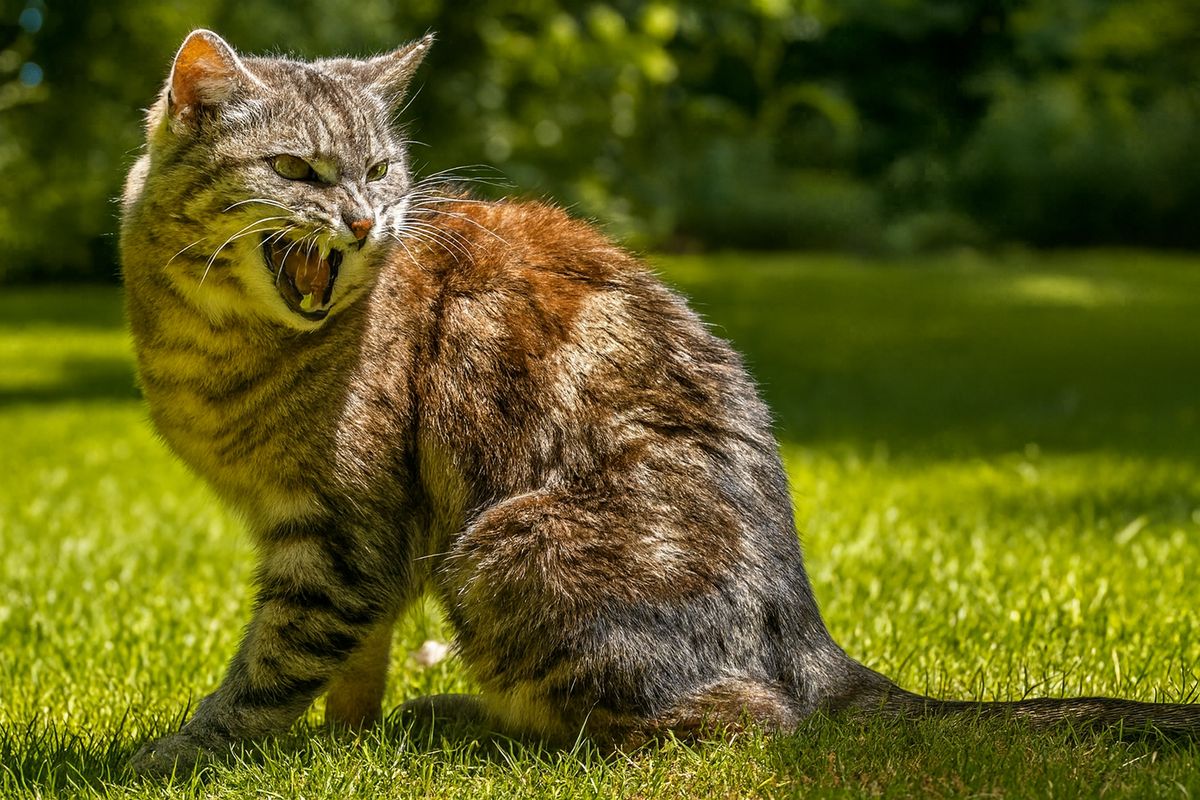
Does your cat have an insatiable appetite yet still lose weight? Has their behavior changed, making them very restless, anxious, or even aggressive? Then it could be that they are suffering from hyperthyroidism, a hormonal disease that commonly occurs in older cats.
What is the thyroid gland and what is its function?
The thyroid gland is an endocrine organ. It is a gland that stores iodine from food and produces iodine-containing hormones. These hormones, thyroxine (T4) and triiodothyronine (T3), play an important role by regulating the speed at which your cat's metabolism functions. Thyroid hormones affect the heart and the circulatory system. They lead to an increase in heart rate, blood pressure, and a widening of blood vessels. They also affect sugar, fat, and protein metabolism. Furthermore, they increase intestinal activity and the excitability of nervous system cells. In summary, thyroid hormones increase the body's energy consumption and basal metabolism.
Cats have two thyroid glands, located on both sides of the trachea.
What is hyperthyroidism and what are the possible causes?
Hyperthyroidism occurs when there is an overproduction of hormones in the thyroid gland. The thyroid gland's regulatory mechanism no longer functions, meaning there is too much thyroxine in the blood and the metabolism in the various organs is accelerated.
Hyperthyroidism is the most common hormonal disease in cats. It usually appears from the age of 8 years, and cats are, on average, 13 years old at the time of diagnosis. There are no breed or sex predispositions.
Most cases of hyperthyroidism are due to benign hyperplasia (enlargement) of the tissue or a benign tumor (adenoma). Very rarely is it a malignant tumor (adenocarcinoma).
However, the exact cause is not known. Diet, environment, or genetic predispositions may play a role in the development of these diseases.
How does hyperthyroidism manifest itself?
Cats with hyperthyroidism develop various symptoms over time.
The most common signs are:
- Weight loss despite increased appetite (polyphagia),
- Behavioral changes such as restlessness, anxiety, aggressiveness, or excessive vocalization.
These symptoms are a consequence of hypersecretion of thyroid hormones, which causes an acceleration of metabolism in the various organs.
Other common clinical signs include:
- increased thirst (polydipsia) and increased urine production (polyuria)
- digestive problems (vomiting, diarrhea)
- dull coat due to lack of grooming
Hyperthyroidism also leads to high blood pressure in the long term, which, if left untreated, can lead to serious complications.
Less commonly, the following symptoms occur:
- excessive panting
- breathing problems
- decreased appetite
- muscle weakness or apathy.
How is hyperthyroidism diagnosed?
The main symptoms mentioned are typical for hyperthyroidism in cats. However, a veterinary examination is essential to confirm the diagnosis of the disease. Therefore, it is important to take your cat to a veterinarian. The veterinarian will then perform a clinical examination and blood tests. The blood tests will determine if the thyroid hormone (thyroxine and/or free thyroxine) in the blood is too high. Sometimes the values are within the normal range, but hyperthyroidism cannot be ruled out. In this case, it may be necessary to repeat the tests.
Since thyroid hormones affect almost all organs, further tests are required to assess the cat's complete health status. This disease can also cause vision, heart, and kidney disorders.
What treatment options are available?
Due to the possible effects of hyperthyroidism on the cat's entire organism, if the disease is not treated, secondary problems can arise that can be significant and worsen over time. Over time, the disease can lead to death, which is why treating a cat with hyperthyroidism is crucial.
There are various treatment options, all with the goal of normalizing thyroid function and reducing hormone secretion.
Which treatment is applied depends on various factors: the health status, whether a tumor is present or not, whether there are secondary complications, and whether the cat cooperates.
The following treatment methods are available:
- Treatment with radioactive iodine
This is the most effective treatment method and leads to the best results. It is usually recommended for young cats with normal kidney function. It involves an injection of radioactive iodine (I 131), which destroys the abnormal thyroid cells. With this method, the cat must be housed in a specialized clinic, which is associated with higher costs.
- Medical treatment
This is the most commonly used treatment. Thyroid medications do not cure the animal, but they control the disease by blocking hormone production. These medications must be administered to the cat daily and for life. They are generally well tolerated and are available as tablets or in liquid form.
- Dietary therapy
An iodine-reduced diet effectively helps to keep hyperthyroidism in cats under control. It is therefore a good alternative, especially for cats that refuse or do not tolerate medical treatment. The thyroid gland needs iodine from food to produce thyroid hormones. If the food contains just enough iodine to produce normal levels of these hormones, this keeps hormone levels in the normal range. The specialized food should therefore be the only food source for the treated cat. Because treats or food scraps (even in small amounts) can contain enough iodine to cause the treatment to fail. The feeding method is therefore only suitable for indoor cats.
- Surgical treatment
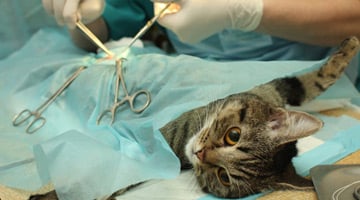
Surgical intervention is only recommended if one of the two thyroid glands is significantly enlarged and is clearly the sole cause of the problem. The affected thyroid gland can then be surgically removed.
However, this method is being used less and less, as there are effective and less invasive alternatives.
With these treatments and an early diagnosis, the prognosis for this disease is generally very good. Most cats have a very good chance of achieving good health status and a normal quality of life.
In some cases, especially with a late diagnosis, complications involving other organs can unfortunately worsen the prognosis and require additional treatments.
Can hyperthyroidism be prevented?
Unfortunately, no preventive measures against hyperthyroidism are currently known. However, early diagnosis reduces the risk of developing secondary problems and improves the prognosis.
Annual check-ups for your cat at the veterinarian are therefore recommended from the age of 8 years.

Set ipet.ch as a preferred source on Google
Never miss a tip: Set ipet.ch as a preferred source in your Google account so that our veterinary advice and pet care guides appear higher up in your search results. Optional and can be undone at any time.
Set as preferred source →Useful information at a glance
What are the most common symptoms of hyperthyroidism in cats?
The most common symptoms of hyperthyroidism in cats are weight loss despite increased appetite, behavioral changes such as restlessness, anxiety or aggression, increased thirst and urine production, digestive disorders such as vomiting or diarrhea, and a dull coat.
How is hyperthyroidism diagnosed in cats?
Hyperthyroidism is diagnosed through a veterinary examination and blood tests. The veterinarian checks if the thyroid hormones in the blood are too high. Sometimes further examinations are necessary to fully assess the cat's health condition.
What treatment options are available for cats with hyperthyroidism?
There are various treatment options, including radioactive iodine therapy, medicinal treatment, nutritional therapy, and surgical interventions. The choice of treatment depends on the cat's health condition and other factors.
Can hyperthyroidism be prevented in cats?
Currently, no preventive measures against hyperthyroidism are known. However, early diagnosis through annual check-ups with the veterinarian from the age of 8 can reduce the risk of secondary problems.
What is the function of the thyroid gland in cats?
The thyroid gland is an endocrine organ that stores iodine and produces iodine-containing hormones. These hormones regulate the cat's metabolism, influence the heart and circulatory system, and affect sugar, fat, and protein metabolism.