
 EN
EN  DE
DE  FR
FR Stables for small animals
Filters
-
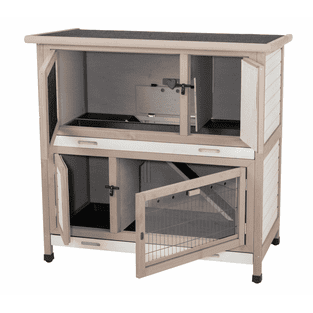
- - 10 %
Free shippingfrom CHF 378.80
CHF 420.90TrixieStyrofoam-insulated small animal hutch with plastic panes -
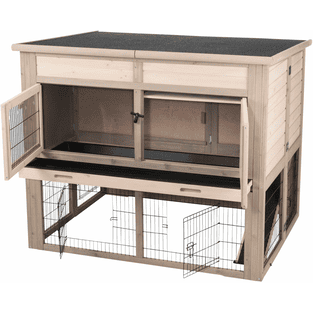
- - 10 %
Special Price CHF 423.80 Regular Price CHF 470.90Free shippingTrixieThermally insulated small animal stable with covered outdoor enclosure
-
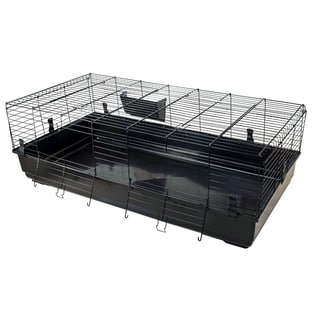 Free shipping
from CHF 80.70
swisspetIndoor cage for rabbits & guinea pigs -
 Free shipping
from CHF 649.60
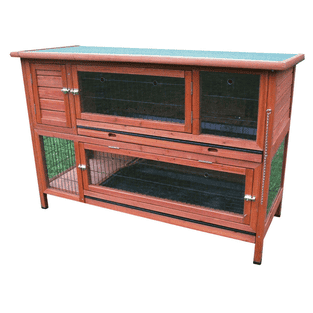
swisspetInsulated outdoor hutch for rabbits & guinea pigs, especially for winter
-
 Free shipping
from CHF 335.80
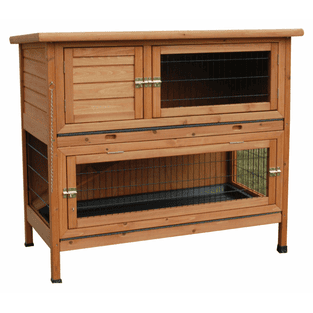
swisspetTwo-storey rabbit/guinea pig hutch, also for the balcony -
 CHF 214.40Free shippingFerplast
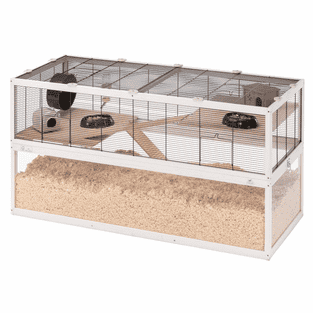
Enclosure for mice with deep bedding area made of Plexiglas for a good view of the small inhabitants
-
 Free shipping
from CHF 321.10
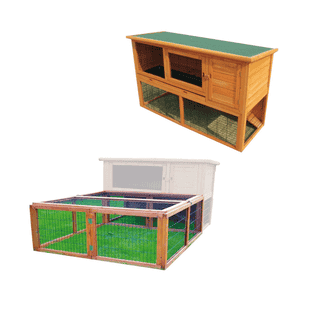
swisspetLarge two-storey rodent hutch, free run and thermal windbreak optional -
 Free shipping
from CHF 260.00
swisspetLarge rodent hutch, optional with windbreak and outdoor run
-
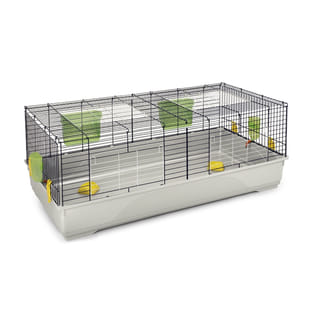 CHF 172.90Free shippingIMACCage for guinea pigs or dwarf rabbits
 -
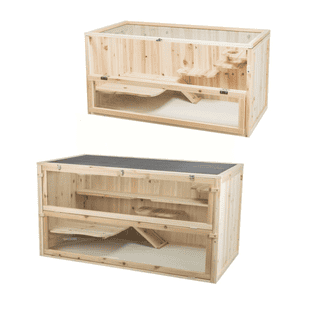
- - 10 %
Free shippingCHF 149.30
CHF 165.90TrixieEnclosure made of wood and plexiglass with high bedding, suitable for a small number of mice
-
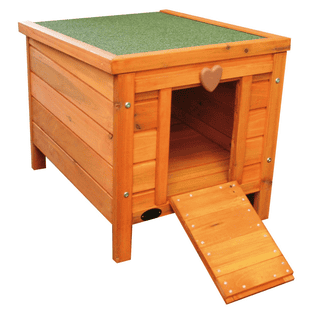 CHF 67.20swisspetSlightly raised sleeping house for outside for rabbits & guinea pigs
 -
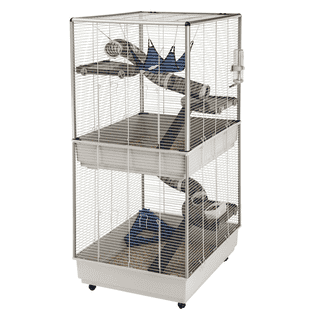 CHF 367.00Free shippingFerplastCage for several rats or 2 chinchillas
 -

- - 10 %
Special Price CHF 208.70 Regular Price CHF 231.90Free shippingTrixieIndoor enclosure for rabbits & guinea pigs, matching run available -
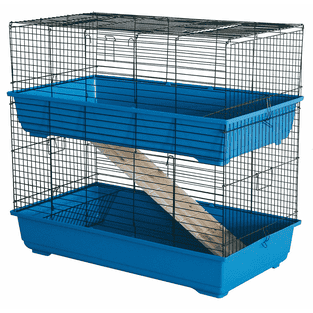 Free shipping
from CHF 173.90
swisspetDouble-tier indoor cage for rabbits & guinea pigs -
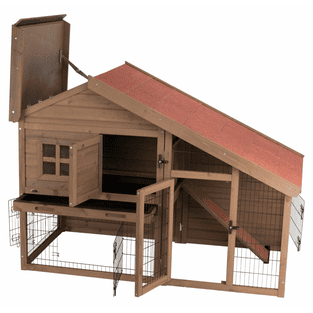
- - 10 %
Special Price CHF 308.60 Regular Price CHF 342.90Free shippingTrixieRabbit/guinea pig hutch with small covered outdoor enclosure -
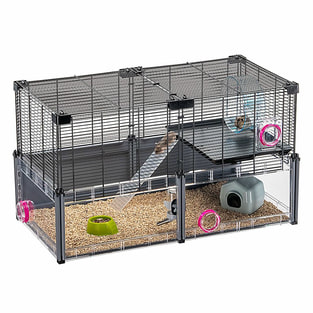 Free shipping
from CHF 139.70
FerplastExtendable enclosure with deep litter area, ideal for mice -
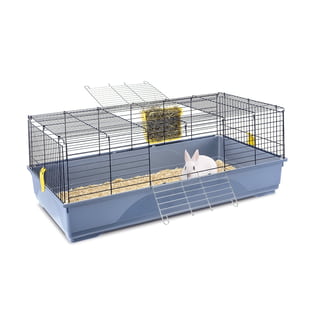 CHF 101.00Free shippingIMACCage for guinea pigs or dwarf rabbits
 -
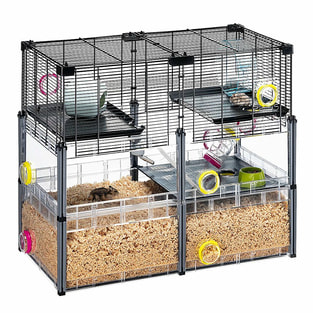 Free shipping
from CHF 192.00
FerplastExtendable enclosure with deep litter area, ideal for mice -
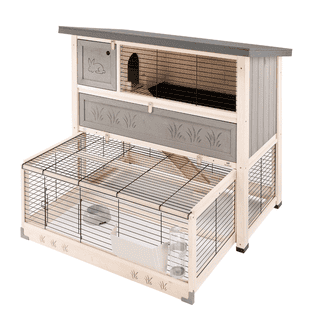 CHF 449.00Free shippingFerplastDouble-storey wooden rodent hutch with extendable outdoor enclosure
 -
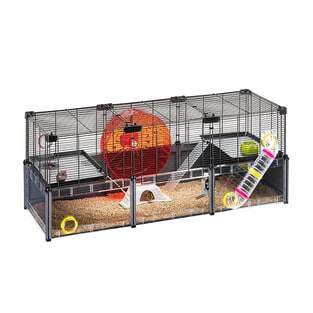 Free shipping
from CHF 200.90
FerplastLarge cage with accessories for hamsters and mice
-
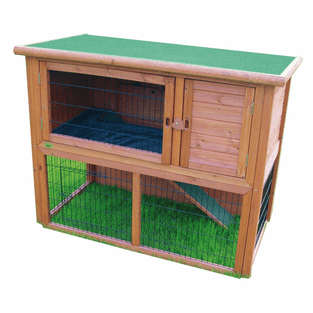 Free shipping
from CHF 247.50
swisspetTwo-storey rodent hutch, free run and thermal windbreak optional -
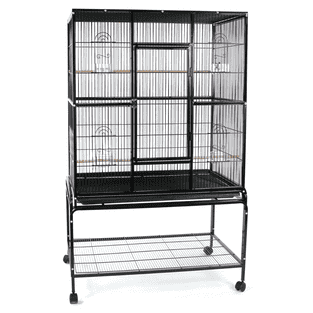 CHF 366.20Free shippingswisspet
Large aviary on castors for budgerigars, cockatiels and canaries
Also suitable for degus or chipmunks -
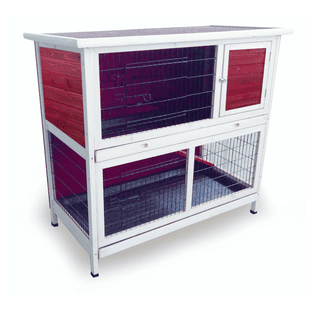 CHF 321.10Free shippingswisspetTwo-storey rabbit/guinea pig hutch in a pretty Swedish look
 -
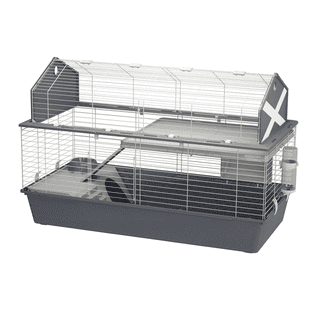 CHF 154.50Free shippingFerplastCage for guinea pigs or dwarf rabbits
 -
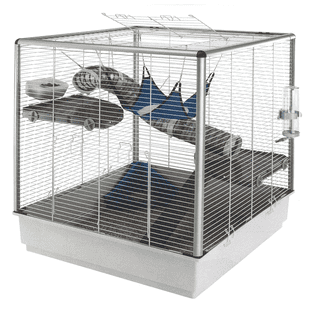 CHF 290.60Free shippingFerplastRat cage for a small number of rats
 -
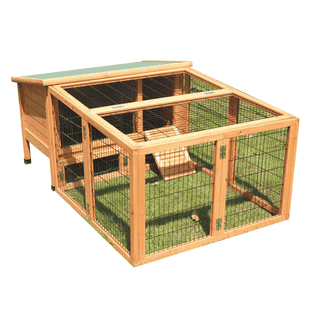 CHF 285.20Free shippingswisspet
Two-storey rodent pen with passageway and extendable free-range enclosure
-
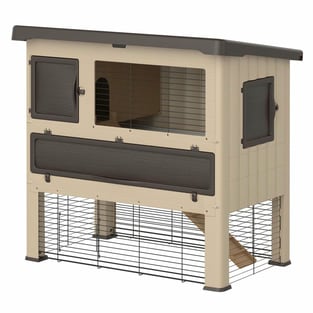 CHF 290.80Free shippingFerplastDouble-storey plastic stable, perfect for outdoor use
 -
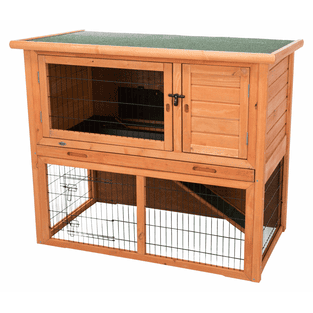
- - 10 %
Special Price CHF 233.90 Regular Price CHF 259.90Free shippingTrixieSmall animal stable with integrated free-range enclosure -
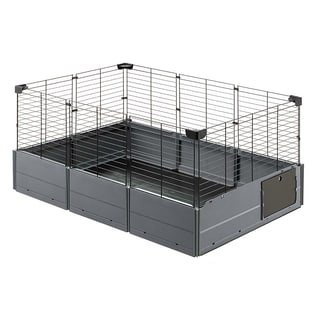
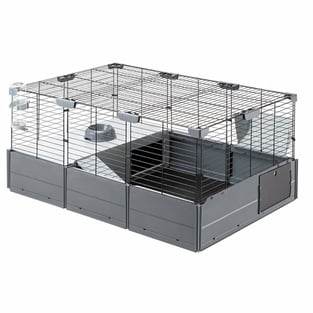 CHF 142.90Free shippingFerplast
Modular habitat, suitable for guinea pigs and rabbits
-
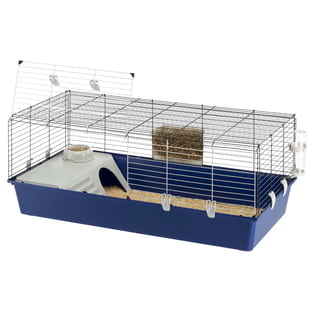 CHF 107.40Free shippingFerplast
Rodent cage for guinea pigs and rabbits with accessories
-
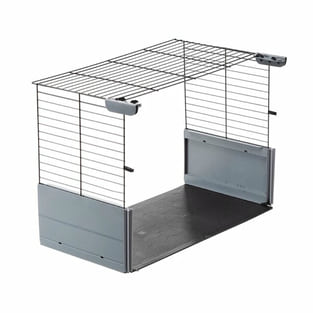
 CHF 90.90Free shippingFerplast
Modular habitat, suitable for guinea pigs, upper part open
-
 CHF 49.40Ferplast
Lateral extension for Multipla small animal cages
-
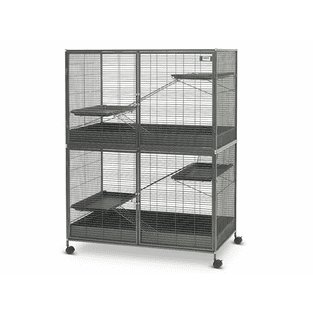 CHF 839.20Free shippingSAVIC
Extra-large luxury cage for small rodents
-
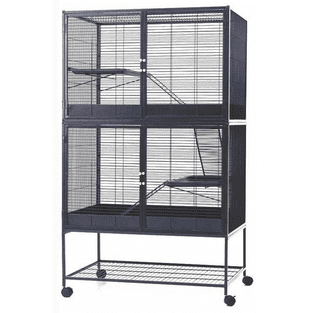
-
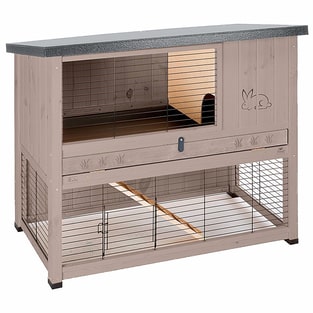 CHF 308.70Free shippingFerplastDouble-storey rodent hutch for indoors or outdoors
 -
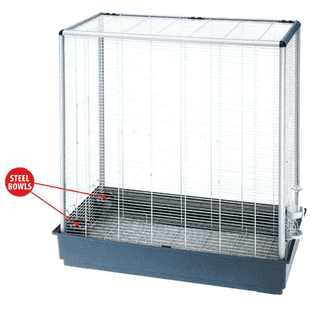 CHF 322.10Free shippingFerplastCage for rats or mice with stainless steel bowls and water bottle
 -
 CHF 84.90Free shippingFerplast
Top extension for Multipla small animal cages


When choosing hutches, cages, indoor and outdoor enclosures for rabbits and rodents, it is important to consider the needs of the species, the size of the animal and the number of animals kept in an enclosure. The enclosure should be made of high-quality materials, be easy to clean and have enough space for the animals to feel comfortable. For outdoor enclosures , it is also important to ensure that the facilities offer sufficient protection from the elements and that they are safe from predators or other dangers.
The most crucial point when buying an enclosure is that the animals have enough space to move freely and display their natural behaviors. We recommend that you use the animal husbandry calculator from the Swiss Animal Welfare Association to find out the minimum enclosure size for the respective animal species and number of animals. These are minimum sizes, i.e. whenever possible, more space should be provided so that the animals can really feel comfortable and live out their lives! After all, they normally spend their entire lives on this terrain (unlike dogs, cats and horses, for example).
Below we have compiled a few important key points for the most common types of small pets kept in pets:
Rabbits:
- Keep in groups or pairs, never keep them alone!
- The easiest way for beginners is to keep a female rabbit and a neutered male rabbit
- For groups of 3 or more animals, socialization can be challenging and also depends very much on the individual characters
- All males should be neutered to prevent unwanted offspring and fights.
- Rabbits need several square meters of space and preferably permanent access to a free-range enclosure where they can also dig. However, it is essential to provide protection so that they cannot dig their way out of the enclosure.
- Rabbits can live outside all year round without any problems once they are acclimatized and have enough space (they warm up through exercise, among other things)
Guinea pigs:
- Guinea pigs feel most comfortable in groups of 4 or more animals
- The most natural and unproblematic group constellation is 1 neutered male and several females (group housing with several neuters and females is possible, but requires a lot of experience. A group of females only is also theoretically possible, but may be a little more restless)
- Can be kept outside all year round in a well-insulated hutch and after appropriate acclimatization
- The little piggies are very active rodents that like to run around and often like to have a place to sleep to themselves, so the enclosure should be 2-3 square meters in size for 4 - 6 animals.
Rats:
- Keep a pack of at least 3 rats
- It is possible to keep separate or mixed sexes, but then the males must be neutered. Usually pure female or male groups are kept.
- Males are calmer and gnaw less than females, but mark much more strongly.
- Females tend to be more active, more demanding and like to gnaw on everything, but they do not mark as strongly as males.
- No outdoor housing, quiet location, protected from draughts, direct sunlight and heat from radiators
- Large cage or aviary with several levels and climbing opportunities
- Regular exercise and active occupation with the rats (e.g. clicker training or intelligence toys) should be offered
Mice:
- Group housing from at least 4 colored mice
- Pure neutered groups, pure female groups or mixed-sex groups with mandatory (!) neutered males and females possible. Groups consisting of unneutered bucks are very problematic and are unlikely to be successful in the long term.
- At least 0.6 square meters of floor space for 4-6 animals
- No outdoor housing, quiet location, protected from draughts, direct sunlight and heat from radiators
- Glass terrariums are less recommended due to air circulation (mice are susceptible to respiratory problems)
- Grid spacing for parallel grids max. 6 - 8 mm
Hamsters:
- NO pair or group housing. Hamsters are solitary animals and if they are kept in groups of 2 or more, sometimes very sudden and often fatal bites can occur! Keeping in pairs or groups is only possible with 100% purebred Campell dwarf hamsters (pedigree), provided you have a lot of experience and the appropriate equipment to separate them immediately if necessary. However, these are rarely available. In pet shops they are almost always so-called hybrids (a cross between a Dzungarian dwarf hamster and a Campell dwarf hamster).
- 1 dwarf hamster requires at least 0.5 square meters of floor space, a golden hamster at least 0.6 square meters
- No major differences in the sex of dwarf hamsters. Females are often more active in golden hamsters (particularly large enclosure and regular exercise recommended).
- No outdoor housing, quiet location, protected from draughts, direct sunlight and heat from radiators
- No mesh cages, preferably wooden enclosures, glass terrariums or OSB terrariums
- Regular exercise (also only indoors!) is readily accepted by some hamsters. However, if there are signs of stress (e.g. body pressed flat on the floor), this should be avoided.
Degus:
- Best kept in groups, but at least 2 animals
- Same-sex groups are the most harmonious
- No significant differences between keeping females or males
- No outdoor housing, quiet location, protected from draughts, direct sunlight and heat from radiators
- Degus need a lot of space as they naturally move around a lot. Ideally, they should have their own degu room, but large aviaries or terrariums are also suitable.
- Degus like to dig and climb, so the enclosure should have a certain height as well as a large surface area.
Chinchillas:
- Chinchillas can become very old (over 10 years), so the purchase should be carefully considered
- Keep at least in pairs, preferably also in groups (more than 4 animals are rather unsuitable for beginners, as the larger the group, the higher the risk of quarrels)
- Ideally the animals should live together from an early age, then the group/pair is the most stable
- Different gender constellations are possible, as long as the males are all neutered.
- Indoor housing (some outdoor housing is controversial), quiet location, protected from draughts, direct sunlight and heat from radiators
- Chinchillas do not like it too warm (ideal room temperature 18 - 20 degrees)
- Chinchillas are relatively large, jump very well and far and need a lot of space. Ideally, they should have a whole room to themselves or alternatively a very large aviary (approx. 2 x 2 m) with lots of climbing and jumping opportunities.
- Daily exercise in the apartment should be offered